
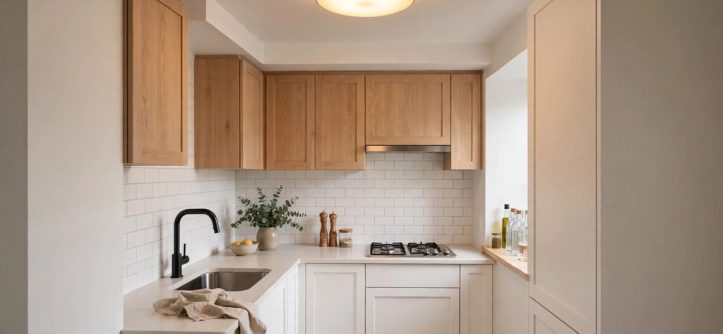
Lighting a small kitchen with low ceilings works best with fixtures that sit close to the ceiling. Flush mount fixtures, compact recessed lights, and under cabinet lighting preserve headroom while delivering bright, even coverage. Layered lighting at the right color temperature makes the room feel taller and more open.
The right plan treats the ceiling, cabinets, and walls as three separate lighting zones. Ambient light from flush mount or recessed fixtures covers the room evenly. Task lighting from under cabinet fixtures keeps counters shadow-free. Accent lighting adds depth and makes tight walls feel farther apart.
Flush Mount or Semi-Flush Mount: Picking the Right Ceiling Fixture
- Best ceiling height: flush mount suits ceilings at eight feet or lower, while semi-flush mount fits taller eight-foot ceilings.
- Profile depth: keep the fixture under three inches deep so headroom stays clear.
- Light spread: frosted diffusers scatter ambient light wider, which softens the low-ceiling effect across the room.
Flush mount fixtures attach directly to the ceiling with zero drop, so they suit the tightest kitchens. Semi-flush mounts hang a few inches lower, which adds style but needs taller ceilings. If you are comparing styles, the kitchen light fixtures guide covers more options for compact kitchens. Measure your ceiling before buying so the fixture clears the tallest person by a wide margin.
Pair the main fixture with matching wall sconces near the sink for balanced accent lighting. The combination keeps the ceiling line clean while filling dark corners with soft, warm glow.
Over a kitchen island, short pendant lights can work if the ceiling allows. Keep them at least 30 inches above the countertop so heads clear them easily. Skip hanging fixtures over walkways, since every inch of clearance matters in a tight space.
Compact Recessed Lighting That Disappears Into the Ceiling
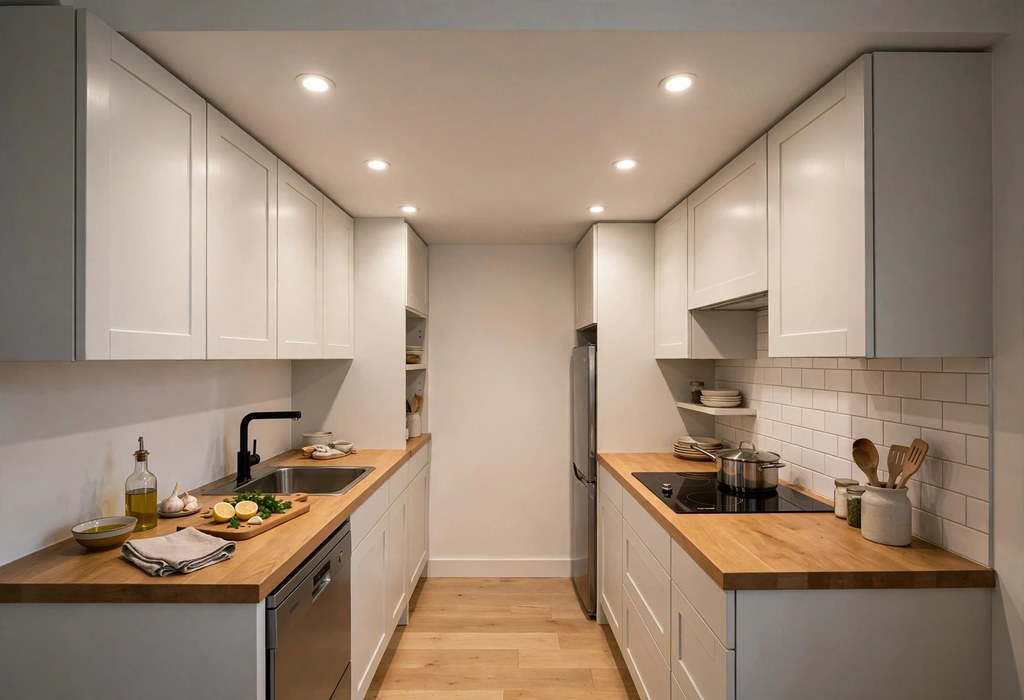
Recessed lighting is the most headroom-friendly option because nothing extends below the ceiling surface. Slim canless models need only a shallow cavity, so they fit even tight ceiling spaces. Choose IC-rated housings wherever insulation touches the fixture to prevent overheating. Damp-rated trims are smart above the sink or near steam sources. For placement guidance, the recessed kitchen lighting layout guide explains spacing rules for small rooms. Space fixtures about four feet apart in an eight-foot ceiling. Select a wide beam angle for even, glare-free coverage.
Galley kitchens benefit from two rows of recessed lights running the length of the room. One row washes the cabinets while the other covers the walkway. Two rows working together eliminate the dark middle zone that single rows often create.
Under Cabinet Lighting: Task Light That Saves Ceiling Space
Under cabinet lighting delivers task lighting exactly where you chop and prep, without using any ceiling space. Slim LED strips give smooth, even coverage along the full counter run. Puck lights create pools of accent lighting that highlight the backsplash and break up shadows. Plug-in versions install in minutes with no new wiring. Hardwired light bars hide all cords and connect to a wall switch. For ideas and placement tips, the under cabinet kitchen lighting guide shows smart layouts for tiny kitchens. Many owners hire a licensed electrician for hardwired installs, which keeps the work safe and code-compliant.
Also consider toe-kick lighting along the base of your lower cabinets. It creates the illusion of floating cabinets and lifts the whole room visually. Together with under cabinet fixtures, it removes nearly every shadow from the workspace.
Brightness, Color, and Control: Lighting Specs Made Simple
- Color temperature: choose 3000 to 3500 Kelvin for warm, inviting kitchens that still look clean and fresh.
- Color accuracy: pick bulbs with a CRI of 90 or higher so food looks true.
- Brightness target: aim for 1500 to 2200 lumens of ambient light, plus separate task layers.
- Dimming control: install a dimmer so ambient lighting and task lighting adjust independently for each activity.
Match your Kelvin choice across all fixtures so the room glows uniformly. Cooler color temperature readings above 4000 Kelvin can make the space feel clinical. Dimmers stretch bulb life and let one room shift from bright cooking light to soft evening glow.
Check the dimmer compatibility label on every bulb before buying, since not all LEDs dim smoothly. Therefore, pair LEDs with a compatible dimmer switch to avoid flicker and buzzing. A compatible pairing saves you a frustrating return trip.
Common Design Mistakes to Avoid
- One lonely fixture: a single central light leaves dark corners and harsh shadows in small kitchens.
- Wrong bulb mix: mismatched color temperatures make cabinets and counters clash visually.
- Overhanging pendants: long pendants turn into head hazards and shrink the room visually.
- Skipping the junction box check: confirm the existing junction box supports the new fixture weight first.
Another mistake is skipping dimmers, which locks the kitchen at full brightness all day. Glare is also common, so choose frosted lenses and aim recessed lights away from glossy counters. Finally, leave hardwired ceiling work to a licensed electrician, who handles permits and safety codes.
Frequently Asked Questions
What Is the Best Lighting for a Small Kitchen With Low Ceilings?
Compact recessed lights with flush mount fixtures and under cabinet lighting deliver the brightest, most even result.
Can I Use Pendant Lights With a Low Ceiling?
Yes, but hang them only over an island or table, at least 30 inches above the surface.
Flush Mount vs Semi-Flush Mount: Which Is Better for Low Ceilings?
Flush mount suits ceilings under eight feet, while semi-flush mount fits eight-foot ceilings nicely.
How Do You Make a Low Ceiling Kitchen Feel Taller?
Use upward-bouncing light, reflective backsplashes, and dimmers, and avoid fixtures that hang deep into the room.
How Bright Should a Small Kitchen Be?
Aim for 1500 to 2200 lumens of ambient light, plus under cabinet task lighting for clear counters.
Conclusion
Good lighting turns a cramped, low-ceiling kitchen into a bright workspace you enjoy. Start with flush mount or recessed fixtures, add under cabinet task light, and fine-tune with dimmers. Browse our related kitchen lighting guides to plan the perfect layered layout for your home.


Leave a Reply