
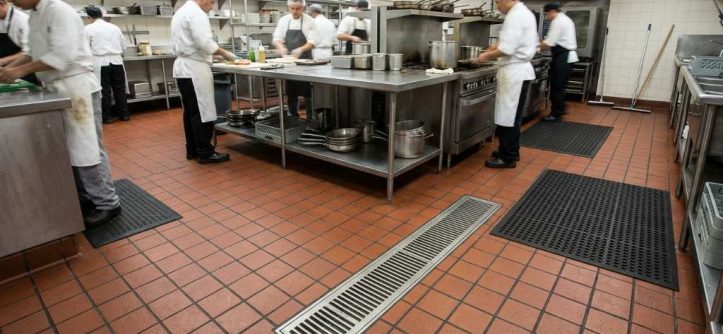
A commercial kitchen is one of the hardest environments a floor will ever face. Hot grease, boiling water, dropped pans, acidic spills, heavy carts, constant moisture and relentless cleaning all hit the same surface, often during a single dinner rush. Choose well and your floor quietly supports a safe, efficient, inspection-ready kitchen. Choose poorly and you inherit slips, cracked tile, odors, repair shutdowns and failed health inspections.
This guide compares the best commercial kitchen flooring options, explains what each does well and where it falls short, and gives you a practical way to choose.
What a Commercial Kitchen Floor Must Do
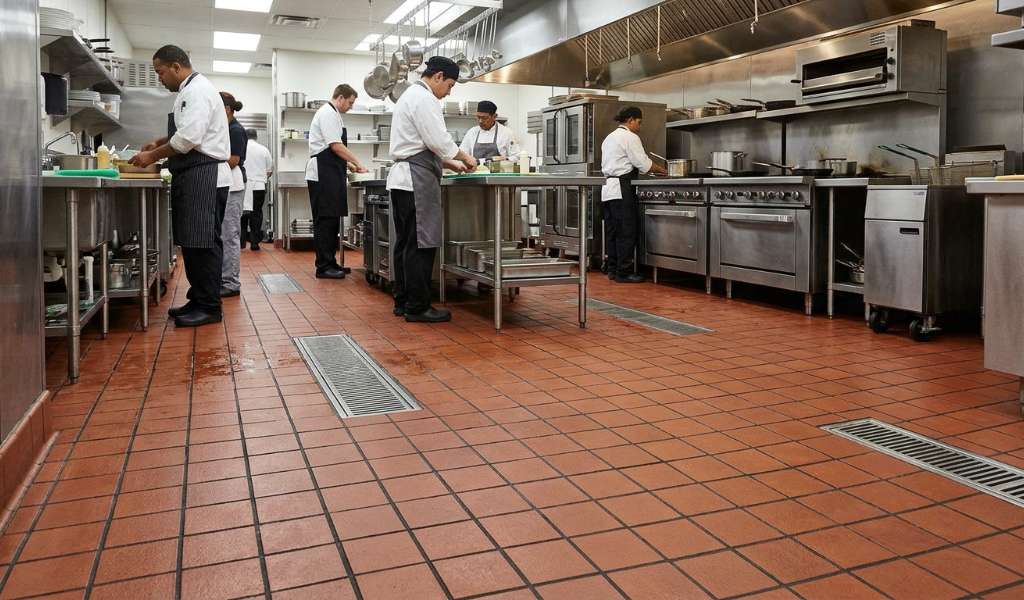
Before comparing materials, define the job. A good kitchen floor should:
- Provide slip resistance when wet, greasy or soapy.
- Withstand thermal shock from hot water washdowns, steam and dropped hot items, followed by cold spills.
- Resist grease, oils, acids and cleaners without softening or staining.
- Be non-porous and seamless, or nearly so, so bacteria and odors have nowhere to hide.
- Support heavy loads including mixers, racks, carts and equipment.
- Drain properly, with slopes that carry water to floor drains rather than leaving puddles.
- Meet local health and building codes, which usually call for a smooth, durable, easily cleanable surface.
- Be comfortable enough for staff who stand for entire shifts.
Because codes differ by location, confirm requirements with your local health department before choosing a system.
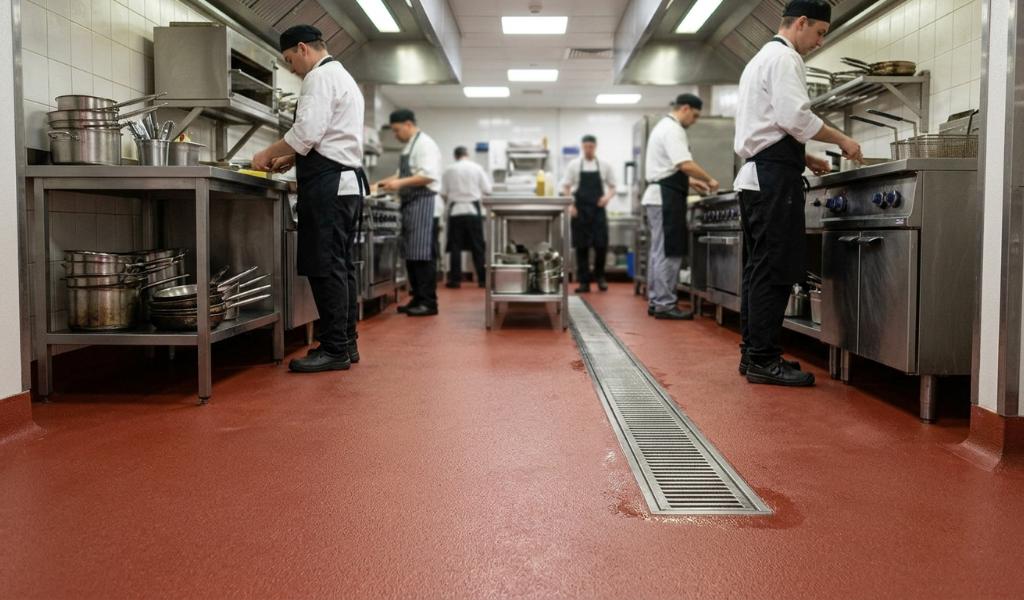
Option 1: Urethane Cement (Polyurethane Concrete)
Urethane cement is widely regarded as a top performer for demanding kitchens, particularly where hot washdowns are routine. These systems are applied in a thick layer, often several times thicker than standard epoxy, and are formulated to tolerate thermal shock far better than many other coatings.
Strengths: Excellent thermal shock tolerance, strong resistance to many food acids and fats, seamless, available in textured finishes, and good durability under heavy use.
Limitations: Higher upfront cost, installation requires experienced crews, and cure times and odors need planning.
Best for: Commercial kitchens, breweries, dairies, food processing and any area that sees frequent hot-water cleaning.
Option 2: Epoxy Flooring Systems
Epoxy is a popular, cost-conscious choice for restaurant and cafeteria kitchens. A broadcast system with aggregate gives a seamless, easy-to-clean surface with traction. Epoxy mortar systems add thickness for heavier duty.
Strengths: Lower cost than urethane cement, seamless and non-porous, good chemical resistance, many color and texture options, and relatively quick installation.
Limitations: Standard epoxy has less thermal shock tolerance and can crack or delaminate in kitchens with frequent very hot washdowns or steam. UV exposure can also cause yellowing, though that matters less indoors.
Best for: Dry storage, prep areas, walk-ins, dining areas and kitchens with moderate heat exposure. Ask the installer which formulation they recommend for hot zones.
Option 3: Quarry Tile
Quarry tile is the traditional restaurant standard. Unglazed, dense ceramic tile with an abrasive surface has been used in kitchens for generations.
Strengths: Strong underfoot, naturally slip-resistant when unglazed, resistant to heat and many chemicals, and familiar to inspectors.
Limitations: Grout lines are the weak point. Grout can absorb grease, stain, harbor bacteria and crumble under constant moisture and cleaning, which is why many kitchens specify epoxy grout. Tile can crack on impact, and a cold, hard surface is tiring to stand on.
Best for: Kitchens that want a classic look and are willing to maintain grout carefully.
Option 4: Vinyl and Sheet Flooring
Commercial-grade sheet vinyl with welded seams offers a smooth surface that is easier on legs and feet and can suit lighter-duty kitchens, bars and serveries.
Strengths: Comfortable, relatively affordable, and quick to install.
Limitations: Heavy equipment, sharp objects and hot pans can damage it, and seams must be heat-welded and coved properly to keep moisture out. It generally is not the best choice for the cooking line of a busy commercial kitchen.
Best for: Light-duty prep areas, coffee shops, bakeries without heavy washdowns, and front-of-house areas.
Option 5: Rubber and Anti-Fatigue Matting
Matting is not a full floor, but it often plays an essential supporting role. Drainage mats and anti-fatigue mats reduce slips and ease strain at workstations, dish pits and fryers.
Strengths: Reduces fatigue, adds traction, and protects dropped items and the floor underneath.
Limitations: Mats must be lifted and cleaned regularly. Neglected mats trap grease and food debris and become a hygiene problem and a trip hazard.
Quick Comparison
| Option | Slip Resistance | Thermal Shock | Hygiene | Typical Cost Level |
| Urethane cement | Very good with texture | Excellent | Seamless | Highest |
| Epoxy broadcast or mortar | Good to very good | Moderate | Seamless | Moderate |
| Quarry tile | Good (unglazed) | Good | Depends on grout | Moderate to high |
| Commercial sheet vinyl | Fair to good | Limited | Good if seams welded | Lower |
| Anti-fatigue matting | Good (as an add-on) | Varies | Needs frequent cleaning | Low |
Use this table as a starting point. Actual performance depends on product formulation and installation quality.
Details That Make or Break Kitchen Floors
Slip resistance is a spectrum. A floor that grips in the demo room may be treacherous once grease and water hit it. Ask for products with traction suited to wet, greasy conditions, and balance that against cleanability, since rougher textures are harder to scrub.
Coving matters. A continuous curved base where the floor meets the wall eliminates the sharp corner where dirt and moisture collect. Many codes expect it, and it is a sign of a well-planned installation.
Slope and drains. The best material cannot overcome poor drainage. Floors should be sloped toward drains so water does not pool under equipment or in traffic lanes.
Joint and crack treatment. Concrete moves. Expansion and control joints need flexible, chemical-resistant sealants. Ignoring them is a common cause of failures.
Moisture in the slab. Moisture vapor from below can lift coatings. Test the slab before installation and address high readings.
Surface preparation. Mechanical grinding or shot blasting to a proper profile is critical for coating adhesion, especially over greasy, oil-soaked concrete that may need aggressive cleaning and degreasing.
How to Choose the Right Floor for Your Kitchen
- Map your zones. The cooking line, dish area, walk-in cooler and dry storage have different demands. Some operators use more than one system.
- Look at your cleaning routine. If crews use hot water or steam daily, prioritize thermal shock resistance.
- Consider your menu. Heavy frying, acidic ingredients, sugar and dairy each affect surfaces differently.
- Think about downtime. Fast-curing systems can reduce closure time, which matters when every day closed means lost revenue.
- Weigh lifecycle cost, not just price. A cheaper floor that needs repairs in a few years costs more than a thicker system that lasts.
- Check regulations and warranties. Get written confirmation of code compliance and what the warranty covers.
- Listen to your staff. Comfort and traction affect safety, morale and productivity.
Maintenance for Longer Life
- Clean spills and grease promptly rather than letting them bake in.
- Use cleaners approved by the flooring manufacturer.
- Degrease on a schedule, especially behind fryers and ranges.
- Inspect grout, seams, coving and joints regularly and repair small defects early.
- Lift and clean mats and drains often.
- Avoid dragging heavy equipment across the floor.
Frequently Asked Questions
What is the best flooring for a commercial kitchen?
There is no single winner. Urethane cement is often considered the top performer for hot, wet environments, epoxy offers strong value for moderate-duty areas, and quarry tile remains a trusted traditional option. Your cleaning methods, budget and local code should decide.
Is epoxy flooring good for restaurant kitchens?
Yes in many cases, particularly when a quality system with the right traction and preparation is used. For areas with frequent very hot washdowns, ask about thermal-shock-resistant formulations.
Is tile a good choice for commercial kitchens?
Unglazed quarry tile is durable and slip-resistant, but grout maintenance is essential. Epoxy grout generally outperforms cement grout in kitchens.
What flooring do health inspectors prefer?
Inspectors generally look for smooth, durable, non-absorbent, easily cleanable surfaces with sealed seams and coved bases. Requirements vary, so check with your local authority.
How long does a commercial kitchen floor take to install?
It depends on the system, floor size and cure time. Some systems return to service within a few days, while others take longer. Ask your installer for a written schedule.
How do I make a kitchen floor less slippery?
Choose a textured system, clean grease promptly, use drainage mats at stations, keep drains clear and insist staff wear slip-resistant footwear.
Build a Safer Kitchen Starting at the Floor
Before you commit, walk your kitchen with two or three qualified commercial flooring contractors, show them your cleaning routine and heat exposure, and request written proposals that spell out preparation, system, coving, slope correction and warranty. A smart floor decision today protects your staff, your reputation and your bottom line for years.




Leave a Reply