

Choose 3000K to 3500K for most kitchens. This range keeps colors natural while giving you bright task light. For best results, match every fixture to one Kelvin for a cohesive look.
Color temperature shapes how your kitchen looks and feels every day. Specifically, it decides whether light appears warm and golden or cool and crisp. Meanwhile Kelvin ratings printed on packaging describe this color, not brightness.
Many homeowners confuse Kelvin with lumens. Kelvin measures the color of light, while lumens measure its brightness. Therefore a warm bulb can still shine very brightly.
First, this guide explains the Kelvin scale in plain terms. Next you will learn which ranges suit cabinets, countertops, and walls. Finally you will match color temperature to every fixture type in the room.
Understand the Kelvin Scale
What Kelvin Ratings Measure
Kelvin measures light color on a scale from 2000K to 6500K. Lower numbers produce warm, amber light. In contrast, higher numbers produce cool, bluish-white light.
Manufacturers print the Kelvin rating on every box. First look for this number when you shop. Then check the CRI beside it. Browse our kitchen light fixtures guide to compare fixture types.
Common Kitchen Kelvin Ranges
Most kitchens work best between 2700K and 4000K. Within this span, 3000K to 3500K suits mixed-use spaces well. Consequently this range covers both cooking and dining comfortably.
Warm white runs from 2700K to 3000K. Neutral white runs from 3500K to 4000K. Meanwhile anything above 5000K looks bluish and harsh indoors.
Warm White vs Neutral White
When to Choose 2700K to 3000K
Warm white creates a cozy, inviting atmosphere. It flatters wood cabinets and natural stone beautifully. Also it softens skin tones during evening meals.
Use this range for dining nooks and decorative accents. It pairs nicely with open-plan living areas. Therefore transitions between rooms feel smooth.
When to Choose 3500K to 4000K
Neutral white delivers cleaner, more energetic light. It improves focus for chopping, reading recipes, and cleaning. However it can feel clinical near 4000K without dimming.
Modern kitchens with white or gray finishes suit this range. It keeps whites crisp instead of yellow. Meanwhile food still looks appetizing at 3500K.
Why to Avoid 5000K and Above
Daylight-rated bulbs above 5000K look bluish indoors. They create glare on stainless steel and glossy tile. Instead save them for garages or utility rooms.
Read CRI for Accurate Color
Why CRI 90 or Higher Matters
CRI measures how truly a light shows colors. A score of 90 or higher keeps food looking fresh and appetizing. For example, greens stay vivid instead of gray.
Budget bulbs often score 80 or lower. They dull reds, wood tones, and stone patterns. Therefore pair your Kelvin choice with a high CRI.
Check the R9 Value Too
R9 measures saturated reds specifically. Low R9 makes tomatoes and meats look flat. Thus high R9 matters most over food prep areas.
Coordinate Color Temperature With Finishes
Your cabinets, countertops, and wall colors interact with light constantly. First choose a Kelvin that flatters each surface. Then use the pairings below to decide.
- Warm wood cabinets: choose 2700K to 3000K so cherry and oak glow naturally.
- White or gray cabinets: choose 3000K to 3500K to keep them crisp without yellowing.
- Granite and marble countertops: match 3000K to 3500K for balanced stone patterns.
- Butcher block or laminate counters: choose 3000K for a warm, natural appearance.
- Warm wall colors: pair beige or cream walls with 2700K to 3000K.
- Cool wall colors: pair gray or blue walls with 3500K for contrast and clarity.
Balance Lumens With Color Temperature
Lumens measure brightness, so they work separately from Kelvin. For instance, a 2700K bulb can still output 800 lumens. Next match lumen levels to room size and ceiling height.
Task lighting over counters needs more lumens per square foot. Ambient lighting needs less since it spreads widely. Therefore plan both values together.
A dimmer also shifts how warm light feels. As you dim, many LEDs grow slightly warmer. Consequently a 3500K bulb feels cozier at low settings.
Match Kelvin to Every Fixture Type
Recessed Lighting and Flush Mounts
Recessed lighting provides general ambient lighting overhead. Generally choose 3000K for ceilings with warm finishes. Additionally select IC-rated housings when insulation touches the junction box.
Flush mount and semi-flush mount fixtures suit lower ceilings. Keep them at the same Kelvin as recessed lights. Consequently the ceiling reads as one layer.
Pendant Lights Over the Kitchen Island
Pendant lights over a kitchen island define the room style. Hang them at 2700K to 3000K for warmth. Then add a compatible dimmer to shift the island from prep to dining.
Under Cabinet Lighting
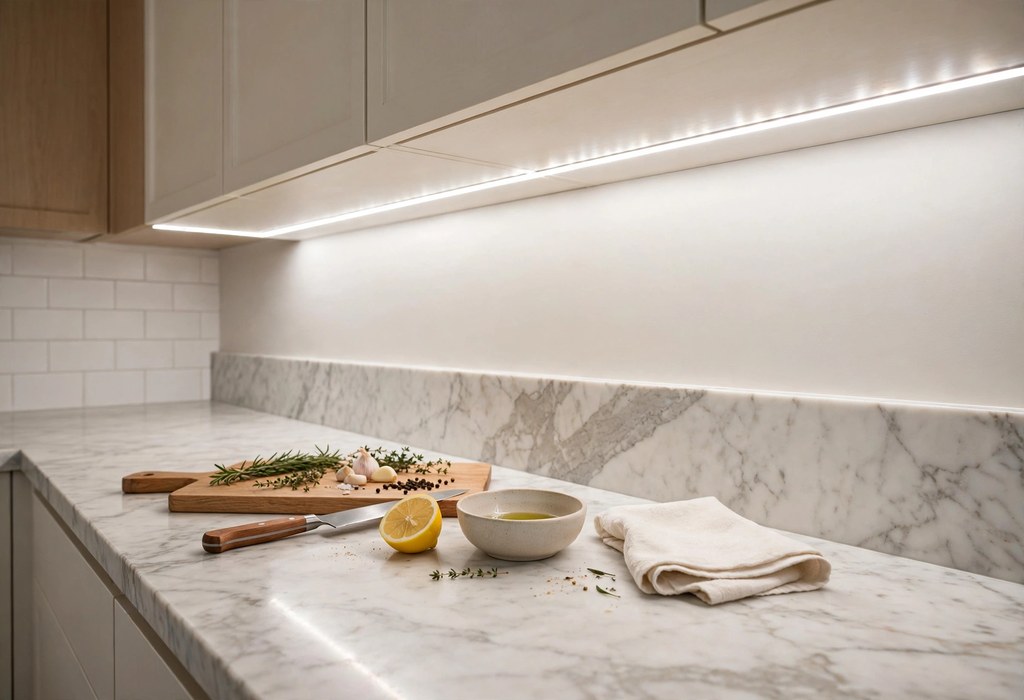
Under cabinet lighting handles most task lighting. Specifically, LED strips, puck lights, and light bars all work well here. Then choose 3500K so knife work feels safe and precise.
Narrower beam angle options focus light onto counters without spill. Also review our under cabinet kitchen lighting resource for placement and spacing tips. Meanwhile hardwired units hide drivers cleanly, while plug-in versions simplify retrofits.
Accent Lighting in Damp Locations
Accent lighting highlights glass cabinets and open shelves. Use 3000K LED strips for a soft glow. Finally choose damp-rated fixtures near sinks and ranges.
Keep One Temperature Throughout
Mixed temperatures make kitchens look patchy and disconnected. Instead follow the steps below to stay consistent. Then test your choices before finalizing.
- Map each zone: assign one Kelvin to ambient lighting and task lighting per zone.
- Check packaging labels: confirm the Kelvin number before you install any fixture.
- Test one bulb: view it against cabinets and countertops at night.
- Consider tunable white: adjustable fixtures shift from 2700K to 4000K on a compatible dimmer.
- Stay efficient: explore our energy efficient kitchen lighting guide for LEDs that hold CRI and Kelvin steadily.
Frequently Asked Questions
What is the best color temperature for kitchen lighting?
Generally, most kitchens look best at 3000K to 3500K, which balances warm comfort with bright task visibility.
Should all kitchen lights have the same color temperature?
Yes, keep every fixture at one Kelvin so the room looks unified rather than patchy.
Is 4000K too bright for a kitchen?
No, 4000K describes color rather than brightness, although it can feel clinical without a dimmer.
What CRI should kitchen lighting have?
Generally choose a CRI of 90 or higher so food, cabinets, and countertops show their true colors.
Can I mix 3000K and 4000K in one kitchen?
Separate them by zone instead; never mix them within one fixture, since the contrast distracts.
Conclusion
The right color temperature transforms how your kitchen works and feels. First start with 3000K to 3500K, confirm CRI 90 or higher, and match every fixture. Then test bulbs against your finishes before committing.
Ready to choose with confidence? Next review our fixture guides, compare your options, and test samples in your own kitchen.



Leave a Reply