
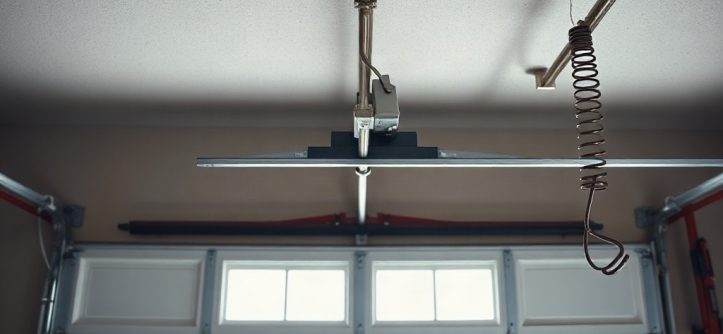
That loud bang from the garage, followed by a door that won’t budge, usually means one thing: a broken torsion spring. Homeowners often ask how long do garage door springs last, and the honest answer depends on the spring type, the door’s weight, and how often you use it.
Quick answer: Most garage door springs last about 10,000 cycles for standard torsion springs, which works out to roughly 7 to 10 years for a typical household opening the door four times a day. Cheaper extension springs often wear out sooner, closer to 5 to 7 years. Cycle count matters far more than calendar age.
This guide breaks down realistic lifespans by spring type, the habits that shorten or extend life, the mistakes that lead to early failure, and when to call a professional instead of reaching for a wrench.
What is how long do garage door springs last?
Garage door springs are the parts that make a heavy door feel light. They store energy as the door closes and release it as the door opens, so your opener only has to lift a fraction of the door’s actual weight. A double-car door can weigh 150 to 250 pounds, and the springs carry most of that load.
Because springs work by flexing, their life is measured in cycles, not years. One cycle equals one full open and one full close. Manufacturers rate springs by expected cycles, and that rating is the number you should care about most.
That’s also why two identical springs on the same street can die years apart. The rating describes a laboratory expectation under ideal conditions, not a promise. Real-world life depends on how close your door’s actual weight comes to the spring’s design load, so a heavier-than-spec door quietly burns through cycles faster than the label suggests.
Torsion vs. extension springs
Most newer homes use torsion springs, mounted on a horizontal shaft above the door. Standard torsion springs are typically rated for 10,000 cycles, and higher-grade versions can reach 15,000 to 20,000 cycles. Extension springs run along the horizontal tracks on each side and usually last 5,000 to 10,000 cycles before they stretch or snap.
Turning cycles into years
The math is simple. A household that opens the door four times a day racks up about 1,460 cycles a year. At that pace, a 10,000-cycle spring lasts nearly seven years. A busy family opening the door eight times a day cuts that lifespan roughly in half.
A lightly used door in a vacation home can keep the same springs for 15 years. A heavy-use door in a busy household may need new springs in five. The calendar is a poor guide; usage is the real clock.
A few other factors shift the number. Heavier doors, poor lubrication, and unbalanced doors all add stress per cycle. Cold climates can make steel more brittle, while a well-tuned door spreads wear more evenly. The takeaway: treat 10,000 cycles as a baseline, then adjust for your door’s weight and daily traffic.
Why how long do garage door springs last matters

Knowing the expected lifespan helps you plan and budget instead of reacting to a breakdown. A broken spring can leave your car trapped, strand you at the worst moment, and turn a routine repair into an emergency call with weekend pricing. Anticipating the replacement window lets you schedule service on your terms.
Replacement timing also affects resale and inspection. A buyer’s inspector will flag tired springs, and a door that won’t stay open or reverses oddly raises questions about the whole system. Documenting a recent spring replacement, with the cycle rating noted, turns a potential negotiation point into evidence of good maintenance.
There’s a practical scheduling angle too. Spring replacement is predictable work a technician can bundle with annual tune-ups, roller swaps, and opener checks. Handling it all in one visit usually costs less than three separate calls, and it keeps the door running smoothly between replacements.
For rental property owners, tracking spring cycles per unit prevents the pattern where one tenant’s heavy use triggers repeated emergency calls. A simple log of install dates and cycle ratings tells you which doors are due, so you replace on a planned basis rather than after a tenant is locked in.
Safety comes first
Springs hold enormous tension. A torsion spring under load can cause serious injury if it releases unexpectedly, and extension springs without safety cables can fly across the garage when they fail. Worn or fatigued springs are a genuine hazard, not just an inconvenience. Recognizing when they’re near the end of their life is a safety issue as much as a money one.
Protecting the opener and door
A failing spring forces your garage door opener to lift weight it wasn’t designed to carry. That extra strain wears out gears and motors, and it can bend door panels or twist tracks. Replacing a spring on schedule is far cheaper than replacing an opener that died from overwork.
Cost and peace of mind
A single torsion spring replacement typically costs far less than a full opener replacement, and many homeowners replace both springs at once so they fail together rather than weeks apart. Planning for that expense every several years beats an unplanned hit. The takeaway: treat spring lifespan as maintenance you schedule, not a surprise you absorb.
Best practices
You can’t make a spring last forever, but you can get every cycle it was rated for. Most of these habits cost nothing and take a few minutes a year.
Keep the door’s hardware tight. Vibration from daily use loosens the bolts on hinges, roller brackets, and the track, and a rattling door works its springs harder. A quick pass with a socket wrench once a year catches loose fasteners before they let the door shift out of alignment.
Mind the weather. In freezing climates, springs are more brittle and more likely to snap on the first cold morning of the season. A pre-winter lubrication and balance check gives you a chance to catch fatigue before the coldest weeks, when service calls are slowest and most expensive.
Finally, keep a simple record. Note the install date, the spring’s cycle rating, and roughly how many times a day the door opens. That log turns guesswork into a firm replacement date, so you can book service in a slow season instead of waiting for the bang.
Lubricate the right parts
Apply a garage-door lubricant to the springs, hinges, rollers, and track pivot points once or twice a year. Avoid heavy grease that attracts dirt. A light coat reduces friction and helps the coils slide against each other instead of grinding.
Balance the door and test it
Disconnect the opener and lift the door halfway by hand. A balanced door should stay put. If it slams down or drifts up, the springs are carrying the wrong tension, and that imbalance accelerates wear. Have a technician adjust the tension rather than guessing.
Watch for warning signs
Listen and look. A stretched extension spring, a gap in a torsion coil, or a door that feels suddenly heavy are early warnings. Address them before a full break leaves you stuck.
| Spring Type | Typical Cycle Rating | Rough Years at 4 Uses/Day |
|---|---|---|
| Standard torsion | 10,000 | 7–10 |
| High-cycle torsion | 15,000–20,000 | 10–15+ |
| Extension | 5,000–10,000 | 4–7 |
High-cycle springs show why asking for a high-cycle spring during replacement can be worth the small added cost for busy households. The takeaway: match the spring rating to your actual usage, then maintain it.
Adjusting or replacing springs involves stored energy that can injure or kill. Lubricate and inspect on your own, but let a trained technician handle any tension adjustment or replacement.
Common mistakes to avoid
Small errors lead to premature failure more often than manufacturing defects do. Avoid these traps and your springs will reach their rated cycles.
Painting over a spring is a quiet but common error. Paint seals the gaps between coils, so the spring can no longer flex evenly and instead binds against itself with every cycle. If you’re repainting the door or the ceiling, mask the springs or wipe them clean before the paint cures.
Overtightening mounting hardware is another trap. Bolts that hold the spring anchor plate and center bearing should be snug, not cranked down until the plate distorts. A warped anchor plate throws the shaft out of line, which side-loads the spring and concentrates stress on a few coils.
Finally, don’t silence a squeak with the wrong product. Spraying WD-40 or silicone on a torsion spring strips away the heavier lubricant it needs and leaves the coils dry. Use a purpose-made garage door lubricant, and if a noise persists after lubing, treat it as a symptom to diagnose rather than something to mask.
Ignoring one broken spring
Torsion systems usually have two springs. When one breaks, the other has done the same work and is near failure too. Replacing only the broken one means you’ll likely pay for a second service call soon after. Replace both together.
Using the wrong spring
Springs are matched to door weight, height, and track type. Installing an undersized or mismatched spring overloads it and shortens its life. Buy the correct size, or let a technician match it for you.
Skipping lubrication and maintenance
A dry, grinding spring wears faster than a lubricated one. Neglecting annual checks lets small problems—loose hardware, worn rollers, an unbalanced door—compound into spring failure.
A door that suddenly feels heavy may have a snapped spring, but it can also be an opener issue or a door off its track. Diagnose before assuming.
DIY replacement
This is the mistake with the highest stakes. Spring replacement requires winding bars, correct tension calculations, and real experience. A wrong move can cause serious injury. The takeaway: save money by maintaining springs yourself, but pay a professional for the replacement.
FAQ
How often should garage door springs be replaced?
Replace them when they break, or proactively around the 10,000-cycle mark. For most homes, that means roughly every 7 to 10 years. If your door sees heavy daily use, plan closer to five years.
How much does it cost to replace garage door springs?
Costs vary by region and door type, but replacing a pair of torsion springs is typically a few hundred dollars including labor. Extension springs usually cost less. Replacing both springs at once saves a second service visit.
Can I replace just one of the two springs?
You can, but it’s usually unwise. The surviving spring has absorbed the same wear and often fails soon after. Most technicians recommend replacing the pair together.
How do I know if my spring is about to break?
Watch for a gap in the coil, a door that feels unusually heavy, or a loud bang when opening. A stretched extension spring is another warning sign. Schedule service at the first clue.
Do high-cycle springs really last longer?
Yes. A 20,000-cycle spring lasts roughly twice as long as a standard 10,000-cycle one under the same use. The added cost often pays off for busy households.
Conclusion
Garage door springs wear out on a cycle clock, not a calendar, and most standard torsion springs are rated for about 10,000 cycles—roughly 7 to 10 years for a typical home. Extension springs and high-use doors run shorter. You can extend that lifespan with regular lubrication, a balanced door, and prompt attention to warning signs.
Your next step is simple: inspect your springs this week, note any gaps or sagging, and check the door’s balance by hand. Then schedule a professional inspection if anything looks worn—and when replacement time comes, ask about high-cycle springs and replace both at once. A few minutes now protects your car, your opener, and your safety.



Leave a Reply