
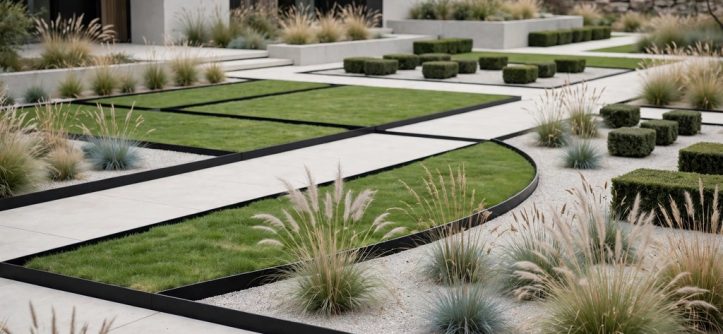
Modern metal garden edging creates clean borders through slim steel profiles, precise lines, and restrained finishes. Additionally, designers shape these borders into straight runs, gentle curves, and geometric planting beds. For example, black steel frames pale gravel, corten warms green planting, and aluminum outlines lawn edges.
Modern metal garden edging creates visual separation between lawn, gravel, and planting beds. Similarly, a slim steel line gives each garden zone a clear structure without visual bulk. As a result, paths stay legible, beds remain tidy, and planting compositions gain calm order.
Choose one finish, repeat it consistently, and let plants provide softness against hard metal lines. Therefore, restraint matters more than ornament in modern border design.
Sleek Steel Lines for Modern Metal Garden Edging
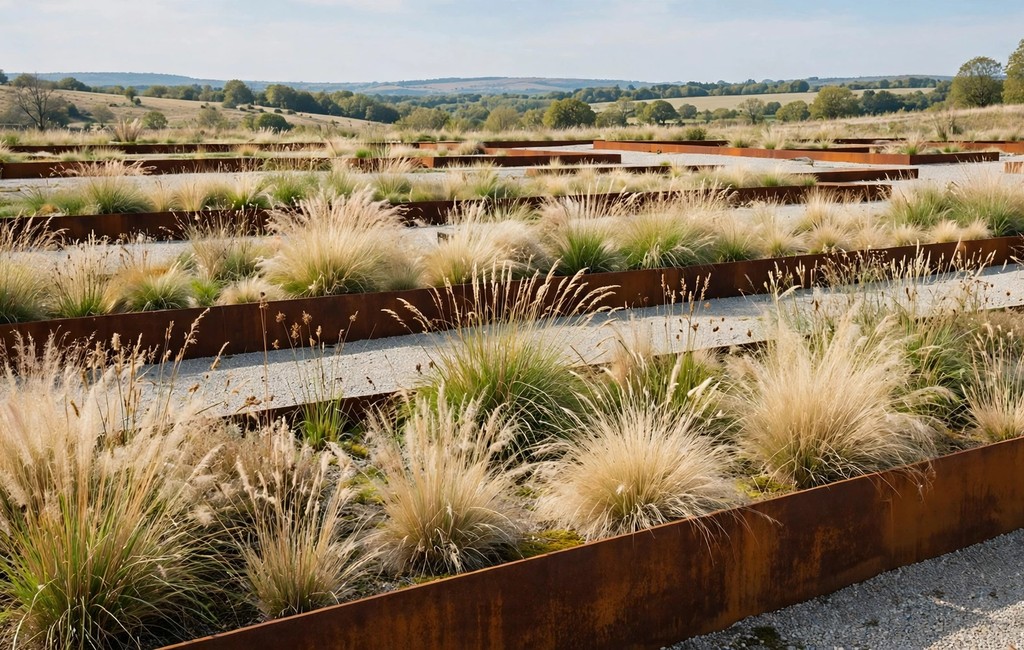
Slim steel profiles draw sharp lines across lawns, gravel courts, and contemporary planting beds. In contrast, thick timber or chunky stone borders interrupt minimalist compositions with heavy visual weight. Meanwhile, a narrow metal edge recedes from view and foregrounds foliage, flowers, and groundcover textures.
First, align steel runs with architecture, paving joints, and planting grids for deliberate geometric order. Next, hold one consistent height along straight runs so shadows fall evenly across the border line. Finally, repeat the same finish beside paths, beds, and terraces for unified modern character.
For example, black powder-coated steel outlines pale gravel paths and highlights silver foliage with quiet contrast. Additionally, galvanized steel offers a brighter metallic line beside concrete pavers and pale stone walls. Similarly, stainless steel suits sleek courtyards where reflective surfaces echo glass, water, and pale paving.
Curved Borders of Modern Metal Garden Edging
Flexible metal strips follow gentle curves around lawns, trees, and free-form planting beds. Moreover, curved borders soften rigid architecture and guide movement through garden spaces naturally. Gardeners bend thin steel by hand around sweeping arcs and join sections at smooth transition points.
For example, a wide curve around ornamental grasses creates flowing movement beside a straight terrace edge. In contrast, tight spirals around specimen trees form focal points within open lawn areas. Additionally, curved edging contains loose mulch and gravel beside winding paths without harsh corners.
Start curves with a garden hose outline, then adjust the line from several viewing angles. Next, anchor stakes firmly along the curve so soil pressure cannot shift the border line. As a result, curved borders hold their shape while planting softens their metallic presence over time.
Striking Material Contrasts
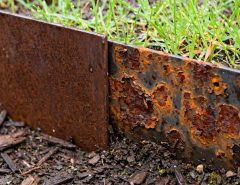
Modern gardens gain depth when cool metal meets warm timber, rough stone, and soft planting textures. For example, corten steel pairs beautifully with gravel paths, weathered timber seats, and pale concrete pavers. Similarly, black steel contrasts sharply with pale gravel, light mulch, and silver-green foliage colors.
- Corten and gravel: Warm rust tones frame pale gravel paths with natural depth.
- Black steel and lawn: Dark lines define bright green lawns with crisp architectural precision.
- Aluminum and stone: Slim silver lines separate rough stone paving from soft planting beds elegantly.
- Steel and timber: Cool metal edges balance warm timber planters beside contemporary terrace spaces.
However, limit contrasts to a few materials so each border reads clearly within the overall design. Therefore, choose one dominant metal finish and repeat complementary textures across beds and paths. Meanwhile, seasonal foliage changes refresh these contrasts without altering the permanent border structure.
Choosing a Finish for Modern Metal Garden Edging
Finish choice shapes mood, maintenance needs, and visual weight across modern garden borders. For example, black powder-coated steel suits formal layouts, minimalist courtyards, and crisp contemporary terraces. Additionally, corten steel brings warm rust tones to gardens with naturalistic planting and earthy hard landscaping.
In contrast, galvanized steel delivers a clean metallic sheen beside concrete, pale stone, and modern paving materials. Similarly, aluminum offers lightweight handling and smooth curves for intricate garden layouts and coastal conditions. However, aluminum dents more easily than steel beside driveways, play areas, and heavy foot traffic routes.
Match the finish to nearby fences, planters, lighting fixtures, and furniture for cohesive garden character. Moreover, test small samples beside lawn, gravel, and foliage before committing to a full border installation. As a result, the chosen finish harmonizes with architecture, planting palettes, and surrounding landscape materials.
Modern Metal Garden Edging Installation Principles
Careful layout determines whether metal borders look precise or uneven across garden spaces. First, mark straight runs with string lines and curved runs with hose outlines for accurate placement. Next, dig a narrow trench along the marked line and seat each strip vertically within the trench.
Secure strips with stakes at regular intervals so soil movement cannot push borders out of alignment. Additionally, overlap joints neatly and align top edges so the border line flows without visible steps. Similarly, backfill both sides firmly with soil or gravel to support strips against lawn and bed pressure.
Keep top edges slightly above soil level beside lawns for clean mowing lines and clear separation. Meanwhile, set edges flush beside gravel paths so wheels, feet, and garden tools cross smoothly. Finally, inspect borders after heavy rain and reset any shifted sections before planting spreads across edges.
Frequently Asked Questions
Does Metal Garden Edging Rust?
For example, galvanized and powder-coated steel resist rust, while corten steel forms a protective patina layer.
How Deep Should Metal Edging Sit?
Install strips deep enough to block grass roots while keeping a visible line above soil level.
Can You Bend Metal Edging Into Curves?
Yes, gardeners bend flexible steel and aluminum strips around gentle curves without special cutting tools.
Which Metal Finish Suits a Minimalist Garden Best?
Black powder-coated steel suits minimalist gardens because its dark line recedes behind planting and gravel.
How Do You Maintain Metal Garden Edging?
Additionally, clear debris regularly, check stakes seasonally, and touch up damaged coatings promptly for lasting borders.
Conclusion
Modern metal edging transforms loose garden boundaries into deliberate, elegant, and highly functional landscape compositions. Therefore, select a finish, plan clean lines, and shape borders that support planting beautifully.
Start with one bed, test your chosen finish, and expand the border system gradually. Finally, walk your garden, refine each line, and enjoy crisp modern borders throughout every season.

Leave a Reply