
To winterize lawn mower engines well, you protect them from stale fuel, moisture, and hidden corrosion in storage. First, you stabilize or drain fuel, change oil, and clean the deck thoroughly. Then, you check the filter, plug, blade, and battery before covering the mower.
Skipped prep often causes hard starting, rough running, and costly carburetor repairs later. However, a careful hour after the final mow prevents most storage problems completely. This guide follows standard small engine practice and stresses safety at every step. Additionally, you need only basic tools, fresh supplies, and your owner manual nearby.
Why Winterize Prep Protects Your Mower Engine
Stale fuel, dirty oil, and wet grass attack the engine all winter long. Moisture also reaches bare metal and forms rust inside and outside the engine. Therefore, simple prep steps stop damage before long storage gives it time.
For example, treated fuel resists gum formation inside tiny carburetor passages all winter. Clean oil also carries fewer acids and less grit against internal engine surfaces. Finally, a dry deck and sharp blade make the first spring cut easier.
Handle the Fuel Before You Winterize the Mower
Fuel causes more spring starting trouble than any other storage factor alone. Gasoline weakens during storage and leaves gum inside the carburetor and fuel lines. Also, moisture collects inside a partly empty tank and dilutes the fuel supply.
Ethanol blends attract moisture, and that moisture separates from gasoline during long storage. That water sinks, corrodes metal parts, and feeds rough running in spring later. Therefore, choose one fuel plan fully and never leave untreated fuel sitting idle.
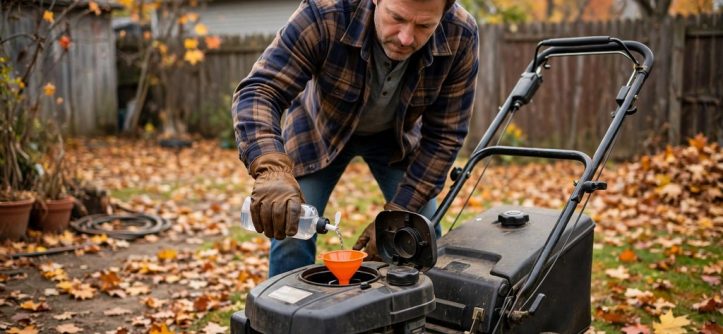
Stabilize a Full Tank of Fuel
First, fill the tank with fresh gasoline and leave little air space inside. Next, add fuel stabilizer at the label rate for your tank size exactly. Then, run the engine briefly so treated fuel reaches the carburetor fully.
A full treated tank suits many mowers during a normal winter storage period. However, manuals vary by model, so follow your manual over general advice here. Store fuel and the mower away from heaters and open flames at all times.
Drain the Fuel System Instead
Alternatively, you can drain the tank and run the carburetor dry before storage. First, work only on a cooled engine and move the mower outdoors safely. Drain fuel only into an approved container and keep fuel away from ignition sources.
Next, start the cooled engine and let it stall from fuel starvation naturally. Then, try one more start and confirm the engine stays completely silent afterward. Finally, seal the container tightly and store it away from ignition sources again. Owners who winterize lawn mower equipment carefully enjoy easier spring startups.
Refresh the Oil and Check Small Lawn Mower Parts
Fresh oil protects internal parts better than dirty oil during long storage months. Owners who follow a full lawn mower repair and maintenance routine catch small problems early. Therefore, treat the winter oil change as one part of that routine.
Change the Oil Briefly Before Storage
Warm the engine briefly, then shut it off and disconnect the plug lead. Next, change the oil before storage and refill with the grade your manual specifies. Typical small engines hold under one quart, but confirm capacity in your manual.
Check the Lawn Mower Air Filter and Spark Plug
Also, inspect the air filter and replace it when dirt blocks light through. Foam filters often accept washing and fresh oil, so check the manual first. Then, remove the spark plug and inspect its tip for heavy deposits carefully.
A tan tip usually signals healthy combustion during the past mowing season overall. However, a black, oily, or damaged plug deserves replacement before spring startup attempts. Finally, leave the plug wire disconnected while you clean and inspect below. A weekend afternoon is enough to winterize lawn mower parts before deep cold.
Clean the Lawn Mower Deck and Care for the Blade
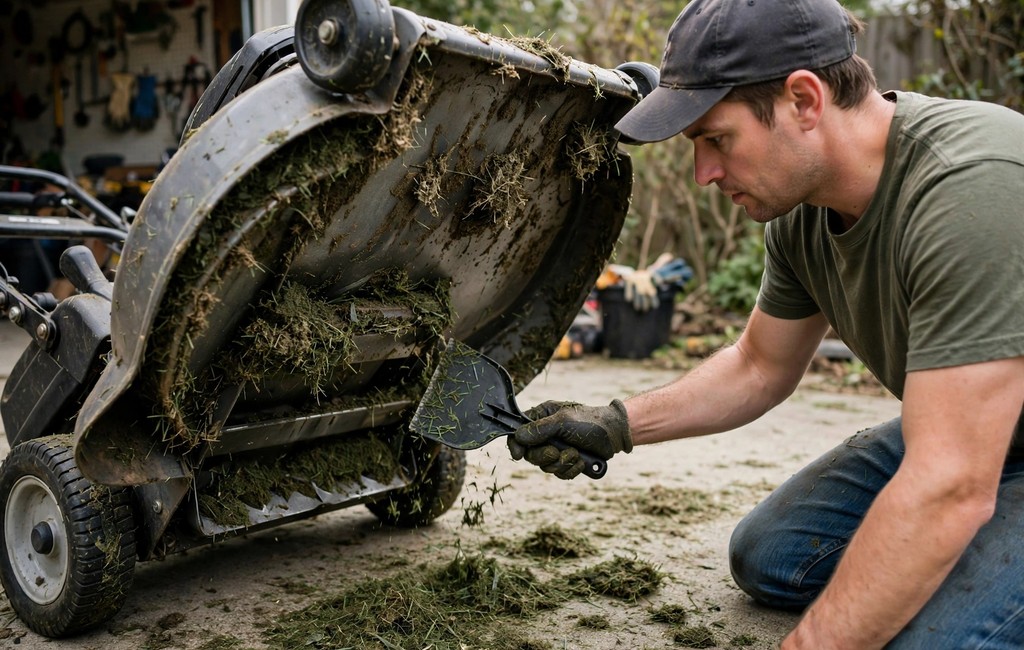
Grass buildup traps moisture against the deck and speeds rust through the winter. Before cleaning, disconnect the spark plug wire and keep it clear of the plug. Also, work only on a cooled engine before you tip the mower sideways.
Next, scrape packed grass from the underside with a plastic scraper carefully. Then, brush loose debris away and wash the deck only when your manual allows. Afterward, dry every surface fully and touch bare metal with light protective oil.
- Deck underside: Scrape every corner and clear the discharge opening completely after scraping. Then dry the metal fully before you inspect it for rust spots.
- Blade surface: Wipe the blade clean and inspect its edge for nicks and bends. Then note heavy damage and replace the blade before spring mowing begins.
- Mounting area: Clear grass from around the blade bolt and the spindle housing thoroughly. Next check the blade for looseness and tighten it to the manual specification.
Meanwhile, clean the deck top, wheels, and handle with a brush and cloth. Leaves and grass hold moisture against paint and fasteners during cold wet months. Then, fold the handle only when your model design allows folding without kinking cables.
Give the Blade Winter Attention
A dull blade tears grass and strains the engine during every spring cut. Therefore, sharpen the blade now or schedule the job before spring arrives. However, replace a bent, cracked, or badly worn blade instead of sharpening it. Shops recommend that you winterize lawn mower engines before the first freeze.
Remove the Battery and Store the Lawn Mower
Electric start models drain batteries slowly during months without regular charging cycles alone. First, remove the battery and store the battery indoors in a dry place. Then, clean the terminals and charge the battery fully before you store it.
Next, park the mower on a flat, dry surface inside a covered space. Also, cover it with a breathable cover after every part dries completely thoroughly. Finally, keep walkways clear and park the mower away from daily household traffic.
A shed or garage protects the mower from rain, snow, and direct sun exposure. However, avoid damp corners and lift the mower off bare concrete when possible. Additionally, keep the storage area ventilated and keep children away from stored fuel. When you winterize lawn mower decks and blades, spring rust repairs disappear.
Run Final Winterize Checks on the Lawn Mower
Before covering, roll the mower slowly and listen for scraping or unusual resistance. Next, check tire pressure visually and add air when a tire looks low. Also, record completed tasks and note parts you still need before spring starts.
Frequently Asked Questions
Should I drain the gas or use fuel stabilizer in my mower?
Either method works well when you follow the manual and finish the chosen method completely.
Can I leave gas in my mower over the winter?
You can leave treated fuel inside, but untreated fuel often causes hard spring starting problems.
Do I need to change mower oil before winter storage?
Yes, fresh oil protects the engine better because it carries less grit and moisture inside.
Should I remove the battery from my mower for winter?
Electric start owners should remove the battery and store it indoors in a dry place.
How do I stop my mower rusting during winter storage?
Clean and dry the deck fully, then store the mower under a breathable cover indoors.
Conclusion
Winterizing takes little time, and it protects the engine through every cold month. First, finish the fuel plan, oil change, cleaning, and battery steps in order. Then, store the mower dry, covered, and away from heat sources all winter.
Start your winterizing checklist today and give your mower a clean, protected storage spot. Next, mark your calendar for a spring inspection before the first mow arrives. Finally, open your manual tonight and begin the first fuel step with confidence. Finally, winterize lawn mower batteries by storing them indoors off the floor.


Leave a Reply