
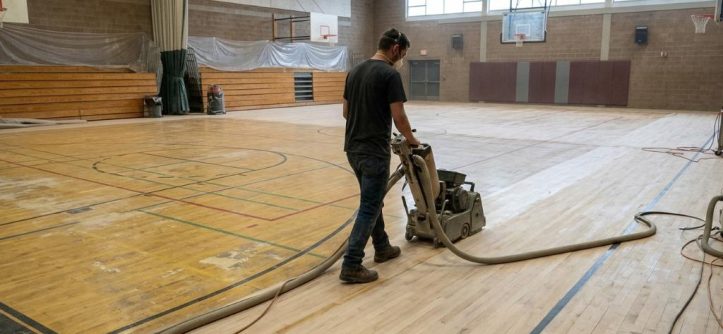
You can usually tell when a gym floor is tired before anyone says a word. The shine is gone, players slide in the wrong places, a faded logo stares up from center court, and the janitor’s mop leaves streaks that never quite disappear. The tricky part is knowing whether that is normal wear or a signal that it is time to resurface. Wait too long and a simple recoat becomes a full sanding. Act too soon and you spend money you did not need to spend.
This guide helps you read the signs, understand your options, and plan gym floor resurfacing with minimal disruption.
What Does Gym Floor Resurfacing Mean?
Resurfacing is a broad term for restoring the top layer of a wood athletic floor. In practice it covers two main services:
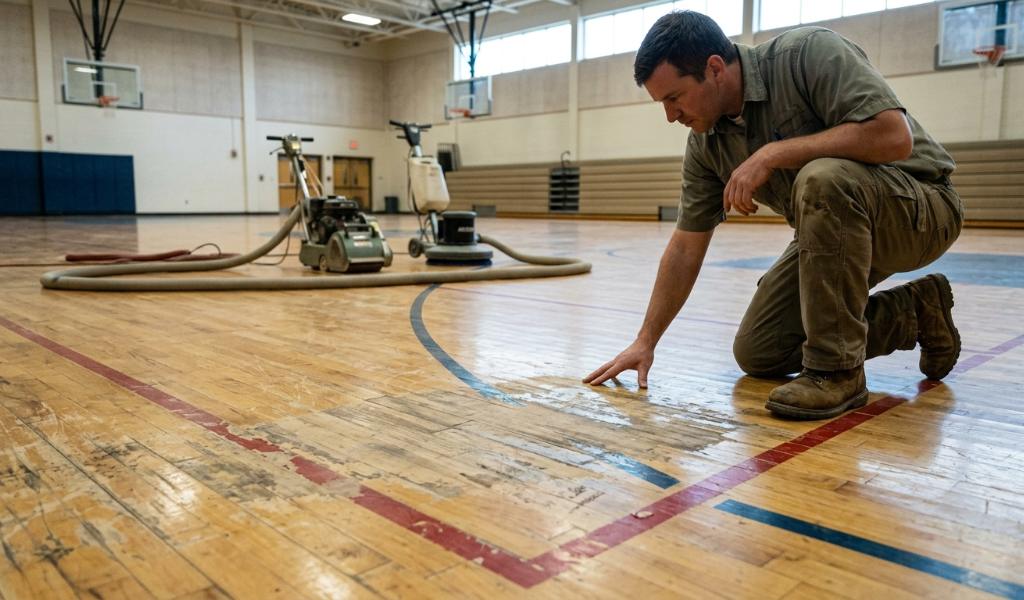
Screen and recoat (maintenance recoat). The existing finish is lightly abraded with a buffer and screen, the dust is removed, and one or more fresh coats of finish are applied. The wood itself is not sanded, so the process is quick and economical. This is the preventive option.
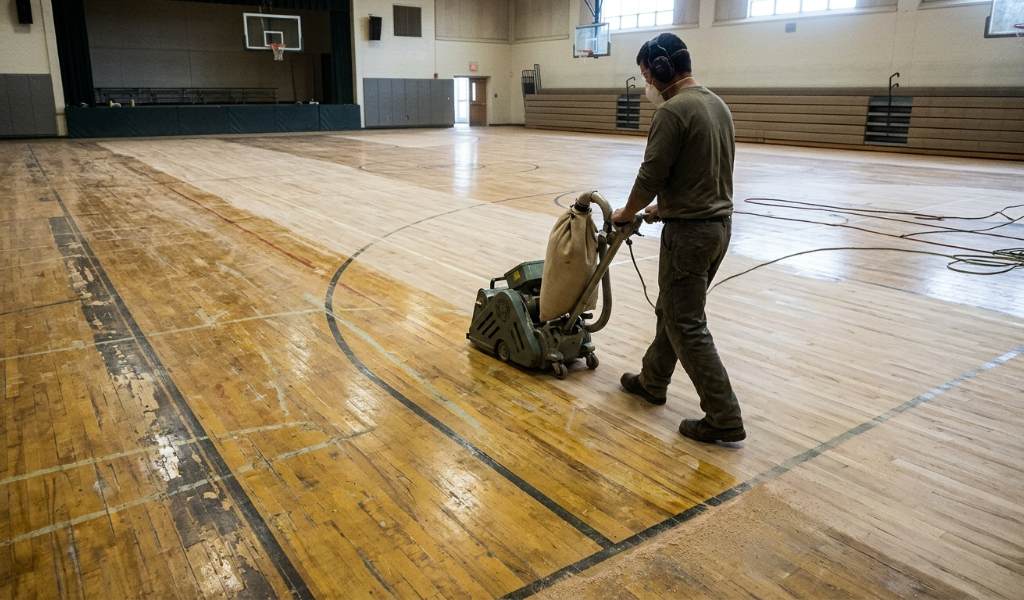
Sand and refinish (full resurfacing). The finish and a thin layer of wood are sanded off, the floor is cleaned, new court lines and graphics are painted, and several coats of finish are applied. This resets the floor to a like-new surface.
Many people use “resurfacing,” “refinishing” and “restoration” interchangeably, so always ask a contractor to spell out exactly which steps are included in a quote.
Seven Signs It Is Time to Resurface
- The finish looks dull, cloudy or uneven. Foot traffic gradually wears the protective coating. When shine disappears in high-traffic lanes such as the free-throw lane, baselines and center court, the finish is thinning.
- You see bare or gray wood. Once wear reaches the wood, moisture, dirt and oils can penetrate. That calls for prompt action, since the longer a floor stays unprotected, the more likely a full sanding becomes necessary.
- Players are slipping or sticking. Traction changes as finishes wear, accumulate residue or get contaminated by cleaners. Inconsistent grip is a performance and safety concern.
- Court lines and logos are faded or peeling. Lines are painted beneath the finish. When they lose crispness, or when your school colors or layout need an update, a sand and refinish is the way to reset them.
- The floor has deep scratches, gouges or stains. Surface scuffs can be buffed out, but deeper damage may need sanding.
- Cleaning no longer restores the look. If mopping leaves haze or the surface stays dull even when clean, the finish may be breaking down.
- It has been a long time since the last recoat. Even if the floor looks acceptable, a regular recoat schedule extends the life of the floor and delays the need for sanding. Ask your installer or finish manufacturer for a recommended interval based on traffic.
Screen and Recoat or Full Resurfacing? A Decision Guide
| Situation | Likely Service |
| Finish dull, wood still sealed, lines in good shape | Screen and recoat |
| Finish worn through in spots, lines still acceptable | Spot repair plus screen and recoat, or sand depending on severity |
| Bare wood, peeling finish or heavy staining | Full sand and refinish |
| Lines faded or need redesigning | Full sand and refinish |
| Floor has structural issues or moisture damage | Inspection first, since repair or replacement may be needed |
The principle is simple: if the finish is intact, protect it with a recoat. If the finish is gone or you want new lines, sand.
What Happens During Resurfacing
A typical full resurfacing project follows these steps:
- Inspection and planning. The contractor assesses wood condition, moisture, board thickness and any damage.
- Loose or damaged boards are fixed.
- Large sanders and edgers remove the old finish. Dust containment systems keep the process cleaner.
- The floor is vacuumed and tack-cleaned to remove fine dust.
- A sealer coat prepares the wood for finish and lines.
- Court lines and logos. Layouts are measured, taped and painted with care.
- Finish coats. Several coats of finish are applied with proper drying time between them.
- The floor rests while the finish hardens.
A screen and recoat skips the sanding and sealer steps, so it is considerably faster.
Timing: The Best Time to Resurface
Most schools and recreation centers schedule projects during summer break, between seasons or over long holidays. Booking early matters because skilled crews fill their calendars well ahead of peak periods. Build in time for curing, since using a floor too soon can mar the finish, and confirm the contractor’s guidance on when light use and full use can resume.
If you host tournaments or events, work backward from your key dates and leave a cushion in case weather or humidity affects drying times.
Protecting Your Investment Between Resurfacings
Good habits stretch the time between major projects.
- Dust mop daily with a clean, treated or microfiber mop to remove grit that acts like sandpaper underfoot.
- Clean with manufacturer-approved products. Harsh cleaners or too much water damage finish and wood.
- Control humidity. Wood moves with moisture, so stable indoor conditions protect against cupping and gapping.
- Enforce footwear rules. Clean, non-marking athletic shoes only. Keep street shoes, cleats and dirty soles off.
- Protect against equipment damage. Use covers, wide-wheel carts and floor protection for events, bleachers and staging.
- Clean up spills right away.
- Schedule routine recoats before the finish wears through.
Common Mistakes to Avoid
- Waiting until bare wood shows before acting
- Using household floor cleaners, oil soaps or waxes that leave residue and ruin traction
- Ignoring moisture problems and expecting a new finish to fix them
- Choosing a contractor on price alone without comparing scope, products and warranty
- Reopening the floor before the finish has cured
- Skipping inspections of the subfloor and board thickness before a major project
How to Choose a Contractor
Look for experience with athletic floors specifically, since gym work differs from residential refinishing. Ask for references from similar facilities, a written scope that lists the number of coats and the products used, how dust will be controlled, how lines will be laid out and what warranty is offered. A reputable contractor will welcome questions and explain their process clearly.
Frequently Asked Questions
How often should a gym floor be resurfaced?
It varies with use. Many facilities do a screen and recoat on a regular cycle and full sanding only when the finish is worn through or lines need replacing. Ask your installer for a schedule that fits your traffic.
How long does gym floor resurfacing take?
A screen and recoat is quick, often a matter of days including drying. A full sand and refinish takes longer because of sanding, line painting and multiple coats plus curing. Your contractor can give a timeline for your floor size.
What is the difference between resurfacing and replacing?
Resurfacing restores the finish and top layer of wood. Replacement removes the floor entirely, usually due to structural failure, severe moisture damage or a worn-out wood layer.
Can I change my court lines during resurfacing?
Yes. A full sand and refinish removes the old lines and lets you redesign layouts, add sports such as pickleball or volleyball and refresh logos and colors.
Will resurfacing make the floor less slippery?
A clean, fresh finish usually restores consistent traction, but the results depend on the products used and on how the floor is maintained afterward.
Is resurfacing worth it?
For most floors in decent structural shape, yes. Restoring a worn floor costs far less than replacing it, and regular recoats keep small problems from becoming expensive ones.
Give Your Gym the Floor It Deserves
Don’t wait for the first complaint from a coach or a player. Schedule a professional floor evaluation this season, ask for a quote covering both a screen and recoat and a full sand and refinish, and pick the approach that matches your floor’s condition and your calendar. Your athletes, your visitors and your budget will all thank you.




Leave a Reply