
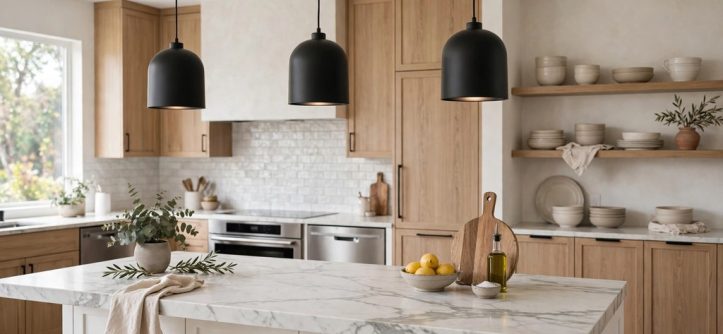
Match kitchen fixtures by repeating your cabinet hardware and faucet finishes in the metalwork. Choose shapes that echo your cabinetry, then layer ambient, task, and accent lighting for function. This simple framework keeps every style, from farmhouse to modern, looking intentional and cohesive.
This guide covers six kitchen lighting styles and shows how fixture finishes, shapes, and materials complement cabinets. First, learn three simple matching rules, then see the fixtures, finishes, and bulbs each style needs. Finally, a short technical section covers color temperature, brightness, and controls. By the end, you can plan lighting that fits your style without guesswork.
Style-Matching Basics
Every cohesive kitchen follows the same three rules before style ever enters the picture. Therefore, start with these fundamentals and apply them to whichever style you choose. These rules work with pendant lights, recessed lighting, and under cabinet lighting alike.
- Repeat one metal: echo the faucet or cabinet pulls in your fixture finish for instant cohesion.
- Mirror the lines: pair sleek slab cabinets with angular fixtures, and detailed cabinets with curved ones.
- Vary the forms: combine two or three fixture types in one finish family instead of a matching set.
Modern and Minimalist Kitchens
Modern kitchens favor clean geometry, flat-front cabinets, and restrained color palettes. Consequently, choose pendant lights with slim profiles, matte black frames, or brushed brass accents. Glass globes and thin cylinders keep sightlines open across a kitchen island.
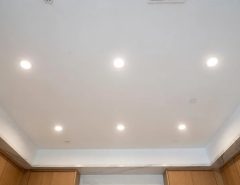
Use recessed lighting with a narrow beam angle for general illumination without visual clutter. Additionally, pick IC-rated housings when fixtures sit against insulation in the ceiling. A flush mount fixture suits low ceilings while keeping the modern look intact.
Fixtures for Modern Minimalism
- Pendant lights: single glass globes or thin cylinders hung over the island.
- Recessed lighting: small apertures with a tight beam angle for clean, unbroken ceilings.
- Under cabinet lighting: hardwired LED strips or slim light bars for seamless task light.
Farmhouse Kitchens
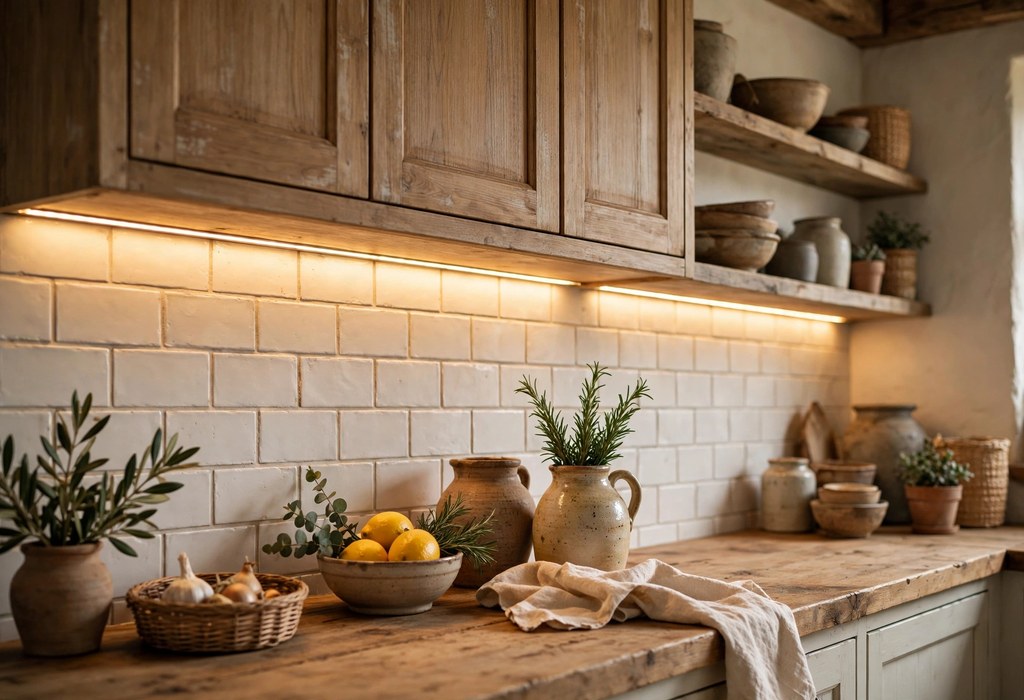
Farmhouse kitchens pair painted cabinetry, apron sinks, and natural wood with warm, inviting light. Therefore, lantern-style pendant lights in matte black or aged bronze feel right at home. Add cage fixtures, bead details, or milk-glass shades for extra vintage charm.
Mix wood and metal finishes rather than matching every fixture exactly. For example, pair black iron pendants with brushed brass cabinet knobs. Warm puck lights under the cabinets add practical task lighting without breaking the rustic mood.
Industrial Kitchens
Industrial kitchens celebrate raw materials like blackened steel, exposed brick, and reclaimed wood. Thus, pendant lights with metal shades, cage guards, or visible bulbs match perfectly. Keep the palette dark and the forms bold for maximum visual impact.
Space the fixtures evenly so every seat and work zone gets usable light. Follow this pendant lights over kitchen island guide for ideal spacing and balanced task lighting. Also, choose damp-rated fixtures near sinks and ranges where steam collects. Every heavy shade needs a properly supported junction box, so verify ceiling capacity first.
Traditional Kitchens
Traditional kitchens feature detailed millwork, crown molding, and classic hardware in warm metals. Accordingly, chandeliers, candelabra pendants, and seeded-glass fixtures suit them beautifully. Polished nickel, antique brass, and oil-rubbed bronze are the natural finish choices.
In rooms with lower ceilings, a semi-flush mount chandelier keeps elegance without crowding headroom. Furthermore, add small sconces as accent lighting over open shelves or artwork. Warm color temperature bulbs tie the classic palette together beautifully.
Transitional Kitchens
Transitional kitchens blend traditional warmth with modern simplicity, so balance matters most. Therefore, mix one classic element with one contemporary detail in each fixture. A brushed-nickel pendant with a clean drum shade, for instance, bridges both worlds.
Keep hardware and fixture finishes within the same metal family for calm cohesion. Additionally, put a dimmer on every circuit to shift from bright prep to soft evening light. Layer recessed lighting for ambient fill plus under cabinet lighting for focused tasks.
The Technical Layer: Brightness, Color, and Control
Good style matching fails without the right light quality underneath it. Specifically, measure color temperature in Kelvin: 2700K feels warm, while 3500K to 4000K looks crisp. Review this kitchen lighting color temperature primer before choosing bulbs for each zone. Choose a CRI of 90 or higher so food and finishes render accurately.
Plan lumens by zone, with brighter task lighting at counters and softer ambient light overhead. Then install a dimmer on each circuit to adjust every layer independently. Plug-in LED strips suit renters, while hardwired light bars work best for permanent installs.
Common Style-Matching Mistakes
- Matching everything exactly: one finish family with varied forms looks curated rather than catalog-bought.
- Ignoring scale: oversized pendants crowd small islands, while tiny fixtures vanish over large ones.
- Skipping layers: ambient light alone leaves counters dark, so add task and accent layers too.
- Forgetting controls: without a dimmer, even perfect fixtures cannot shift from prep to dinner.
Frequently Asked Questions
What type of light fixture is best for a kitchen?
Layered pendant lights, recessed lighting, and under cabinet lighting together cover ambient, task, and accent needs.
What color temperature is best for kitchen lighting?
Choose 2700K to 3000K for warm kitchens, and 3500K to 4000K where bright task visibility matters most.
Can you mix metal finishes in kitchen lighting?
Yes, mixing two complementary finishes like matte black and brushed brass adds depth while staying cohesive.
How do I match pendant lights to cabinet hardware?
Repeat the hardware finish in the pendant metalwork, echo its lines, and vary the fixture shape.
Should all kitchen light fixtures be the same style?
No, coordinating finishes across different fixture types looks more designed than buying one matching collection.
Conclusion
Matching fixtures to your kitchen style comes down to repeating finishes, echoing shapes, and layering light types. Once you apply these rules, every choice feels deliberate instead of random. Start with one zone, such as the island, and build your plan outward.
Ready to choose actual fixtures, controls, and layouts for your kitchen? Explore this kitchen light fixtures guide next and turn your style plan into reality.

Leave a Reply