


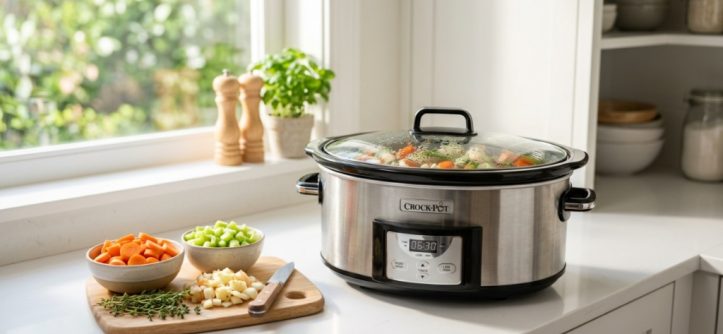
You finally decided to take control of your kitchen time and energy bills. You want a set-it-and-forget-it appliance that doesn’t spike your electricity costs. However, every model you look at seems to promise low wattage but delivers mediocre cooking. The truth is, not all slow cookers are created equal when it comes to energy use. A true energy efficient slow cooker does more than just draw fewer watts—it retains heat, cooks evenly, and fits seamlessly into your daily routine without wasting power or food.
What Exactly Makes a Slow Cooker Energy Efficient?
An energy efficient slow cooker minimizes electricity consumption by using advanced insulation, precise temperature regulation, and a well-sealed lid. Unlike a standard oven which heats a large cavity, a slow cooker directly heats a concentrated ceramic or metal pot, losing very little heat to the surrounding air.
The most efficient models draw between 70 and 200 watts on low, compared to an electric oven which can pull 2,000 to 5,000 watts. In an average four-hour cooking cycle, a low-wattage slow cooker uses roughly 0.4 to 0.8 kilowatt-hours (kWh). That translates to pennies per meal rather than dollars.
Key Features That Define Efficiency
- Thick ceramic crock: Retains heat longer, reducing the need for the heating element to cycle on frequently.
- Tight-fitting gasket lid: Prevents steam escape, which means the cooker doesn’t have to work harder to maintain temperature.
- Programmable timers and auto-shutoff: Prevent unnecessary running beyond cooking time.
- Induction base (in select models): Heats the pot directly rather than the air around it, improving thermal transfer.
Why Should You Care About Wattage Ratings?
Wattage is the single most important numerical factor when evaluating energy consumption. A slow cooker rated at 240 watts uses roughly 25% more electricity than one rated at 180 watts, assuming identical cooking times. Lower wattage generally means higher efficiency, but only if the model cooks food thoroughly.
For daily use, look for a unit with a wattage between 150 and 250 watts for a standard 4-to-6-quart size. Larger models for big families may draw up to 300 watts, but they also often take longer to heat, offsetting some efficiency gains. Always check the ENERGY STAR rating if available, though most slow cookers are naturally efficient enough to skip formal certification.
How Does Size Affect Energy Consumption for Daily Use?
Size matters more than you think. A 7-quart slow cooker that is only half full requires more energy per serving than a 4-quart cooker that is three-quarters full. The ideal approach is to match the cooker size to your typical meal batch. For one to two people daily, a 3-to-4-quart model is optimal. For a family of four, a 5-to-6-quart unit works best.
Running an oversized cooker partially filled forces the heating element to work harder to maintain temperature across empty space. That wasted thermal energy translates directly to higher electricity use. If you cook daily, the money saved by downsizing to the correct capacity can add up to $15 to $25 per year.
Which Type of Slow Cooker Is Most Efficient: Manual or Programmable?
Programmable slow cookers are generally more energy efficient than manual models because they offer precise temperature control and automatic shutoff or warm modes. A manual cooker often runs on high for the entire duration unless you physically unplug it, wasting energy during the final hours when food is already cooked.
Programmable units allow you to set a timer for low or high heat, then automatically switch to a ‘keep warm’ setting that uses 40% to 60% less power. This eliminates overcooking and unnecessary energy draw. For daily use, a programmable model with a delay start feature also helps you align cooking times with your schedule, reducing the total hours the appliance runs.
Pros and Cons of Manual vs. Programmable
| Feature | Manual Slow Cooker | Programmable Slow Cooker |
|---|---|---|
| Energy Control | Low (constant heat) | High (auto-shift to warm) |
| Daily Convenience | Moderate | High (timers, delay start) |
| Initial Cost | Lower | Higher but long-term savings |
| Risk of Overcooking | Higher | Lower (auto shutoff) |
Can an Energy Efficient Slow Cooker Really Replace Your Oven?
Yes, for many everyday meals such as stews, braised meats, soups, and even certain baked goods like molten lava cake, a modern slow cooker can completely replace your oven. An oven preheats and maintains a large volume of hot air, whereas a slow cooker only heats the food and the ceramic liner.
Consider this: cooking a pot roast for six hours in a slow cooker uses about 1.2 kWh. Cooking the same roast in an electric oven for three hours uses approximately 3.6 kWh. The slow cooker saves roughly 66% on energy for that single meal. Over a month of daily cooking, replacing just 15 oven-based meals with slow cooker meals can save enough electricity to power a refrigerator for a week.
What Features Should You Look for in a Daily-Use Model?
For daily use, prioritize durability, ease of cleaning, and consistent heat distribution. Look for a model with a removable ceramic crock that is dishwasher safe, as hand washing daily becomes tedious. A clear glass lid helps you monitor food without lifting the cover, which releases heat and wastes energy.
Another critical feature is a cool-touch exterior. Some budget models radiate significant heat through the sides, which not only wastes energy but also makes the appliance unsafe near cabinets. Models with double-wall construction or stainless steel exteriors with insulation between the walls lose far less heat. Also consider an energy efficient slow cooker that includes a multi-cook function so you can also sauté or steam directly in the same pot, eliminating the need to preheat a separate pan on the stove.
Picking the correct size ensures you aren’t wasting energy heating an empty pot. If you are also wondering how size impacts your other countertop appliances, check out our guide on How Rice Cooker Capacity Affects Cooking Results to optimize your entire kitchen setup.
How to Use Your Slow Cooker for Maximum Energy Savings?
Even the most efficient slow cooker wastes energy if used incorrectly. Follow these practical habits to minimize electricity use:
- Preheat ingredients on the stove: Browning meat or sautéing onions before adding them to the crock reduces the total cooking time needed in the slow cooker.
- Keep the lid on: Each time you lift the lid, the temperature drops by 10 to 15 degrees, forcing the heating element to work harder to recover.
- Cook on low when possible: Low heat uses slightly more time but less total energy because the heating element cycles on and off less frequently than on high.
- Fill the crock between half and three-quarters full: This optimizes thermal mass so the cooker maintains temperature efficiently.
- Use a timer to match your schedule: Avoid letting the cooker run on warm for hours if you are not ready to eat immediately.
Is ‘Keep Warm’ Mode Energy Efficient for Daily Use?
The keep warm setting on most slow cookers uses significantly less power than the low or high cooking settings. Typically, a slow cooker in warm mode draws only 40 to 80 watts. That means you can safely leave food for an extra hour or two without a major energy penalty.
However, leaving it on warm for four or more hours will consume roughly 0.3 to 0.5 kWh extra per session. If you do this daily, that adds up to about $10 to $15 per year on your electricity bill. The smarter daily strategy is to cook the food until it’s done, then unplug and transfer leftovers to the refrigerator. Use keep warm only for the period when you are actively serving dinner.

Which Materials Provide the Best Heat Retention?
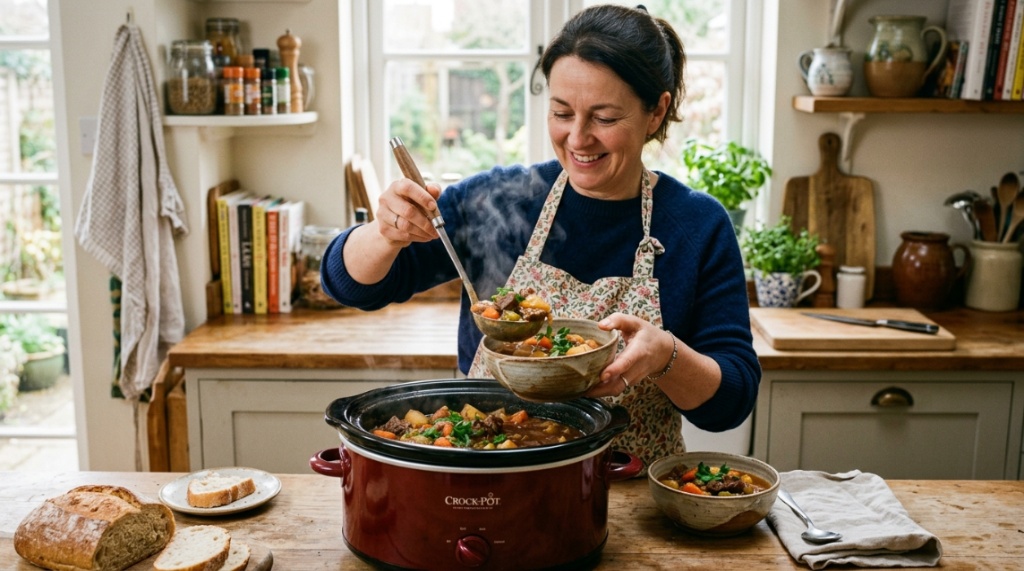
Ceramic and stoneware are the gold standards for heat retention in slow cookers. These materials hold heat much longer than metal liners, meaning the heating element does not need to cycle on as frequently. Some lower-cost models use aluminum or thin stainless steel inserts, which cool quickly and force the appliance to consume more electricity to maintain set temperatures.
When shopping, look for a slow cooker advertising a “heavy-duty stoneware crock” or “premium ceramic insert.” These thicker walls act as thermal batteries, keeping food hot even during a brief power interruption. The trade-off is weight: a quality ceramic crock can weigh five pounds or more, but that mass directly contributes to energy efficiency over the appliance’s lifespan.
How Do Multi-Cookers Compare to Dedicated Slow Cookers in Efficiency?
Multi-cookers like modern pressure-slow cooker hybrids offer excellent efficiency because they combine multiple cooking methods in one appliance. A dedicated slow cooker is slightly more efficient for low-and-slow cooking because it has a single-purpose, highly insulated design. However, a multi-cooker can replace a rice cooker, steamer, pressure cooker, and slow cooker, reducing the number of plugged-in appliances on your countertop.
From a daily-use standpoint, a high-quality multi-cooker that includes a slow cook function is often a better investment if you have limited counter space. Just be aware that the slow cook mode on some multi-cookers runs slightly hotter than a dedicated unit because the heating element is designed for high-pressure searing. Always check user reviews specific to the slow cook performance before buying.
What Is the Real Cost Difference Over a Year?
Let’s put numbers to this. Assume you use a slow cooker for one hour of cooking daily (some meals take longer, some shorter). A 200-watt model running for one hour uses 0.2 kWh per day. At the average U.S. electricity rate of 14 cents per kWh, that is 2.8 cents per day, or about $10.22 per year.
Compare that to a standard electric oven used for one hour daily at 2,400 watts: 2.4 kWh per day, costing 33.6 cents per day, or about $122.64 per year. Switching from oven to slow cooker for just one meal per day saves you roughly $112 annually. If your slow cooker lasts five years, that is over $560 in direct energy savings, plus the convenience of hands-free cooking.
Frequently Asked Questions
Can I leave an energy efficient slow cooker on all day?
Yes, most modern slow cookers are designed to run unattended for 8 to 12 hours. Programmable models with auto-shutoff are safest and most efficient for all-day cooking because they switch to a low-power warm mode when cooking ends.
Does a smaller slow cooker always use less electricity?
Not always. A very small 2-quart model can actually be less efficient than a 4-quart model if it uses a primitive heating element without proper insulation. Always check the wattage rating and look for thick ceramic crocks regardless of size.
Is it cheaper to use a slow cooker or an Instant Pot?
An Instant Pot used in pressure cook mode is generally faster and uses slightly less total energy than a slow cooker for the same meal, often around 0.3 to 0.5 kWh per cycle. However, slow cookers are more efficient than the Instant Pot’s slow cook function specifically.
Should I unplug my slow cooker after cooking?
Yes. Many slow cookers still draw a small standby current (0.5 to 2 watts) when plugged in but turned off. Unplugging saves a negligible amount of energy but is a good habit for overall appliance safety and longevity.
Do glass lid slow cookers waste more energy than metal lids?
Glass lids can lose a small amount of heat through the glass surface, but the difference is minimal (under 5%) compared to a metal lid. The visibility benefit of a glass lid usually outweighs the tiny efficiency loss, especially since it prevents frequent lid lifting.
Can I use a slow cooker to reheat leftovers efficiently?
Yes, but it is not the most efficient method for small portions. Reheating one cup of soup in a slow cooker uses about 0.1 kWh, while a microwave uses only 0.05 kWh. For large batches, the slow cooker is comparably efficient and heats more evenly.
What wattage is best for a daily-use slow cooker?
For most households, a wattage between 150 and 250 watts for a 4-to-6-quart model strikes the best balance between cooking performance and energy savings. Larger families may need up to 300 watts for an 8-quart model, but efficiency drops if the crock is not full.
Conclusion
Choosing the right energy-efficient slow cooker for daily use comes down to matching size to your household, prioritizing programmable controls, and selecting a well-insulated model with a thick ceramic crock. The wattage, lid seal, and timer features directly impact how much electricity you consume per meal. Even small daily habit changes—like keeping the lid closed and cooking on low—can amplify your savings. With the right appliance, you save time, reduce food waste, and cut your energy bill by over $100 annually compared to oven cooking. Ready to upgrade your kitchen routine? Start by researching models that balance affordability with efficiency, and make every meal a step toward a smarter, greener kitchen.



Leave a Reply
Cancel reply