


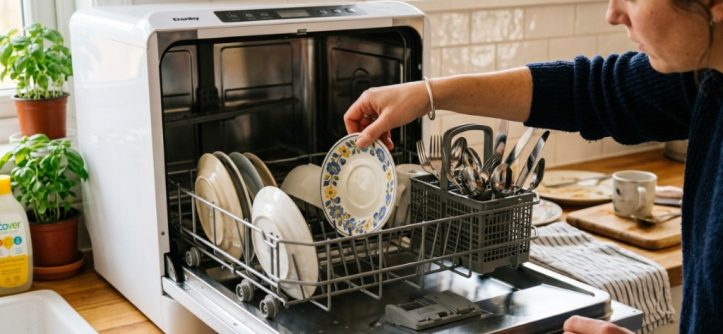
You just finished a great meal, but now you’re staring at a pile of dirty dishes. live in a small apartment, a rented room, or an RV. I don’t have a built-in dishwasher, and hand-washing feels like a waste of time. This is exactly why you are searching for countertop dishwasher reviews. You want a machine that saves time, fits on your counter, and actually gets dishes clean without breaking the bank. Comparing models can feel overwhelming because every brand claims to be the best. This guide cuts through the noise. We will walk you through every feature that matters, from washing performance to noise levels, so you can make a confident decision today.
What Is a Countertop Dishwasher and How Does It Work?
A countertop dishwasher is a compact, portable appliance that sits on your kitchen counter. It connects to your kitchen faucet using a quick-connect adapter. It washes, rinses, and dries a smaller load of dishes, typically holding enough place settings for two to four people.
How Does It Connect to Your Faucet?
Most countertop models use a diverter valve that attaches directly to your standard kitchen faucet. You simply screw the adapter on, connect the hose, and turn a lever to direct water into the machine. This eliminates the need for permanent plumbing or professional installation.
How Does the Wash Cycle Work?
Inside the unit, spinning spray arms blast hot water and detergent onto the dishes. A heating element or internal heater maintains water temperature for effective cleaning. After washing, the machine rinses and uses a fan or residual heat to dry the load.
What Size Loads Can You Expect?
Standard countertop dishwashers hold between four and six place settings. This covers dinner plates, bowls, glasses, and flatware for one or two meals. You will still need to hand-wash large pots and baking sheets.
Which Key Features Should You Compare First?
When you compare models, start with the features that directly affect your daily experience: capacity, wash cycles, noise, and drying method. These four factors determine whether the machine fits your lifestyle or becomes a frustration.
Capacity and Place Settings
Check the manufacturer’s listed place settings, but also look at internal photos. Some models claim six place settings but only fit small plates and narrow glasses. If you have large dinner plates or deep bowls, confirm the dimensions inside the tub. A unit with a taller interior gives you more flexibility.Once you have reviewed the sizing, water capacity, and installation requirements of each unit, you can easily find the Perfect Dishwasher for Your Home that fits both your space and your daily routine.
Wash Cycle Options
Basic models offer two cycles: normal and heavy. Advanced models include a quick wash (30 minutes), a rinse-only cycle, and a gentle cycle for fragile glassware. If you cook frequently, look for a heavy-duty or pots-and-pans cycle that uses higher water pressure and longer wash times.
Noise Level Ratings
Noise is measured in decibels (dB). A rating of 50 dB or lower is quiet enough for an open-concept kitchen. Ratings above 55 dB are noticeable during operation and can be distracting while watching TV or talking. Check user comments for real-world noise feedback, not just advertised numbers.
Drying Performance
Some models use a fan-forced dry, which circulates warm air inside the tub. Others rely on condensation drying, where the heat from the wash cycle evaporates moisture. Fan drying is faster but louder. Condensation drying is silent but may leave plastic items wet.
How Do You Compare Washing Performance Across Models?
Washing performance is the most critical comparison point. A dishwasher that leaves food stuck on plates is useless. To evaluate this, look at spray arm design, water temperature, and filtration systems.
Spray Arm Design Matters
Single spray arm models use less water but may miss items on the top rack. Dual spray arm models provide more coverage and better cleaning for stacked dishes. Look for models with upper and lower spray arms for consistent results.
Water Temperature and Heating Element
A built-in heating element raises water temperature to 130–150°F. This is essential for dissolving grease and sanitizing dishes. Models without a heating element rely on your home’s hot water supply, which may not reach high enough temperatures for sanitary cleaning.
Filtration Systems
Self-cleaning filters grind up food particles and flush them away. Manual filters require you to rinse out trapped debris after every cycle. Self-cleaning systems are more convenient and prevent odors, but they also add to the purchase cost. If you want low maintenance, choose a self-cleaning filter.
Which Size and Dimensions Fit Your Kitchen Counter?
Countertop dishwashers vary significantly in footprint. Measure your counter space before you buy. Standard dimensions are about 17–22 inches wide, 17–20 inches deep, and 17–19 inches tall. Some compact models fit under standard upper cabinets, while taller units may not.
How to Measure Your Space
Use a tape measure to check width, depth, and height. Account for clearance above the machine to open the door. Most models require the door to swing down fully, so leave at least 20 inches of open space in front of the unit.
Countertop Weight Limits
A full countertop dishwasher weighs between 30 and 50 pounds. Ensure your countertop is sturdy enough to support this weight long-term. For laminate or hollow-core counters, consider placing the unit on a sturdy rolling cart instead.
How Do Water and Energy Usage Compare?
Countertop dishwashers use far less water than hand-washing. A typical cycle uses 2–4 gallons of water, while hand-washing the same load can use 8–15 gallons. Energy usage depends on the heating element and drying method.
Water Consumption Per Cycle
Models with efficient spray systems and shorter cycles use less water. Look for Energy Star certified models, which are tested for water efficiency. A standard cycle on an efficient model uses around 3 gallons, while a heavy cycle may use 4.5 gallons.
Energy Costs and Drying Choices
Heating water consumes the most energy in any dishwasher. Models that heat water internally use more electricity than those that rely on your home’s hot water heater. If you want to save on utility bills, choose a model with an air-dry or eco-dry option that skips the heating element during drying.
Can Countertop Dishwashers Really Clean Dried-On Food?
Yes, but only if you choose the right model and use it correctly. Machines with high-pressure spray arms and a heavy-duty cycle can handle dried-on sauce, egg residue, and baked-on cheese. Lower-end models may struggle with tough messes and require pre-rinsing.
Pre-Rinse vs. Scrape Only
Modern countertop dishwashers are designed to handle food residue. You only need to scrape off large chunks like bones or avocado pits. Pre-rinsing wastes water and can actually reduce cleaning effectiveness because the sensors may detect less soil and choose a shorter cycle.
What About Glassware and Plastic?
Glassware generally comes out spotless if you use a rinse aid. Plastic items, especially lightweight containers, may not dry completely. Place plastics on the top rack away from the heating element to prevent warping. For better drying results, open the door slightly after the cycle ends to release steam.
Which Brands Offer the Best Reliability and Support?
Reliability varies significantly across brands. Some brands are known for durable construction and responsive customer service. Others have a reputation for frequent repairs or difficult warranty claims. Research brand reputation through verified customer feedback.
Top Brands to Consider
Danby, SPT, and COMFEE are popular in the countertop category. Danby is known for consistent performance and wide availability of replacement parts. SPT offers compact designs with quiet operation. COMFEE provides affordable models with good feature sets. Avoid unknown brands that lack a customer service presence in your region.
Warranty and Support
Look for a minimum one-year warranty on parts and labor. Some brands offer extended two-year coverage if you register the product. Check if the manufacturer provides phone support, email support, or live chat. A brand with a local service center is better than one that requires you to ship the unit for repairs.
How Much Should You Spend on a Countertop Dishwasher?
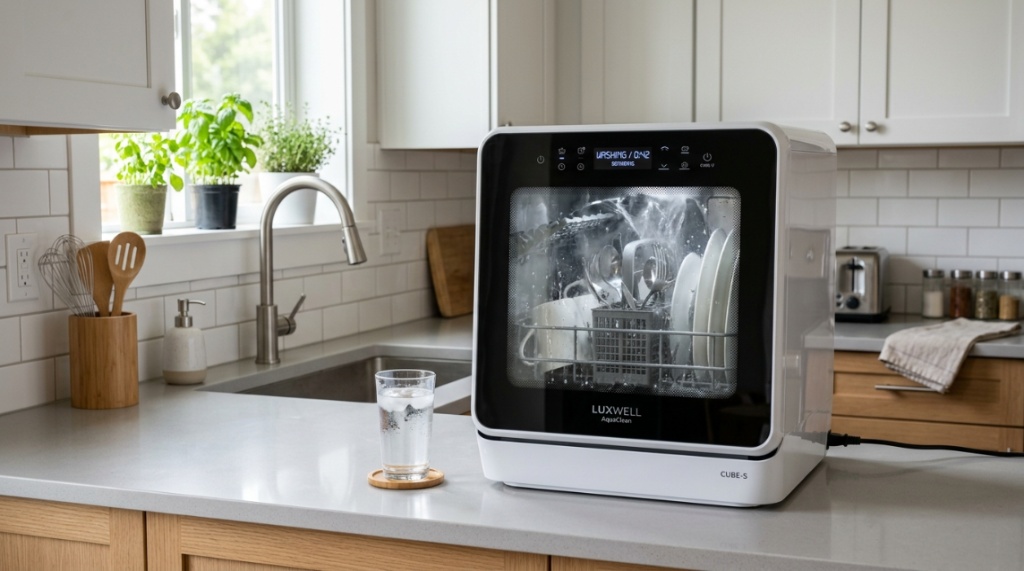

Prices range from around $200 to $600. The price correlates with build quality, feature set, and noise level. Budget models under $300 often have fewer cycles and higher noise. Mid-range models from $300 to $450 offer better performance and quieter operation. Premium models over $450 include advanced features like stainless steel tubs, extra insulation, and smart controls.
Budget Models vs. Mid-Range
Budget models work well for light use, like washing a few plates and glasses daily. Mid-range models are better for households that cook multiple meals per day and need reliable heavy-duty cleaning. The extra cost often pays off in fewer repairs and better drying results.
If you want to see a list of top-performing units in different price brackets, check out these detailed countertop dishwasher reviews that break down real-world performance across popular models.
What Installation Considerations Should You Know?
Installation is straightforward, but it requires a compatible faucet. Most modern faucets work with the included adapter, but some pull-down or pull-out spray heads may not connect properly. Check your faucet type before ordering.
Faucet Compatibility Checklist
- Standard threaded faucet (most common)
- Pull-down spray head with removable aerator (may need special adapter)
- Pull-out spray head with integrated hose (usually not compatible)
- Touchless or motion-sensor faucets (check manufacturer guidelines)
Ventilation and Clearance
Countertop dishwashers release steam from a vent on the front or side. Ensure the vent is not blocked by other appliances or cabinet doors. Some models need at least 2 inches of clearance on each side for proper airflow.
How Do You Maintain a Countertop Dishwasher for Long Life?
Regular maintenance prevents odors, clogs, and performance issues. A few simple habits can extend the life of your machine by years.
Weekly Cleaning Routine
Wipe down the door gasket with a damp cloth to remove food debris. Remove and rinse the filter if it is a manual type. Run a rinse cycle with a cup of white vinegar once a month to break down mineral deposits and grease.
Common Problems and Fixes
If the dishwasher stops draining, check the hose for kinks or clogs. If dishes come out cloudy, you likely have hard water. Use a rinse aid and consider a descaling product every three months. If the machine leaks, inspect the hose connections and the door seal for damage.
Frequently Asked Questions
Do countertop dishwashers use a lot of water?
No. Most countertop dishwashers use 2 to 4 gallons of water per cycle. That is significantly less than hand-washing, which can use up to 15 gallons for the same load.
Can you put a countertop dishwasher in a cabinet?
You can, but you need to ensure proper ventilation and clearance for the door to open fully. Check the manufacturer’s installation guide for minimum clearance requirements before enclosing the unit.
How long does a typical wash cycle take?
Standard cycles range from 60 to 90 minutes. Quick wash cycles take 30 to 45 minutes. Heavy-duty cycles can last up to 120 minutes.
Do countertop dishwashers dry dishes completely?
Most models dry dishes well, but plastic items may retain moisture. Models with a fan dry or heated dry option provide better drying results than models relying on condensation alone.
Can you use regular dish soap in a countertop dishwasher?
No. Only use dishwasher detergent, rinse aid, and cleaning tablets designed for automatic dishwashers. Regular dish soap creates excessive suds and can damage the machine.
Are countertop dishwashers noisy?
Noise levels vary by model. Look for units rated at 50 dB or lower for quiet operation. Units above 55 dB are noticeable during a cycle.
Do you need to pre-rinse dishes before loading?
No. Simply scrape off large food particles. Modern dishwashers are designed to handle food residue. Pre-rinsing wastes water and may interfere with the machine’s soil sensors.
Final Thoughts on Choosing the Right Model
Comparing countertop dishwasher models comes down to four main factors: washing performance, size, noise, and drying method. Start by measuring your counter space and checking your faucet type. Then prioritize the features that match your cooking habits. If you cook large meals daily, invest in a mid-range model with a heavy-duty cycle and dual spray arms. For light use, a budget-friendly unit will serve you well. Always read real user feedback to verify performance claims. With the right comparison approach, you will find a machine that saves you time, water, and effort for years to come.
Now measure your counter, check your faucet, and pick a model that fits your life. You deserve a clean kitchen without the hassle of hand-washing every dish.





Leave a Reply
Cancel reply