


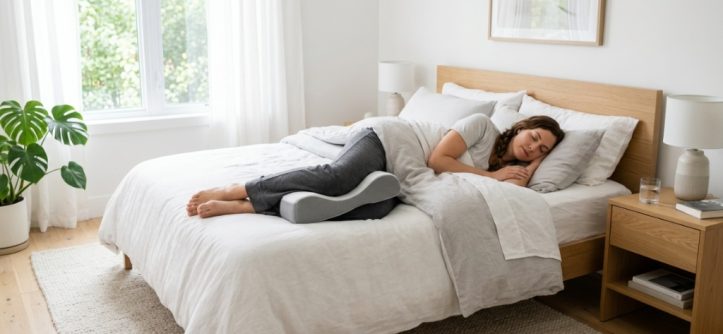
Waking up with a dull ache in your lower back or a numb hip is a frustrating way to start the day. If you sleep on your side, the culprit is often the position of your legs. Without proper support, your top leg drops, twisting your pelvis and spine out of alignment. The solution is a simple yet highly effective tool: a dedicated knee pillow. Finding the best knee pillow for side sleepers isn’t about picking the most expensive option; it’s about understanding the mechanics of your sleep posture and matching them with the right material, height, and shape. This guide breaks down everything you need to know to wake up pain-free and well-rested.
What Makes a Knee Pillow Different from a Regular Pillow?
A standard bed pillow is designed for your head, offering a large, flat surface. A knee pillow is intentionally smaller, denser, and contoured to fit specifically between your legs. This distinction is crucial for therapeutic benefit, as the goal is to maintain a neutral spine by preventing the upper leg from pulling the pelvis out of alignment.
The Core Functional Difference
Regular pillows are often too soft or too bulky for between-leg use. They either compress completely under the weight of your leg, offering zero support, or they push your legs too far apart, creating a new strain on your hip joint. Knee pillows use firmer foams, gel-infused layers, or ergonomic contours to fill the space between your knees and ankles consistently throughout the night.
How It Aligns the Spine
When you place a pillow between your legs, you immediately prevent the top knee from dropping toward the mattress. This keeps your hips square and your lumbar spine neutral. For side sleepers, this reduces pressure on the sciatic nerve and the piriformis muscle, which are common sources of pain.
Who Needs a Dedicated Knee Pillow?
While beneficial for everyone, dedicated knee pillows are essential for those with lower back pain, hip bursitis, or a history of spinal surgery. They are also a game-changer for pregnant women, as they relieve pressure on the round ligament and improve circulation to the lower extremities. If you toss and turn frequently, a specialized pillow stays in place better than a standard one.
Why Do Side Sleepers Specifically Need a Knee Pillow?
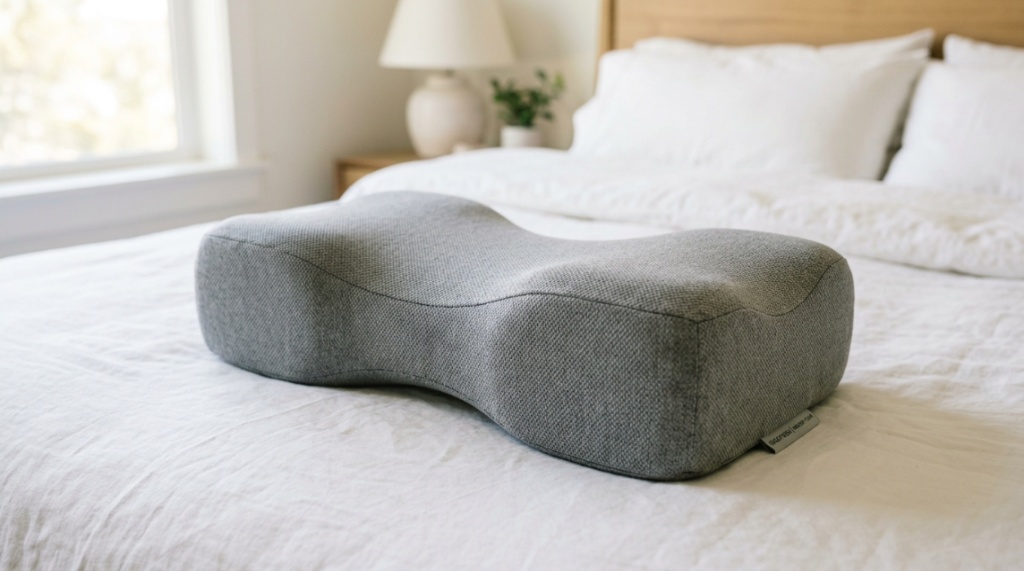

Side sleeping is often recommended by doctors as the best position for spinal alignment, but it is only optimal when your spine is in a straight line. Without a knee pillow, the gravitational pull on your top leg creates a rotational torque on your pelvis, which directly translates to stress on your lower back.
Preventing Lower Back Rotation
Think of your pelvis as a bowl of water. When your top knee drops, the “bowl” tilts. This tilt causes the vertebrae in your lumbar spine to twist. Over time, this constant twisting leads to disc degeneration and muscle strain. The pillow elevates the knee, keeping the “bowl” level and the spine elongated.
Reducing Hip Joint Pressure
Without a knee spacer, your top hip bone presses directly into the mattress, creating a pressure point. This can cause pain in the glutes and the lateral side of the hip. Placing a pillow between the knees distributes the weight of the top leg, which actually reduces the compression on the bottom hip and shoulder.
Improving Circulation and Reducing Numbness
When your legs are stacked without support, they can compress the blood vessels in the lower leg and foot. This is why many side sleepers experience leg numbness or “falling asleep” sensations at night. A knee pillow elevates the top leg slightly, taking the pressure off these vessels and promoting better blood flow throughout the night.
While side sleepers benefit greatly from placing a supportive cushion between their legs, front sleepers require an entirely different approach to keep their necks aligned. Check out our guide on the Thin Pillows for Stomach Sleepers to find the ideal low-profile option for stomach sleeping.
Which Material Is Best for a Knee Pillow?
The material dictates the pillow’s durability, coolness, and support level. Memory foam is the most popular choice due to its pressure-relieving properties, but you must consider its density. A medium-firm to firm memory foam works best to prevent the leg from sinking into the mattress.
Memory Foam vs. Gel-Infused Foam
Standard memory foam offers excellent conformity but can trap heat. Gel-infused variants are specifically designed to draw heat away from the skin, making them ideal for hot sleepers. If you are prone to sweating, opt for a gel-infused core or a pillow with a breathable mesh cover.
Cooling Gel vs. Ventilated Mesh Covers
The cover is often as important as the foam. A ventilated mesh cover increases airflow around the foam, while a cooling gel layer on the foam itself provides an active cooling sensation. For maximum comfort, look for a pillow with a removable, machine-washable cover made from cotton or bamboo, which are naturally breathable fabrics.
| Material | Pros | Cons | Best For |
|---|---|---|---|
| Memory Foam | Excellent pressure relief, contours to leg shape, reduces motion transfer | Can retain body heat, may soften over time | Those with chronic hip or back pain |
| Gel-Infused Foam | Cooler than traditional foam, retains contouring benefits | Can be slightly heavier, sometimes more expensive | Hot sleepers who need pressure relief |
| Latex | Naturally hypoallergenic, bouncy, durable, cooler than memory foam | Firmer feel, may not compress enough for some | Eco-conscious users needing firm support |
| Polyester Fiber | Soft, lightweight, cheap, easy to fluff | Lacks support, easily flattens overnight | Travel or temporary use, minimal pain relief |
How Do I Choose the Correct Height and Thickness?
The height of the pillow is determined by your leg circumference and hip width. As a general rule, the pillow should be thick enough to fill the space between your knees and ankles without tilting your pelvis or causing the top leg to feel stretched. A pillow that is too thin collapses the spine; too thick elevates it uncomfortably.
Measuring Rule of Thumb
To find your ideal height, lie on your side with your legs stacked. Have a partner measure the distance from the top of your bottom knee to the top of your top knee. The pillow height should match this distance, typically between 4 and 7 inches. If you have larger thighs, you will likely need a thicker pillow.
Adjustable Jelly-Filled Options
Many manufacturers now offer knee pillows filled with a “jelly” gel that shifts to conform to your leg shape. These are unique because they offer adjustability—you can push the gel to the sides to change the height slightly or settle it in the middle for a consistent loft. These are great if you change sleeping positions nightly.
Contoured vs. Flat Options
Contoured pillows have a dip in the middle to cradle the leg, preventing it from sliding off. Flat pillows are simpler but offer a consistent surface. For those who move a lot, a contoured design with a spine or ridge helps keep the pillow locked between your knees.
Can a Knee Pillow Relieve Sciatica and Lower Back Pain?
Yes, a knee pillow can be a powerful tool for managing sciatica, as it reduces the mechanical pressure on the sciatic nerve root in the lower lumbar spine. By maintaining a neutral pelvis, you allow the discs to rehydrate and reduce the inflammatory response.
The Relationship Between Pelvis Alignment and Nerve Pain
When the pelvis rotates, it compresses the facet joints and narrows the spaces where nerve roots exit the spinal column. This compression exacerbates sciatic pain, which travels down the back of the leg. A knee pillow stops the rotation at the source, preventing the irritation before it starts.
Complementing Your Mattress Support
It is essential to understand that a knee pillow is not a substitute for a good mattress. if your mattress is sagging in the middle, no pillow will fix the spine alignment. the pillow works in tandem with a firm, supportive mattress to keep your hips level. If your mattress is older than 8 years, consider replacing it first.
Consistency is Key
You won’t see a dramatic change overnight. It takes time for inflamed tissues to heal. Use the pillow every single night for at least two weeks to allow your body to adapt. Most users report reduced morning stiffness within 3–5 days, but the long-term benefits require consistency.
When Is the Best Time to Utilize a Knee Pillow?
The best time to use a knee pillow is every night, consistently, for the entire duration of your sleep. Intermittent use can disrupt the muscle memory your body is trying to develop. If you wake up mid-sleep and find the pillow has fallen away, put it back—this reinforces the correct posture.
During Pregnancy
For pregnant women, the best time is immediately upon getting into bed, as soon as the second trimester begins. As the belly grows, the pelvic tilt becomes more pronounced. Using the pillow early helps prevent the development of pregnancy-related pelvic girdle pain.
Post-Surgery and Recovery
If you are recovering from hip replacement, spinal fusion, or knee surgery, use the pillow whenever you are lying down, even for daytime naps. This prevents accidental twisting during rest periods, which could damage the surgical site.
Transitioning Sleep Positions
If you are trying to train yourself to be a side sleeper from a back sleeper, the knee pillow becomes a comforting anchor. It provides a physical boundary that stops you from rolling onto your back fully, making the transition easier and more comfortable.
Which Knee Pillow Shape Should I Buy?
There are primarily two shape categories: rectangular and contoured (often shaped like a butterfly or a triangle). The shape you choose affects how the pillow interacts with your legs during movement. Rectangular pillows are versatile, while contoured pillows are designed to stay put.
Butterfly Contour Design
The butterfly shape has a raised center that rests between the knees and sloping wings that wrap around the front and back of your thighs. This unique shape severely reduces the chance of the pillow sliding out of place during the night, making it ideal for restless sleepers.
Rectangular Cushion Design
A rectangle is the classic design. It offers a large surface area, allowing you to support your entire lower leg from knee to ankle. This is excellent for those who experience ankle pain in addition to knee pain, as it prevents the ankles from pressing together.
Straps and Attachments
Some designs come with a strap that wraps around your thigh to secure the pillow in place. While this guarantees it stays, some users find the strap restrictive or irritating. If you are a very active sleeper, look for a strap made of soft elastic that doesn’t cut off circulation.
To see specific products that excel in these categories, you can review this list of the best knee pillow for side sleepers to compare budget-friendly options.
How to Care for and Maintain Your Knee Pillow
Proper maintenance extends the life of your pillow and ensures hygiene. Always check the care tag. Most memory foam pillows cannot be washed in a machine, as water destroys the foam’s structural integrity. Only wash the cover.
Daily Maintenance Vents
If your pillow has a solid foam core, let it air out for a few hours each morning. This allows trapped moisture from night sweats to evaporate, reducing the build-up of dust mites. If your pillow has a mesh cover, this airflow is already improved.
Washing Instructions
Remove the cover and wash it on a gentle cycle with cold water. Air dry the cover to prevent shrinkage. For the foam itself, spot clean with a damp cloth and a mild detergent solution, then allow it to air dry completely before replacing the cover.
When to Replace Your Pillow
Most knee pillows last between 12 and 18 months. If you notice the foam no longer bounces back after compression, or if it has started to crumble or flake, it is time to replace it. A flattened pillow offers zero support and can actually do more harm than good.
Is There Any Difference Between a Pregnancy Pillow and a Knee Pillow?
Yes, they are often confused. A full-body pregnancy pillow is large and wraps around your entire body, supporting your belly, back, and legs simultaneously. A knee pillow is specifically designed for the space between the legs and is much smaller and more targeted.
Targeted Support
A knee pillow provides concentrated support to the legs, which helps with hip and spinal alignment. A pregnancy pillow spreads support across the torso, which is beneficial for the heavy weight of the baby but can hinder movement during sleep.
Space Efficiency
Knee pillows are compact and portable. You can take them on vacation or use them in a recliner without taking up much space. Pregnancy pillows are massive and difficult to move, often making it hard to change position without waking up.
Cost Consideration
Knee pillows are significantly cheaper and less bulky. If your primary pain is in the hips or lower back, a knee pillow is usually the more cost-effective and pragmatic solution. If you have widespread neck and back pain, a full body option might be better suited.
Frequently Asked Questions
Can a knee pillow make my pain worse?
Yes, if it is the wrong height or too soft. A pillow that is too thick forces your hips apart, pinching the hip joint. A pillow that is too flat does not support the spine. Always choose a medium-firm feel and the correct thickness based on your leg size.
Should I use a knee pillow if I sleep on my back?
No. For back sleepers, a pillow should be placed under the knees to maintain the natural curve of the lower back. Using it between the knees while on your back will not provide the necessary lumbar support and may create a lateral twist in the hips.
Is it better to use a memory foam knee pillow?
Memory foam is generally the best option because it contours to the exact shape of your legs, distributing pressure evenly. However, if you are a hot sleeper, you should prioritize a cooling gel layer to prevent overheating or look for a latex alternative.
How long does it take to notice results?
Most users notice a reduction in morning stiffness within the first week. However, if you have chronic nerve pain, it may take 2 to 4 weeks of consistent use to see significant improvement as the inflammation in the lower back subsides.
Can I use a rolled-up blanket instead?
A rolled blanket can work in a pinch, but it is not optimal. Blankets tend to flatten under the weight of your leg, losing support quickly. They also create a hard pressure point if rolled too tight, which can cause bruising on the knee bone.
Are there specific knee pillows for pregnant women?
Many knee pillows are safe for pregnancy, but look for ones labeled “pregnancy-safe” that use certified non-toxic foams. They are typically contoured to fit the growing belly curve and provide extra support to the upper leg during pregnancy.
What is the correct way to place the pillow?
The pillow should rest between your knees and your ankles, extending down the length of the lower leg. Ensure your top knee and bottom knee are stacked directly on top of each other, not one forward of the other, to avoid spinal rotation.
Conclusion
Selecting the right knee pillow is a small investment with a massive return in sleep quality and daily comfort. The best knee pillow for side sleepers is one that aligns with your specific body mechanics—it must be the right height, made from supportive material, and designed to stay in place throughout the night. We’ve covered the importance of firmness, the differences in shape, and the critical role the pillow plays in relieving back and hip pain. Now, the final step is to assess your sleeping position and measure the gap between your knees to make an informed purchase. Your spine will thank you in the morning.
We encourage you to move past the frustration of waking up in pain. Use the guidance provided to make a smart choice today. Your body deserves the support, and the fix is immediately available. Take action now to start sleeping in proper alignment.






Leave a Reply
Cancel reply