
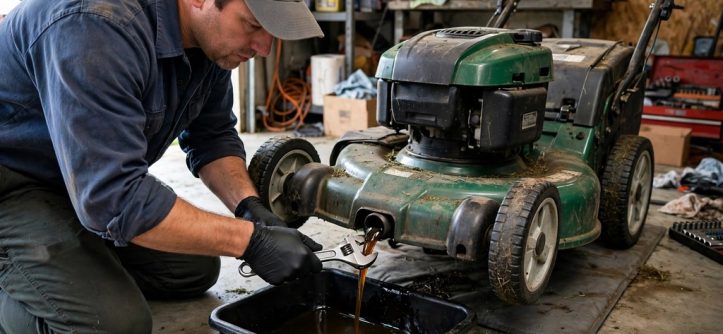
Change lawn mower oil by warming the engine briefly, draining the old oil completely, and refilling slowly. Then check the level carefully with the dipstick before you start the mower again. This simple routine protects the engine and prevents costly wear during the season.
First, always confirm the oil grade and capacity in your manual before you begin. Manuals vary by model, so typical grades and amounts never replace model specific guidance. Additionally, fresh oil reduces friction and helps the engine run cooler and longer. Finally, you need only basic tools and about thirty minutes for most mowers.
Choose the Right Oil First

First, choose four stroke engine oil that matches the recommendation in your manual. Most small engines use a detergent oil formulated for air cooled operation. However, two stroke engines mix oil with fuel and need no separate change.
Oil collects dirt, fuel residue, and fine metal particles during normal mowing. Heat gradually breaks the oil down and weakens its protective film strength. Then old oil circulates abrasive grit and accelerates wear inside the engine. Therefore, timely changes protect power, starting, and long engine service life.
Understand Viscosity and Temperature
Viscosity describes how thickly oil flows at cold and hot operating temperatures. Typically, SAE 30 suits warm weather mowing and steady summer temperatures well. Meanwhile, typical 10W-30 oil flows easier during cold starts across changing seasons. Also, typical 5W-30 oil helps cold starting when you mow during chilly weather.
Check Capacity Before You Pour
Capacity varies widely by engine size, design, and mower type. Typically, walk behind mowers hold roughly fifteen to twenty ounces of oil. Typically, riding mowers hold roughly forty eight to sixty four ounces instead. Therefore, treat every capacity figure as typical and confirm your exact amount manually.
Gather Your Tools and Prepare Safely
First, gather every tool before you warm or tilt the mower. Careful preparation prevents spills, burns, and rushed mistakes during the drain step. Then park the mower on flat ground outdoors or inside ventilated space.
First, choose a flat surface with strong light and no foot traffic. Next, lay cardboard beneath the mower to catch drips and protect flooring. Also, keep children and pets away from the work area completely.
- Drain pan: Choose a low pan that slides easily beneath the engine.
- Fresh oil: Match the grade and amount to your manual exactly.
- Funnel and rags: Pour slowly and wipe spills immediately after each pour.
- Socket wrench: Fit the drain plug snugly without forcing the tool.
- New filter: Bring a replacement whenever your engine uses one.
- Sealed container: Store used oil safely until you reach a collection point.
Before tilting, always disconnect the spark plug wire from the plug completely. Next, tuck the wire safely away from the plug during all work. Also, use this disconnected moment to replace the spark plug when its tip looks worn. Also, remove the ignition key whenever your mower uses one for starting.
Warm the Engine and Drain the Oil
First, run the engine briefly until the oil feels warm, not hot. Warm oil flows faster and carries more dirt and fine particles out. Then switch the engine off and let it cool until you can handle it safely.
Drain Through the Drain Plug
First, place your drain pan directly beneath the drain plug opening. Next, loosen the plug slowly with your wrench and finish by hand. Then let every drop drain fully before you reinstall the plug firmly.
Siphon Through the Dipstick Tube
Some engines lack a plug, so owners siphon oil through the dipstick tube instead. First, insert the extractor tube fully and pump until the flow stops completely. Alternatively, tilt a small mower carefully and pour oil into your pan slowly. However, keep the air filter side facing upward during any careful tilt. Owners who change lawn mower oil on schedule rarely see sludge inside the crankcase.
Change the Filter and Refill Carefully
First, check whether your engine actually carries a spin on oil filter. Many walk behind mowers lack filters, while many riding mowers include them. Then unscrew the old filter slowly and catch its trapped oil carefully.
First, wipe the mounting surface clean and inspect the old gasket closely. Next, wet the new gasket lightly with fresh oil before installation. Then screw the new filter on by hand until the gasket contacts firmly. Finally, tighten the filter slightly further by hand without using excessive force.
First, reinstall the drain plug securely before you add any fresh oil. Next, place your funnel into the fill opening and pour slowly. Add only part of the typical capacity first and pause briefly afterward. Then wait several minutes while the oil settles into the crankcase fully.
First, reconnect the spark plug wire firmly after you finish refilling. Next, start the engine briefly and watch the filter and plug closely. Then stop the engine and inspect the ground for fresh leaks carefully. Finally, recheck the dipstick level once the oil settles completely again.
Check the Level and Follow a Schedule
First, wipe the dipstick clean and reinsert it fully before checking again. Good lawn mower repair and maintenance keeps the level between the dipstick marks always. Then pull the dipstick out and read the oil film carefully. Finally, add small amounts only and recheck after every small addition.
Typically, owners change oil every fifty hours or once each season. Meanwhile, riding mowers often follow typical intervals near one hundred hours. Also, change new engine oil after the first five hours typically. However, dusty and hot mowing conditions always justify an earlier change.
First, check the oil level before every mowing session without fail. Also, inspect color and texture whenever you wipe the dipstick clean. Dark oil, gritty residue, or low levels demand attention before starting. Therefore, small checks between changes prevent dry running and serious damage.
First, pour drained oil into a sealed container immediately after draining. Never pour used oil onto the ground or into household drains ever. Then take used oil to a recycling or collection point promptly. Finally, winterize your mower completely after the final cut each season. Always change lawn mower oil while the engine stays slightly warm for a full drain.
Frequently Asked Questions
How often should you change lawn mower oil?
Typically, change the oil every fifty hours or once each season, whichever comes first.
What type of oil does a lawn mower take?
Most small engines typically take SAE 30 or 10W-30 four stroke oil.
Can you change lawn mower oil without a drain plug?
Yes, you can extract warm oil through the dipstick tube with a siphon pump.
How do you know when lawn mower oil needs changing?
Dark, gritty, or low oil on the dipstick signals an overdue change clearly.
What should you do with used lawn mower oil?
Always seal used oil and deliver it to a recycling collection point.
Conclusion
Fresh oil protects bearings, reduces wear, and supports reliable starting every week. Therefore, follow the full method today and record your next change date. Then gather your oil, pan, and manual and complete your change this weekend.
Also, store leftover fresh oil sealed and labeled for your next service. Then file your notes beside the manual for quick future reference. Finally, enjoy a quieter, smoother mower that rewards simple consistent care. Record the date each time you change lawn mower oil so intervals stay honest.




Leave a Reply