

Cut power at the breaker before you touch any kitchen lighting wire or fixture. Verify the circuit is dead with a non-contact voltage tester before handling any conductors. Hire a licensed electrician for any hardwired fixture or new circuit run.
Kitchens combine water, heat, steam, and electricity in a tight space. Therefore every lighting fixture must carry the right safety ratings for its location. Additionally, wiring rules differ by city and county, so always confirm local electrical code requirements. This guide covers general safety principles and flags where local rules or professionals must take over.
You will learn how to size circuits, pick damp-rated or IC-rated fixtures, and install cabinet lighting safely. Moreover, you will see which tasks belong to a homeowner and which demand a licensed electrician. Proper installation also protects your color temperature, CRI, and lumen output, since overheated LEDs degrade faster. Let’s walk through each step carefully.

Understand Your Circuit Before You Start
Find the breaker that controls your kitchen lighting and label it before any work begins. Most general lighting circuits run at 15 amps, while some kitchens use 20-amp circuits for added capacity. Add up fixture wattages and keep the total well below the circuit’s safe limit. When you cannot identify the circuit or its rating, call a licensed electrician before proceeding.
Older homes often share kitchen lighting with outlets or appliances, which increases overload risk. Local codes may require dedicated lighting circuits in new work, so verify requirements with your building department. A licensed electrician can evaluate panel capacity and add a circuit safely if you need one.
Choose Fixtures With the Right Safety Ratings
- Listing mark: choose fixtures labeled UL Listed or ETL Listed for recognized safety testing.
- Moisture rating: pick damp-rated fixtures near sinks, ranges, or anywhere steam collects regularly.
- Insulation contact: use IC-rated recessed lighting where insulation touches the housing to prevent overheating.
- Box support: mount heavy pendants and chandeliers only to boxes rated for the fixture weight.
- Enclosed drivers: keep LED drivers for strips and puck lights in ventilated spots away from heat sources.
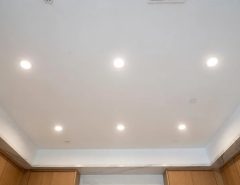
Recessed lighting, pendant lights, flush mount, and semi-flush mount fixtures each suit different ceiling heights. Browse our kitchen light fixtures guide for an overview of styles before you buy. Under cabinet lighting, LED strips, puck lights, and light bars work well as task lighting over counters. Remember that local codes may restrict certain fixtures in specific locations, so confirm ratings against local rules.
Prepare the Work Area Safely
Switch off the breaker and lock the panel or post a clear warning so nobody restores power. Test every wire with a non-contact voltage tester, and check the tester on a live outlet first. Wear safety glasses and use a stable ladder when you reach ceiling fixtures. Keep a headlamp or flashlight nearby since the work area will stay dark.
Install With Care: Boxes, Wiring, and Mounting
Every splice must sit inside an approved junction box with a tight cover, never buried behind drywall. Match black to black for hot, white to white for neutral, and green or bare for ground. Secure each joint with the correct wire connector and tug gently to confirm a firm grip. Treat this guidance as general information only, since local codes define the exact methods to follow.
Hang pendant lights over a kitchen island at a height that clears sight lines and tall users. Choose lightweight fixtures for pendant lights over kitchen island spaces unless the box supports heavier loads. Provide enough clearance above ranges so heat and steam never reach the fixture. Ask a licensed electrician to install or upgrade any ceiling box before you hang a heavy fixture.
Match Dimmers to Your Light Source
LEDs need dimmers rated for LED loads, since old incandescent dimmers often cause flicker or buzz. Read the dimmer package for compatibility with your bulb or fixture brand and wattage range. Also confirm that your chosen color temperature and Kelvin value stay stable when dimmed. Run through the full dimming range before you close up the wall box or switch plate.
Strip and puck lights need a compatible driver and a dimmer that works with that driver. Leave drivers accessible for future service and away from enclosed hot cavities. Note that mixing dimmer brands can void fixture warranties, so follow manufacturer pairing charts. In doubt, a licensed electrician can confirm the pairing quickly.
Know When to Hire a Licensed Electrician
- New circuits: hire a licensed electrician to run new wiring, add breakers, or extend circuits.
- Hardwired fixtures: leave hardwired installations to a professional rather than tackling live panels yourself.
- Aluminum wiring: homes with aluminum wiring need special connectors and a qualified electrician.
- Panel work: never open a breaker panel yourself; only a licensed electrician should service it.
- Permits and inspections: many areas require permits for new fixtures, so let your electrician handle approvals.
General guidance can explain the steps, yet only a licensed electrician knows your local code thoroughly. Electricians also carry insurance and stand behind their work if something fails later. If any step feels uncertain, stop and book a professional instead of guessing.
Choose Light Output That Fits Each Zone
Plan three layers for every kitchen. Combine ambient lighting for general brightness, task lighting over counters, and accent lighting inside glass cabinets. Use lumens to judge brightness and pick a CRI of 90 or higher for accurate food colors.
Select a beam angle that spreads light evenly without harsh hot spots on the counter. Where flexibility matters, plug-in under cabinet kitchen lighting avoids new wiring, while hardwired versions look cleaner.
Frequently Asked Questions
Can I install kitchen lighting myself?
Homeowners can replace plug-in fixtures and bulbs themselves, but hardwired work needs a licensed electrician.
Do kitchen lights need a separate circuit?
Since codes vary by location, ask a licensed electrician whether your kitchen lighting needs a dedicated circuit.
What does IC-rated mean for recessed lighting?
IC-rated means the fixture can touch insulation safely without creating a fire hazard.
Do dimmers need to be LED compatible?
Pick a dimmer rated for LED loads to prevent flicker, buzzing, and shortened fixture life.
Do I need a permit to install kitchen lighting?
Permit rules differ by location, so check with your local building department before starting electrical work.
Conclusion
Safe kitchen lighting comes down to circuit planning, properly rated fixtures, and respecting DIY limits. Check your local electrical code before you start the project. Enclose every splice in a junction box and match dimmers to compatible LEDs. For hardwired fixtures or new wiring, schedule a licensed electrician and enjoy a brighter, safer kitchen.



Leave a Reply