
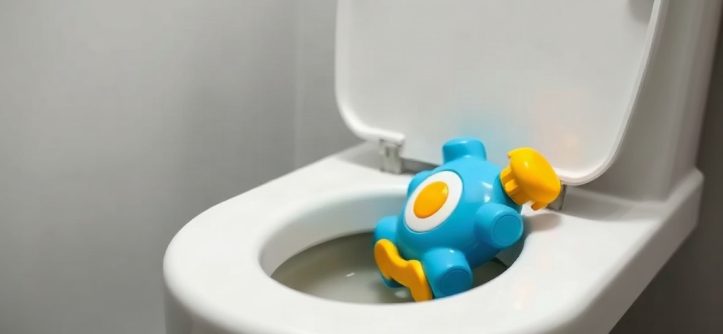
A small plastic dinosaur disappears down the drain, and suddenly the bathroom becomes a crime scene. If you are staring at a toilet clogged with a toy, you need a plan before you reach for the plunger. The good news: most toy blockages are fixed at home in under thirty minutes.
Quick answer: Stop flushing immediately and remove the toy if any part is visible. If it slipped out of reach, confirm the water drains slowly rather than not at all, then use a plunger or a closet auger to pull it back. Never pour chemical drain cleaner into a toilet holding a toy, because it cannot dissolve plastic and creates a splash hazard.
This article explains what causes these blockages, why acting fast protects your plumbing, and which tools and habits get the toy out without damaging the bowl or the wax seal.
What is a toilet clogged with a toy?
A toy blockage happens when a small object drops into the bowl and settles inside the trapway, the S-shaped channel behind the bowl. Water has to travel through that curve to reach the drain line. A solid object sitting in the curve narrows the opening, so waste and paper catch on it, and the flush backs up.
The most common culprits are small and hard:
- Building bricks and their figures
- Toy cars, marbles, and rubber balls
- Action figures with outstretched arms
- Bath toys that float and then drop
- Small dolls and figurine parts
Soft toys follow a different pattern. A plush animal or stuffed ball can compress and slide deeper, then swell with water and wedge tighter. Hard plastic tends to sit near the top of the trap, while squishy toys may travel further into the pipe.
What happens inside the pipe
Most toilets have a trapway about two inches wide with two tight bends. A toy the size of a golf ball will almost always lodge in the first bend, just a few inches below the water line. That location is reachable with the right tool, which is why professional repairs are often avoidable.
The symptoms tell you where the toy sits. Water that rises slowly and drains slowly suggests a partial blockage near the bowl. Water that fills the bowl and stays there points to a full blockage. Gurgling sounds from the drain after a flush mean air is trapped behind the object.
A toy resting in the trap still leaves gaps around it for water to pass. The bowl usually overflows only after repeated flushes pile paper on top of the object.
Get to know the parts of your toilet before you start. The bowl, the trapway, and the wax seal at the floor are all involved in this repair, and the seal is the part most easily damaged by rough handling. Keep that in mind for everything that follows.
Takeaway: a toy in the trap narrows the pipe instead of sealing it, so slow drains and gurgling are your early warning signs.
Why a toilet clogged with a toy matters
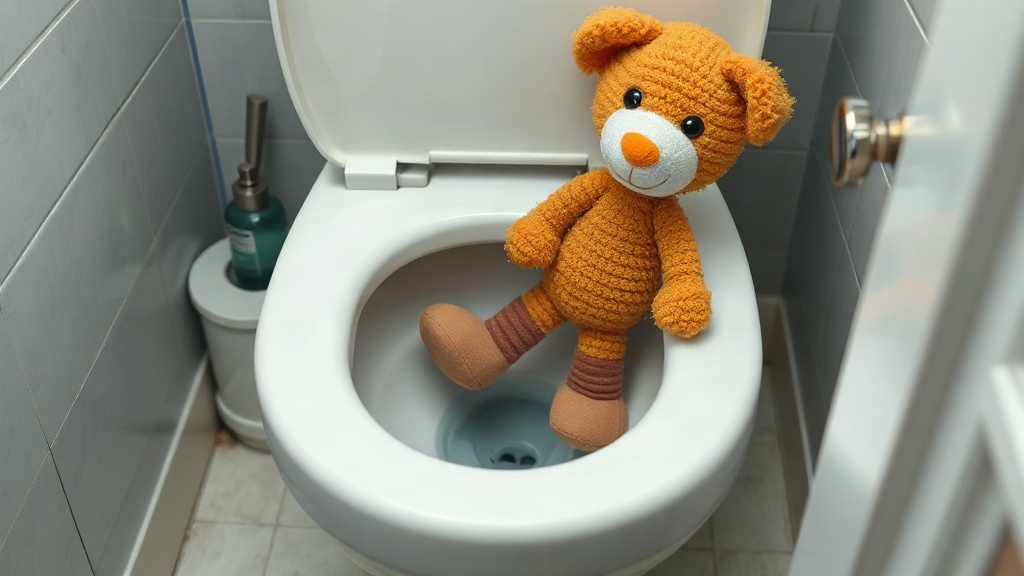
Speed is the difference between a five-minute retrieval and an afternoon with a plumber. Every extra flush pushes the toy deeper and packs waste around it. A toy that sat near the first bend can end up jammed halfway down the trap, where no plunger can reach it.
Cost is the second reason to act carefully. A plumber can usually clear a toy blockage by pulling the toilet and retrieving the object. That job takes time and often costs well over a hundred dollars in most markets. Doing it yourself with a closet auger costs nothing if you already own the tool, or the price of a basic one at a hardware store.
The risks you may not see
A hard toy exposed to pressure can crack the porcelain around the trapway. Porcelain does not flex, so a sharp edge or a forceful jab with a metal rod can chip the bowl. A cracked bowl cannot be repaired and means a new toilet.
Repeated flushing also strains the wax ring that seals the toilet to the floor. Water that seeps past a damaged ring rots the subfloor slowly and quietly. You may smell dampness or see a soft spot near the base weeks later.
Health is a practical concern too. Standing water contaminated with waste can splash onto hands, walls, and nearby surfaces during plunging. Keep a bucket, gloves, and disinfectant nearby, and wash up thoroughly when the job is done.
Children feel the stress of the moment as well. A child who sees a parent panic may hide future accidents, which makes small problems bigger. Staying calm and narrating each step turns a scary moment into a quick lesson about what goes into the toilet.
Chemical cleaners cannot dissolve plastic, rubber, or metal toys. They sit in the bowl, damage finishes, and splash dangerously when the blockage finally clears.
Takeaway: a toy blockage is a plumbing problem and a household safety issue, so treat the first slow flush as an alarm rather than an inconvenience.
Best practices
The right sequence matters more than the tools. Follow these steps in order, and stop as soon as the water clears.
- Stop flushing. One flush can push a toy from reachable to stuck. Turn off the water supply valve behind the toilet if the bowl is close to overflowing.
- Look before you plunge. Shine a flashlight into the bowl. If you can see the toy, reach in with gloved hands or long-handled tongs.
- Plunge with a flange plunger. The rubber flap should fold into the drain opening to create a seal. Push down slowly, then pull up sharply five or six times without breaking the seal.
- Try a closet auger. Feed the flexible cable through the trap while turning the handle. The spring head hooks the toy and lets you pull it back.
- Verify the fix. Flush once with clear water and watch the level. A toy can come free but leave behind paper that re-clogs the pipe.
Choosing between a plunger and an auger
Comparison: Flange plunger vs. closet auger
A plunger works by pressure and suits soft clogs; an auger reaches and grips solid objects. Notice that each tool solves a different problem.
| Feature | Flange plunger | Closet auger |
|---|---|---|
| Best for | Paper and soft clogs | Solid objects in the trap |
| Reaches the trap | Partly | Yes |
| Risk to porcelain | Low | Low if used gently |
| Cost | Low | Moderate |
Start with the plunger because it is gentle and fast. Move to the auger if two rounds of plunging fail or if the water level does not change.
Lay old towels around the base before you begin. A sudden release of water often splashes more than expected.
For soft toys that may have swollen, a short wait can help. The object sometimes loosens as it softens, then a gentle plunge pushes it through. Never force a soft toy deeper with a rod. If the toy has not moved after these steps, call a plumber rather than escalating to metal tools.
Takeaway: plunge first, auger second, and always confirm with a clean test flush.
Common mistakes to avoid
Most damage in these situations comes from impatience, not from the toy itself. Avoid these traps and your toilet will usually come through intact.
Flushing again to “see if it clears.” This is the most common error. Each flush adds pressure and water, and the toy rarely moves in the direction you want.
Pouring drain cleaner. Plastic and rubber do not dissolve. The chemical only sits in the bowl and creates a burn hazard for whoever tries the next step.
Using a plunger without a seal. A flat cup plunger meant for sinks will not seal the toilet drain. The flange design exists for this exact opening, and a poor seal just sloshes water.
Jamming a wire coat hanger into the trap. Sharp metal scratches the porcelain glaze and can pierce the trapway. A proper auger costs little and does far less harm.
Reaching in blindly. You can push the toy deeper or cut a hand on a hidden edge. Use gloves and a flashlight, and stop if you cannot see the object.
When to stop and call a plumber
Some situations need professional hands. Call for help if the bowl fills and will not drain after one attempt, if water leaks at the base, or if a toy has been stuck for more than a day. A plumber can pull the toilet, retrieve the object from the trap, and replace the wax ring in one visit.
Address the habit, not just the object. If a toddler is in the house, a toilet lid lock costs a few dollars and prevents the next incident. Keep small toys out of the bathroom entirely, and give children a covered bin for bath toys.
If the toilet clogs again within a week, a fragment of the toy may still be in the trap. A plumber can inspect the line and confirm it is clear.
Takeaway: the safest approach is patient pressure and the right tool, never more force.
FAQ
Can a toy flush down on its own?
Yes, especially small figures with narrow shapes. Once a toy passes the trap, it usually stops in the drain line below the floor. That location is harder to reach, so a slow drain after the flush is your cue to call a plumber.
How much does it cost to remove a toy from a toilet?
Many plumbers charge for a service call plus labor, often well over a hundred dollars in total. A DIY closet auger costs far less if you buy one. If the toilet must be pulled, expect the higher end of the range.
Will a toilet clogged with toy resolve if I wait?
Rarely. The toy stays in place and waste builds around it. Waiting a day or two only makes the blockage firmer and the water dirtier. Act within the first hour if you can.
Can I use a plunger on a fully blocked toilet?
Only with care. If the bowl is nearly full, remove some water first with a cup or bucket to avoid overflow. Then plunge with slow, controlled strokes rather than fast ones.
What if the toy is a soft plush or sponge?
Soft toys can compress and travel further than hard ones. Plunging may push them through, which is fine. If the drain stays slow after the toy passes, a plumber should check the line.
Should I replace the toilet after a toy clog?
Rarely. A cleared toy blockage leaves the bowl intact if you avoided metal tools. Replace the toilet only if the porcelain is cracked or the trapway is damaged.
Conclusion
A toilet clogged with a toy is a stressful surprise, but it follows a predictable pattern and rewards a calm response. Stop flushing, look for the object, work through the plunger and then the auger, and confirm the fix with a clean test flush. Avoid chemical cleaners, metal rods, and repeat flushing, since those steps cause most of the real damage.
If two careful attempts fail, call a plumber rather than forcing the issue. Then take the preventive step that matters most in a house with children: install a toilet lid lock today, so the next small toy stays out of the bowl.

Leave a Reply