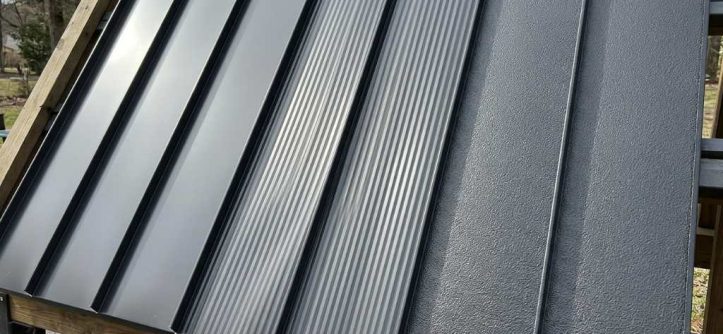
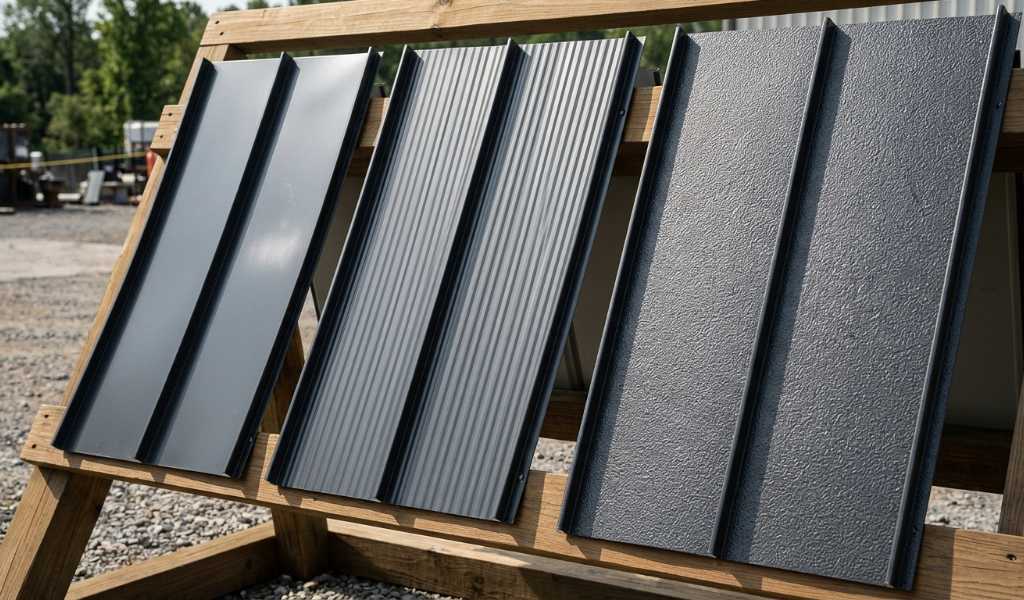
Standing seam metal roof texture comes in three main choices: smooth, striated, and stucco-embossed. Striated or embossed panels hide waves and cut glare on sunny days. Smooth panels deliver the sleekest, most modern look. However, they show waves more easily in bright light.
Texture shapes how your roof catches light and hides small flaws over time. It also affects glare, oil canning, and the long-term appearance of the metal. This guide compares each surface so you can pick with confidence before ordering. You will also learn how sheen and home style fit in.
Smooth Flat Surfaces
Smooth panels give the cleanest, most modern look. Their flat pans reflect light evenly and show crisp shadow lines. Many contemporary homes use them for that reason.
However, flat metal reveals waves more easily. Bright sun at low angles can highlight every ripple. Thicker gauge and careful installation reduce the risk.
Striations and Light Corrugation
Striated panels carry shallow grooves along the pan. These tiny lines break up reflections and soften the surface. They also stiffen the metal.
As a result, waviness becomes much harder to see. Striations cost little extra on many panels. Therefore, they often offer the best balance of looks and value.
Stucco-Embossed and Pencil Ribs
Stucco embossing stamps a fine, pebbled pattern into the metal. It scatters light and gives a soft, matte feel. The pattern also hides fingerprints and minor scuffs.
Pencil ribs add thin raised lines in the pan. They create subtle rhythm without a busy look. Both options suit traditional and farmhouse homes.
Matte, Satin, or Gloss Sheen
Texture works hand in hand with sheen. Sheen describes how much light the paint reflects:
- Matte: Low reflection, a soft look, and strong glare control.
- Satin: A balanced glow that suits most homes.
- Gloss: Bright and bold, but it shows every flaw.
Dark gloss on flat panels highlights waves the most. Matte on textured panels hides them best. Test both under real sunlight before you commit.
Texture and Oil Canning
Oil canning is the visible waviness in flat metal. It rarely harms performance, yet many owners dislike the look. Textured pans cut its visibility sharply.
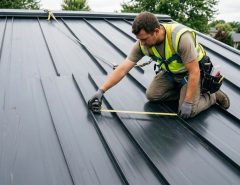
Thicker gauge, proper clip spacing, and quality coil also help. Careful crews avoid over-tightening panels during installation. A standing seam metal roof can still show slight waviness even with perfect work, so plan for it.
Ask your roofer how they limit oil canning. A confident, specific answer signals real experience. Vague reassurance deserves a second opinion.
Choosing a Texture for Your Home Style
Match the surface to your architecture and your sky. Use this quick guide:
- Modern homes: Smooth panels in matte finishes.
- Farmhouse and cottage styles: Striated or lightly embossed panels.
- Traditional homes: Stucco-embossed panels with softer sheen.
- Large roof areas: Textured panels to hide waves across wide spans.
- Sunny regions: Matte or satin finishes to limit glare.
Color selection also influences how texture looks. Dark shades emphasize waves, while light shades forgive them. Choose both together, not one at a time.
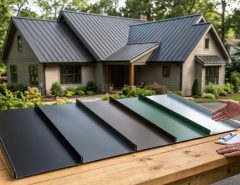
Not every maker offers every pattern. Confirm which panels offer which texture before you fall in love. Samples show the real effect.
Caring for Textured Finishes
Textured panels clean up easily with mild soap and a soft brush. Avoid abrasive pads, since they scratch the coating. Rinse thoroughly to prevent streaks.
Dirt can settle in deeper patterns, so rinse yearly. Check for scratches after storms or ladder work. Touch up paint quickly to prevent rust.
Ready to Pick Your Surface?
Request large samples in two or three textures. View them in morning light and late afternoon light. Then choose the one that still looks good at every hour.
For broader guidance on the whole system, read the complete homeowner guide. Order only after you approve a full-size sample. Your eyes will tell you more than any brochure.
Frequently Asked Questions
Which texture hides oil canning best?
Striated and stucco-embossed panels hide it best.
Do textured panels cost more?
Sometimes slightly more, though the difference is often small.
Is smooth metal a bad choice?
No, but it shows waves more easily than textured options.
Does texture affect durability?
Not much, though stiffening ribs add some strength.
Can I change the texture later?
No, texture is part of the panel, so you would need new panels.

Leave a Reply