



Feeding your baby should be a calm and bonding experience. However, without the right support, it can quickly become exhausting. Your arms tire, your back aches, and your baby struggles to latch properly. A good nursing pillow solves all of these problems at once.
Choosing the right one, though, takes a little thought. There are many options on the market, and not all of them work the same way. This guide will help you understand exactly what to look for so you can feed your baby comfortably from day one.
Why a Nursing Pillow Makes Such a Big Difference
New parents are often surprised by how much a nursing pillow changes their experience. Before using one, many mothers hold their baby entirely with their arms. This creates tension in the shoulders, neck, and lower back. Over time, that tension builds into real pain.
A breastfeeding support pillow takes most of that weight off your arms. It positions the baby at the right height, so your back stays straight and relaxed. Additionally, it gives your baby a stable surface, which makes latching easier and more consistent.
Therefore, a nursing pillow is not just a comfort item. It is a practical tool that makes every feeding session go more smoothly.
Understanding the Different Shapes Available
Nursing pillows come in several shapes, and each one serves a slightly different purpose. Knowing the differences helps you pick the right fit for your body and your baby.
The C-Shape Pillow
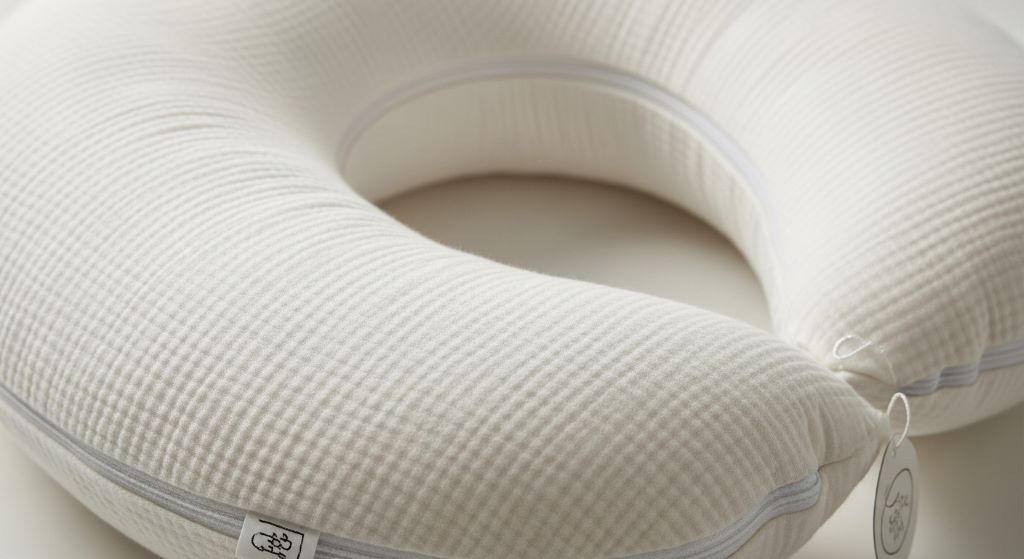
The C-shape is the most common design. It wraps around your waist and holds the baby close to your body. This shape works well for most body types and supports a variety of feeding positions. Furthermore, it is easy to move from one side to the other during a feeding session.
The U-Shape Pillow
The U-shape is larger and wraps around both sides of your body. It provides more surface area and is especially useful for mothers nursing twins. However, it takes up more space and may feel bulky for smaller frames.
The Wedge Pillow
Wedge-shaped nursing pillows are slim and lightweight. They slide under the baby to provide a slight angle. They are great for travel or quick top-up feeds. Additionally, they are easy to store when not in use.
The Wrap-Around Pillow
This style fastens around your waist with a strap or buckle. It stays in place even if you need to move or stand up briefly. Therefore, it is a popular choice for active mothers who need a hands-free option.
Key Features to Look for When Choosing
Once you understand the shapes, you need to think about specific features. These details make a big difference in how useful and comfortable the pillow will be over time.
Firmness and Fill Material
A nursing pillow needs to be firm enough to hold your baby’s weight without sinking flat. A pillow that compresses too easily will force you to hold your arms up again, defeating the purpose entirely.
Memory foam fills offer excellent support and hold their shape well. Polyester fiberfill is softer but tends to flatten faster with regular use. Buckwheat filling is firmer still and moulds slightly to the body. Consider how often you plan to use the pillow and choose the firmness level accordingly.
Cover Material and Washability
Babies spit up. Milk leaks. Covers get dirty quickly. Therefore, choosing a pillow with a removable, machine-washable cover is essential. Look for covers made from soft cotton or bamboo fabric, as these are gentle against the baby’s skin and breathable during long feeding sessions.
Additionally, some pillows come with extra covers sold separately. Buying a spare cover means you always have a clean one ready, even when the other is in the wash.
Size and Fit
A nursing pillow should fit your body, not just the average person. If you are petite, a large pillow may push the baby too far from your body. If you are taller or fuller-figured, a small pillow may not provide enough reach.
Many brands now offer adjustable or size-specific options. When possible, try the pillow before buying. If shopping online, check the dimensions carefully and read reviews from people with a similar body type.
Non-Slip Base
A pillow that slides around your lap is frustrating and unsafe. Look for a baby feeding cushion with a non-slip or rubberised base. This keeps it firmly in place throughout the feeding session, even as the baby moves around.
Positions That Work Best with a Nursing Pillow
A good nursing pillow supports multiple feeding positions. Understanding these positions helps you get full value from your purchase.
The cradle hold is the most common. The baby lies across your body with the pillow supporting their weight. The football hold tucks the baby under your arm, with their legs pointing behind you. This position is particularly useful after a caesarean birth, as it keeps pressure away from the incision.
The cross-cradle hold mirrors the cradle hold but gives you more control over the baby’s head. Additionally, side-lying feeding is possible at night, though a nursing pillow used in this position should always be used under close supervision to ensure safety.
Furthermore, a versatile pillow lets you switch between positions easily. That flexibility is valuable as your baby grows and your feeding routine changes.

Using a Nursing Pillow Beyond Breastfeeding
A nursing pillow does not retire when breastfeeding ends. Many families find creative uses for it long after the feeding stage is over.
It works well as a support prop when a baby begins to sit up. It cushions the baby on either side and reduces the impact of the inevitable topples. Additionally, it can serve as a reading cushion for toddlers or a comfortable head rest for older children during car journeys.
Therefore, a durable, well-made pillow represents long-term value, not just a short-term purchase.
Top Tips for Getting the Most Out of Your Nursing Pillow
A few simple habits will help you use your nursing pillow more effectively from the start.
- Position the pillow snugly against your body before placing the baby on it
- Adjust the height with a folded blanket underneath if the pillow feels too low
- Keep a spare pillowcase washed and ready at all times
- Use the pillow consistently to train your posture during feeds
- Store it in a clean, dry place to extend its lifespan
These small steps make a noticeable difference in comfort and hygiene over time.
What to Avoid When Buying a Nursing Pillow
Not every product on the market meets the standard you need. There are some clear warning signs to watch out for before spending your money.
Avoid pillows with covers that cannot be removed or washed. These become unhygienic very quickly. Similarly, stay away from extremely cheap options with no fill quality information. A flat, unsupportive pillow is worse than using no pillow at all.
Additionally, avoid pillows that do not have any safety certifications. Look for products tested to recognised safety standards in your country. Some pillows may look appealing but contain materials that are not safe for close contact with a newborn.
Furthermore, be cautious with pillows marketed purely as infant sleep products. A breastfeeding support pillow is designed for supervised feeding use, not for unsupervised sleep. The two uses have different safety requirements, and conflating them can be risky.
Recommended Brands Worth Considering
Several brands have earned consistent praise from parents and lactation consultants alike. Boppy is one of the most well-known names in the category, offering firm support and a wide range of covers. My Brest Friend is another favourite, praised for its adjustable strap and flat feeding surface. Ergobaby and Leachco also produce quality options that cater to different body types and budgets.
However, the best brand for you depends on your individual needs. A pillow that works perfectly for one mother may not suit another. Reading detailed reviews and, where possible, asking your midwife or lactation consultant for a recommendation can be very helpful.
Conclusion
Choosing the right nursing pillow is one of the most practical decisions you can make as a new parent. It protects your posture, supports your baby, and makes every feeding session more comfortable for both of you.
Start by understanding the available shapes and matching them to your body type and lifestyle. Then focus on the details: firmness, washable covers, non-slip bases, and certified safety standards. A quality baby feeding cushion will serve you well through the newborn stage and beyond.
Take your time, do your research, and choose a pillow that fits your life. When feeding is comfortable, it becomes one of the most peaceful parts of your day.
Frequently Asked Questions
When should I start using a nursing pillow?
You can start using a nursing pillow from your very first feeding session. Many mothers find it helpful even in the hospital. It is never too early to establish good posture and positioning habits.
Can I use a regular bed pillow instead of a nursing pillow?
A regular bed pillow can work in a pinch, but it is not designed for feeding. It tends to be too soft and shifts out of position easily. A purpose-made nursing pillow provides much better and more consistent support.
Is a nursing pillow safe for my baby to sleep on?
No. Nursing pillows are designed for supervised feeding only, not for unsupervised sleep. Always move your baby to a firm, flat sleep surface after feeding. Follow your national safe sleep guidelines at all times.
How do I clean a nursing pillow?
Most nursing pillows come with a removable cover that can be machine washed. Check the care label on both the cover and the pillow insert. Many inserts can also be hand washed or spot cleaned. Always allow them to dry fully before use.
Can I use a nursing pillow for bottle feeding too?
Absolutely. A nursing pillow supports comfortable, upright positioning whether you are breastfeeding or bottle feeding. It keeps the baby at the right angle and reduces arm strain for any caregiver doing the feeding.
Related Topics:
How Dot and Dot Twist Travel Pillow Helps With Neck Support
How to Pick the Right Pillow for Kids Without Hurting Their Neck






Leave a Reply
Cancel reply