

Imagine an entire city transforming into a living, breathing gallery. Streets become stages. Museums become laboratories. Neighbourhoods turn into immersive design districts buzzing with ideas that shape how we live, work, and connect. That is exactly what happens every September in London, and 2026 is shaping up to be the most extraordinary edition yet. The London Design Festival (LDF) 2026 returns for its 24th edition from 12 to 20 September, and the creative world is already paying close attention. With London’s creative industries contributing a remarkable £51.7 billion to the economy each year and accounting for one in five jobs in the capital, this festival is far more than a cultural celebration. It is a global engine of innovation, commerce, and inspiration.
What Is the London Design Festival and Why Does It Matter?
Before exploring what makes 2026 so special, it helps to understand what the London Design Festival actually is and why designers, brands, students, and curious visitors from over 75 countries make the journey every year.
Founded in 2003 by Sir John Sorrell and Ben Evans CBE, the London Design Festival began as a bold idea: to position London as the world’s design capital and prove that great design touches every aspect of human life. From that inaugural event featuring 90 speakers across 60 events, the festival has grown into one of the most influential creative gatherings on the planet. By 2019, attendance had reached a record-breaking 600,000 individual visitors, and more than 2,000 design businesses, brands, universities, and organisations now participate each year.
The festival does not confine itself to one venue or one discipline. Instead, it spreads across the entire city, using London itself as its canvas. Consequently, whether you are a professional designer, an architecture enthusiast, a tech innovator, or simply someone who appreciates beautiful, purposeful things, you will find something here that genuinely moves you.
London Design Festival 2026: The Big Picture
Dates, Duration, and Format
The 2026 edition runs for nine immersive days, from 12 to 20 September 2026, across various locations throughout London. The central hub, as always, is the Victoria and Albert Museum in South Kensington, with the Southbank Centre and the Design Museum also serving as major anchors for the programme.
What makes the format so exciting is its sheer range. The festival presents forums, talks, product launches, open showrooms, exhibitions, installations, workshops, and even parties. Therefore, no two days feel alike, and no two visitor experiences are the same. The programme covers fashion, architecture, interiors, furniture, technology, materiality, art, crafts, and digital design, all woven together into a nine-day celebration of human creativity.
Furthermore, much of the festival is completely free to attend. General admission to public installations and district trails costs nothing, which makes this one of the most democratically accessible major cultural events in the world. Specialised trade fairs and the prestigious Global Design Forum do require tickets, but these represent exceptional value for professionals seeking deep engagement with industry thought leaders.
The 24th Edition: A Milestone Year
Celebrating its 24th anniversary, LDF 2026 arrives at a genuinely pivotal moment in design history. The world is grappling with urgent questions about sustainability, artificial intelligence, urban living, and the future of materials. Additionally, the creative landscape has never been more globally connected or more eager for meaningful dialogue. All of these forces converge at the London Design Festival, making 2026 not just another edition but a landmark gathering.
The Mayor of London’s recent commitment of more than £10 million in funding to support the capital’s creative industries, including direct investment in the London Design Festival, signals just how seriously the city takes this event. That investment is projected to generate more than £2.5 billion in economic value, which underscores the festival’s extraordinary commercial and cultural significance.
The Design Districts: London Becomes Your Map
One of the most distinctive features of the London Design Festival is its district-based structure. Rather than centralising everything in one location, the festival transforms entire neighbourhoods into themed creative clusters. This approach gives visitors a genuine reason to explore parts of London they might never otherwise visit.
The Key Neighbourhoods to Know
For the 2026 edition, ten design districts participate across the city, each with its own character and curatorial focus:
- Bankside Design District draws on the area’s rich cultural heritage and proximity to Tate Modern, blending contemporary installations with conversations about public art and urban identity.
- Brompton Design District, centred around the V&A, remains the festival’s intellectual heartland, with major commissions and landmark projects anchoring the experience.
- Chelsea Design District leans into luxury craft and material innovation, reflecting the neighbourhood’s long association with interior design excellence.
- Dalston to Stokey Design District brings a more experimental, community-rooted energy, celebrating emerging designers and grassroots creativity.
- EC1 Design District taps into the dense concentration of architects and creative studios in Clerkenwell, offering unrivalled access to professional studios and showrooms.
- Fleet Street Quarter continues to evolve as a space where print, graphic design, and media heritage meet contemporary visual culture.
- Mayfair Design District showcases high-end product design, jewellery, and bespoke craftsmanship, attracting collectors and brand leaders.
- Park Royal Design District provides a fascinating industrial context for functional art and furniture design, including immersive works that challenge how we define usefulness in objects.
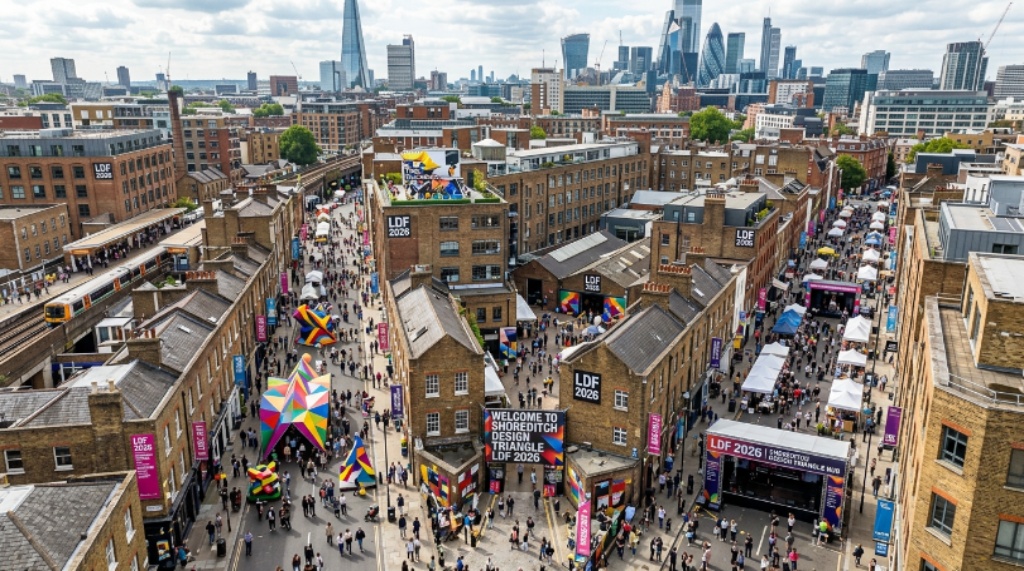
- Shoreditch Design Triangle pulses with digital innovation, street-level activations, and the kind of raw creative energy that has made east London famous globally.
- William Morris Design Line honours the legacy of the Arts and Crafts movement while connecting it to contemporary conversations about craft, sustainability, and slow design.
Each district hosts its own programme of events, which means visiting the festival feels like exploring multiple mini-festivals simultaneously. Moreover, walking or cycling between districts gives you a living tour of one of the world’s most architecturally diverse cities.

The V&A: The Festival’s Creative Heartbeat
No discussion of the London Design Festival would be complete without deep focus on the Victoria and Albert Museum. As the festival’s central hub, the V&A consistently delivers some of the most ambitious and talked-about installations of the entire nine-day programme.
Landmark Installations and Commissioned Works
Each year, the festival commissions world-renowned designers to create large-scale, site-specific works for iconic public spaces across London. In 2026, immersive installations appear in major locations including Trafalgar Square and the Southbank Centre, where they engage not just festival visitors but the broader London public going about their daily lives.
This commissioning approach has produced some genuinely unforgettable moments over the festival’s history. Consequently, LDF 2026 continues that tradition with ambitious new works that challenge assumptions about space, materiality, and the role of design in everyday environments. The installations function as conversation starters, inviting people who might never set foot in a design conference to pause, reflect, and engage with ideas that matter.
The Global Design Forum
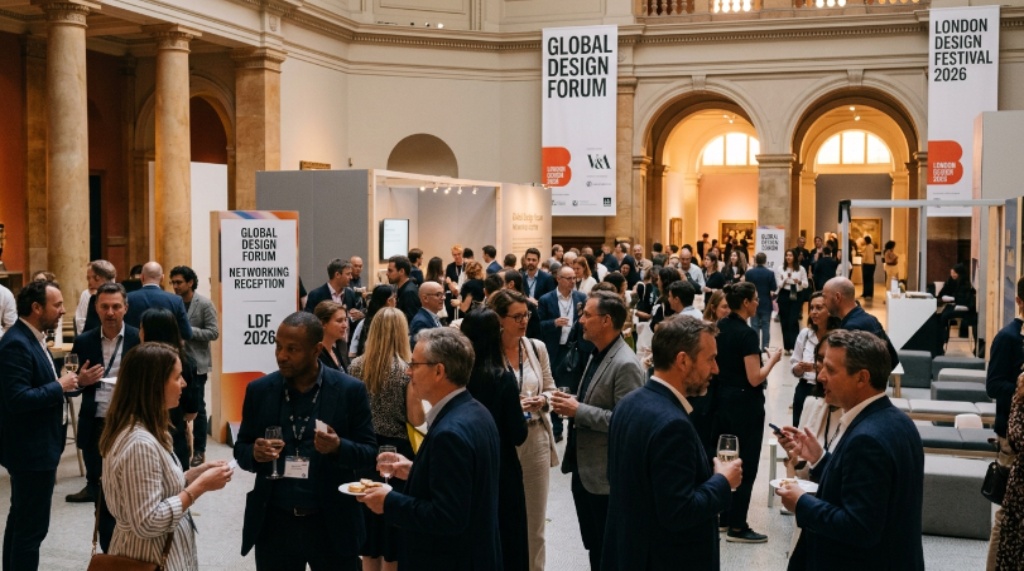
The Global Design Forum, held at the V&A during the festival, represents the intellectual centrepiece of the entire event. This curated thought leadership programme brings together some of the most significant voices in global design to discuss the challenges, opportunities, and responsibilities facing designers today.
Topics at past editions have ranged from regenerative futures and digital design to identity, inclusivity, and design’s role in crisis recovery. In 2026, conversations are expected to centre on themes including circular economy principles, AI’s integration into the design process, sustainable urban transformation, and the ethics of design in an increasingly unequal world. These are not abstract discussions. Rather, they are urgent, practical conversations that shape the direction of the entire design industry.
Sustainability at the Core: Design for a Resilient Future
Perhaps the most significant shift in tone for LDF 2026 is the festival’s deep, structural commitment to sustainability. This edition places sustainable urban living and the role of design in building a resilient future at the very centre of its identity.
Material Revolution
One of the most anticipated thematic strands of 2026 focuses on what organisers call “Material Revolution.” This strand brings together exhibits exploring eco-materials, circular design principles, and innovative approaches to production that minimise waste and environmental impact. Visitors can expect hands-on demonstrations of biomaterials, recycled composites, and regenerative textiles that point toward a genuinely different way of making things.
This focus reflects a broader shift in the design profession. Designers today face growing pressure and, equally, growing inspiration to rethink how objects are made, used, and returned to the earth. The festival gives these conversations a physical, tangible form, making abstract principles concrete and accessible.
Green Partnerships and Bloomberg Philanthropies
Supporting this sustainability agenda, Bloomberg Philanthropies returns as a major partner for the 2026 edition. Their involvement brings additional resources, global networks, and a sharp focus on using design as a tool for environmental and social progress. Furthermore, collaborations with Google Arts and Culture bring digital tools to bear on questions of urban transformation, allowing visitors to explore how design interventions can reshape cities in more equitable and sustainable ways.
Technology and Digital Design: The Future Arrives in September
Alongside sustainability, technology represents one of the defining themes of the London Design Festival 2026. The relationship between design and technology has always been dynamic, but in 2026 it feels especially charged. Artificial intelligence, extended reality, and computational design are no longer futuristic concepts. They are tools that designers use every day, and LDF gives the creative community a chance to examine them critically and creatively.
AI, VR, and the Creative Process
Across multiple design districts and dedicated exhibition spaces, LDF 2026 features showcases exploring how artificial intelligence is changing creative practice. These are not cheerleading exercises for technology. Instead, they are nuanced explorations of what AI means for authorship, craftsmanship, ethics, and the future of design education. Virtual reality experiences also feature prominently, inviting visitors to step inside speculative visions of future cities, homes, and workplaces.
Additionally, digital design disciplines including UX, motion graphics, and interface design receive dedicated attention through talks and workshops aimed at bridging the gap between screen-based creativity and the physical design world. This cross-disciplinary approach is one of the festival’s greatest strengths.
Emerging Talent and Design Education
The London Design Festival has always been as much about discovering the next generation as celebrating the current establishment. In 2026, this commitment to emerging talent intensifies, with dedicated platforms for graduate designers, new studios, and universities from around the world.
Why This Matters for Young Designers
For students and recent graduates, LDF 2026 offers something genuinely rare: direct access to industry leaders, potential employers, and international peers in a context that favours openness over hierarchy. Workshops, mentoring sessions, and open studio events create genuine opportunities for connection and career development. Furthermore, the festival’s free admission model means that financial barriers do not prevent talented young designers from participating fully.
Many established designers today trace early career breakthroughs to encounters at the London Design Festival. A conversation at a Shoreditch opening, a mentor met at a V&A talk, a collaboration begun over a workshop table in EC1: these are the kinds of life-changing moments that the festival consistently makes possible.
The London Design Medals: Recognising Excellence
Each year, the London Design Festival awards its prestigious London Design Medals to individuals who have made outstanding contributions to the design world. These awards represent some of the highest honours in the global design community, recognising not just commercial success but genuine cultural impact.
The medals cover multiple categories, celebrating excellence in product design, communication design, architecture, fashion, and more. For recipients, a London Design Medal carries genuine weight. For visitors, the associated events and conversations provide a fascinating lens through which to understand what excellence in design actually looks like in practice.
Practical Guide: How to Make the Most of LDF 2026
Planning your experience of the London Design Festival 2026 takes a little thought, but the rewards are enormous. Here is how to approach it strategically.
Before You Go
- Register on the official website at londondesignfestival.com to access the full programme, interactive maps, and personalised event recommendations.
- Book tickets in advance for the Global Design Forum and any ticketed trade events, since popular sessions regularly sell out.
- Plan your district routes using the festival map. Grouping nearby districts together on the same day saves time and helps you experience each neighbourhood’s distinct character.
- Follow #LDF2026 on social media for real-time updates, behind-the-scenes content, and last-minute programme additions.
- Consider your accommodation early, particularly if travelling internationally. September is a busy month in London, and proximity to key districts like Shoreditch, Brompton, or Bankside can significantly improve your experience.
On the Ground
- Arrive at the V&A early on your first day to get your bearings and pick up printed guides.
- Allow yourself to wander without a rigid schedule. Some of the festival’s best experiences are discovered spontaneously.
- Attend at least one evening event, since late-night museum openings and district parties offer a completely different atmosphere from daytime visits.
- Engage with designers directly. Many exhibitors are present at their installations and genuinely welcome conversation.
- Take notes or photographs as you go. Nine days is a lot to absorb, and capturing moments helps you reflect meaningfully afterward.
For Design Professionals
If you are attending in a professional capacity, the festival offers exceptional networking opportunities. Open showrooms, brand presentations, and trade events create structured contexts for business conversations. However, some of the most valuable connections happen informally, at the bar after a talk or in the queue for an installation. Therefore, keep your schedule flexible enough to follow the conversation wherever it leads.
Why 2026 Stands Apart from Every Previous Edition
It would be easy to describe each year’s London Design Festival as the best yet, but 2026 genuinely earns that distinction for specific, substantive reasons.
Firstly, the 24th edition arrives at a moment of particular creative energy globally. After years of disruption and uncertainty, the design world is channelling accumulated tension into remarkable innovation. Consequently, the work on display at LDF 2026 reflects a field that has been pushed to think harder, design smarter, and ask deeper questions.
Secondly, the festival’s expanded focus on sustainability and technology responds directly to where society’s most urgent conversations are happening. Rather than simply showcasing beautiful objects, LDF 2026 positions design as an active participant in solving the defining challenges of our time.
Thirdly, the Mayor of London’s significant investment in the festival’s future signals institutional confidence in LDF’s ability to generate real economic and cultural value. This backing translates directly into a richer, more ambitious programme with greater international reach.
Finally, the simple fact of the festival’s longevity and growth matters. Twenty-four years of building relationships, developing platforms, and earning the trust of the global design community means that LDF 2026 arrives with unparalleled convening power. When the world’s best designers want to show their most important work or engage their most significant ideas, London in September remains their first choice.
Conclusion
The London Design Festival 2026 is not simply a trade event or a cultural calendar highlight. From 12 to 20 September, it becomes a living argument for the power of design to inspire, challenge, and change the world. With ten vibrant design districts, major installations at iconic London landmarks, a sustainability-driven programme, cutting-edge explorations of technology and artificial intelligence, and platforms for the next generation of creative talent, this edition has everything it needs to be genuinely unforgettable.
Whether you are a seasoned design professional, an enthusiastic student, a curious tourist, or a London resident who has never quite made it along before, 2026 is the year to show up. Mark 12 to 20 September in your calendar, plan your visit at londondesignfestival.com, and prepare to see design in a completely new light. The most inspiring event of the year is waiting for you.
Frequently Asked Questions
When and where does London Design Festival 2026 take place?
London Design Festival 2026 runs from 12 to 20 September 2026 across various locations throughout London. The central hub is the Victoria and Albert Museum in South Kensington, with additional major venues including the Southbank Centre and the Design Museum. The festival also spreads across ten design districts covering neighbourhoods from Shoreditch to Mayfair to Park Royal, turning the entire city into a participatory creative space.
Is London Design Festival 2026 free to attend?
The majority of events at London Design Festival 2026 are free to the public. This includes public installations, district trails, and many exhibitions across the city. However, some specialised events require tickets, including the Global Design Forum and selected trade-focused sessions. Ticket prices for premium experiences can range from modest fees to professional passes at the higher end. Full ticketing details are available on the official website at londondesignfestival.com.
What themes will London Design Festival 2026 focus on?
LDF 2026 places particular emphasis on sustainable design and circular economy principles, technology and artificial intelligence in the creative process, material innovation, digital design, and urban transformation. The festival also continues its longstanding commitment to celebrating emerging design talent alongside established international names. These themes reflect the most urgent and exciting conversations happening in the global design community right now.
Who should attend London Design Festival 2026?
The festival welcomes an extraordinarily diverse audience. Design professionals including architects, interior designers, product designers, graphic designers, and UX practitioners will find rich programming directly relevant to their practice. Students and graduates benefit from networking opportunities and talent showcases. Brands and businesses use the festival for product launches and industry engagement. Meanwhile, design enthusiasts and curious members of the public will find the free district trails and public installations genuinely accessible and rewarding, regardless of professional background.
How do I plan my visit to London Design Festival 2026?
Start by registering on the official festival website to access the interactive programme and district maps. Prioritise booking any ticketed events, particularly the Global Design Forum, well in advance. Group geographically close design districts together to make the most of each day. Allow flexibility in your schedule to follow unexpected discoveries, since some of the best festival experiences are spontaneous. If travelling internationally, book accommodation early given September’s high demand across the city.
Find Location In Google Maps:







Leave a Reply
Cancel reply