



Setting up a reef tank comes with many questions, but one of the most common is: do you need a protein skimmer? Skimmers are famous for maintaining water quality, but are they truly essential? In this comprehensive guide, we’ll break down what a protein skimmer does, why and when you might need one, and how to set it up for reef success. Whether you’re a beginner or seasoned aquarist, you’ll find everything you need to make an informed decision and ensure your corals and fish thrive
Quick Answer: A protein skimmer is not absolutely required for every reef tank, but it’s highly recommended in most cases. It significantly improves water quality by removing organic waste before it breaks down, helping to prevent algae blooms and keeping fish and corals healthy. However, some advanced aquarists succeed without one by maintaining rigorous maintenance routines.
What Is a Protein Skimmer & How Does It Work?
A protein skimmer is a filtration device designed to remove dissolved organic compounds from aquarium water. It works by creating fine bubbles that attract and trap waste, forming a foam that gets collected in a cup. This process helps improve water clarity and quality.
At its core, a protein skimmer simulates the natural ocean process where waves crash and foam forms, carrying waste away. In your tank, water is injected with air, creating countless microbubbles. Organic waste molecules stick to these bubbles, rising into a collection cup as foam or “skimmate.” This removes pollutants before they can decompose into ammonia or nitrite, reducing the load on biological filtration and preventing excess nutrients like nitrate and phosphate. Ultimately, a protein skimmer helps you maintain a cleaner, healthier reef tank environment.
Do You Need a Protein Skimmer for Every Reef Tank?
Not every reef tank absolutely needs a protein skimmer, but most will benefit from having one. Tanks with heavy bioload, limited water changes, or sensitive inhabitants are especially aided by skimmers.
Your need for a skimmer depends on several factors:
- Tank Size: Larger tanks with more inhabitants produce more waste, increasing the need for skimming.
- Stocking Levels: Heavily stocked tanks accumulate dissolved organics faster.
- Maintenance Routine: If you are diligent with large, frequent water changes and careful feeding, you may keep a small tank healthy without a skimmer.
- Types of Corals and Fish: Sensitive species benefit from the stable, low-nutrient environments skimmers help create.
In summary, while small, lightly stocked tanks may function without a skimmer, most reef aquarists find them to be a worthwhile investment for cleaner, more stable water.
What Are the Main Benefits of Using a Protein Skimmer?
The main benefits of a protein skimmer are improved water quality, reduced algae growth, and increased oxygenation. It also lowers maintenance effort and creates a healthier habitat for corals and fish.
More specifically, a protein skimmer:
- Removes Dissolved Organics: Prevents the buildup of waste that can turn into harmful nutrients.
- Controls Nitrates & Phosphates: Reduces fuel for nuisance algae without chemicals.
- Boosts Oxygen Levels: Increases gas exchange, benefiting all aquarium life.
- Stabilizes Water Chemistry: Reduces swings in pH and other parameters.
- Decreases Water Change Frequency: Lessens your workload by exporting waste.
For aquarists seeking the healthiest, most vibrant reef system, these advantages make a compelling case for using a protein skimmer.
Are There Any Downsides to Protein Skimmers?
Yes, there are a few downsides: protein skimmers have upfront and ongoing costs, may strip beneficial trace elements, are sometimes noisy, and require regular cleaning to work efficiently.
Some common drawbacks include:
- Cost: Quality skimmers can be expensive, and budget models may not keep up with larger or heavily stocked tanks.
- Trace Element Removal: Along with waste, skimmers can also remove useful compounds, so dosing or water changes remain important.
- Noise: Some skimmers are loud, especially cheaper models.
- Maintenance: Cups and bodies need regular cleaning to stay effective and prevent buildup.
- Energy Use: Skimmers add to your tank’s power consumption.
Weigh these factors before purchasing, as a poorly chosen or maintained skimmer can create more hassles than benefits.
How Do You Choose the Right Protein Skimmer for Your Reef Tank?
Choose a protein skimmer based on your tank size, bioload, installation method (in-sump, hang-on, etc.), and budget. Always select a model rated for a larger capacity than your actual tank size for best performance.
Here are key points for choosing the best skimmer:
- Tank Volume: Match the skimmer’s rating to your display and sump, always erring on the larger side.
- Bioload: Consider the number and size of fish, as well as coral types.
- Design Compatibility: Ensure it fits your sump, rim, or back chamber dimensions.
- Noise Level: Many brands now advertise “silent” models for living spaces.
- Brand Reputation: Reputable brands tend to last longer, work better, and have better support.
Research reviews and ask experienced hobbyists for recommendations before purchasing. Investing in a reliable, proven model pays off with lower hassle and consistent water quality.
How Do You Set Up and Maintain a Protein Skimmer?
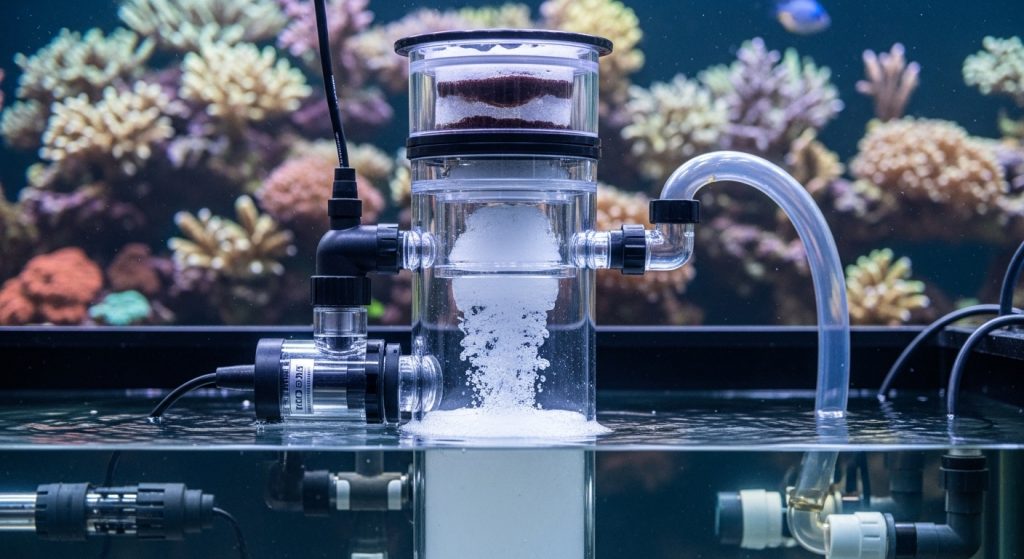

Setting up a protein skimmer involves assembling the unit per manufacturer instructions, placing it in the sump or tank, and adjusting the water level and air intake for optimal foam production. Regular maintenance is crucial for peak performance.
Step-by-Step Setup:
- Unpack and assemble according to instructions.
- Place it in the sump or hang-on location ensuring correct water depth.
- Prime the pump and connect the air intake line as directed.
- Turn it on and adjust the water/air to get a stable foam head in the neck.
- Let the skimmer “break in” for a few days. Fine tune for optimal skimmate collection.
Maintenance:
- Empty and clean the collection cup every 2-3 days.
- Disassemble and rinse the body monthly to prevent buildup.
- Check and clean air inlets and intake pumps to prevent clogs.
Keeping your skimmer clean and properly adjusted ensures it always does its job effectively.
Can You Run a Successful Reef Tank Without a Protein Skimmer?
Yes, it’s possible to keep a successful reef tank without a protein skimmer, but it demands more frequent water changes, meticulous feeding, and robust filtration. Skimmerless tanks are more practical for small, lightly stocked setups.
If you choose to skip a skimmer, you’ll need:
- More frequent, larger water changes (10-15% weekly).
- Accurate monitoring of nitrate, phosphate, and organic buildup.
- Efficient biological and mechanical filtration.
- Prudent, low-waste feeding practices.
Many experienced aquarists run “natural” reef systems using refugiums, live rock, and macroalgae instead. While this can yield great results, beginners and busy keepers typically benefit from the insurance a protein skimmer provides.
What’s the Difference Between Skimmer Types?
Protein skimmers come in in-sump, hang-on-back (HOB), and internal (in-tank) models. Each type offers unique advantages, such as installation flexibility, space saving, and varying performance levels.
| Type | Best Use Case | Pros | Cons |
|---|---|---|---|
| In-Sump | Medium to large aquariums with sumps | Quiet, efficient, hides in sump, higher capacity | Requires sump, larger footprint |
| Hang-On-Back (HOB) | Small aquariums without sumps | Easy to install, no sump needed | Can be noisy, visible equipment |
| Internal/In-Tank | Nano/small tanks, all-in-ones | Compact, no external plumbing | Limited performance, takes tank space |
Picking the right type ensures an easy install and optimal performance.
How Do You Optimize Skimmer Performance for Your Reef Tank?
Optimize skimmer performance by keeping it clean, maintaining proper water depth, tuning air and water flow, and adjusting for your tank’s bioload. Fine-tuning ensures maximum waste removal.
Use these tips to get the most from your protein skimmer:
- Clean the collection cup and neck regularly to maintain foam formation.
- Set your sump water level at the skimmer’s recommended depth (usually 7-9 inches).
- Adjust the air intake for a steady foam head that’s not too dry or too wet.
- Replace or clean air silencers and diffusers to ensure quiet, efficient operation.
- Monitor skimmate for color and consistency—dark, smelly gunk means effective skimmate.
Regular care and adjustments help your skimmer keep tank water at its cleanest and most stable.
Conclusion: Should You Get a Protein Skimmer for Your Reef Tank?
A protein skimmer is not mandatory for every reef tank, but it’s a proven way to make life easier and your tank healthier. It acts as an insurance policy, catching unseen waste before it can harm your delicate corals and fish. While advanced reefers can run skimmerless tanks with rigorous care, most hobbyists appreciate the peace of mind, cleaner water, and reduced algae problems a good skimmer provides. Take the time to select and maintain the right model, and you’ll see the benefits in crystal-clear water and thriving marine life.
Have more questions before you buy? Explore our FAQ below or reach out for personalized advice. Your reef tank’s future will thank you.
Frequently Asked Questions
Can I use a protein skimmer on a freshwater aquarium?
No, protein skimmers are ineffective in freshwater tanks. The surface tension is too low for stable foam formation. They’re specifically designed for saltwater environments, where organic waste can be efficiently removed via foam fractionation.
How long should I run my protein skimmer each day?
It’s best to run your protein skimmer 24/7 to provide consistent waste removal. Some aquarists turn off skimmers during coral feeding, but otherwise, continuous operation ensures optimal water quality.
Do protein skimmers replace water changes?
No, a protein skimmer does not replace water changes. It removes dissolved organics, but does not replenish trace elements or eliminate all pollutants. Regular water changes are still essential for a balanced and healthy reef tank.
What should my skimmate look like?
Ideal skimmate is dark and foul-smelling, indicating efficient waste removal. If it’s too watery or clear, adjust the air and water to obtain a thicker, darker foam.
Why is my protein skimmer overflowing?
Skimmer overflow is often caused by too high water level, overfeeding, or use of additives like medications or dechlorinators. Readjust the air/water balance or wait a few hours after dosing.
Do I need both a refugium and a protein skimmer?
A refugium and protein skimmer serve complementary purposes. Skimmers remove dissolved organics, while refugiums promote natural nutrient export via macroalgae. Running both together yields the highest water quality for demanding reef tanks.
How often should I clean my protein skimmer?
Clean the collection cup every 2-3 days and rinse the skimmer body monthly. Keeping air inlets, pumps, and diffusers free of salt creep and debris ensures reliable operation and performance.
Read More Also: How to Choose the Best Nursing Pillow for Comfortable Feeding
Find out: How to Decorate My Home for Christmas: Practical Room-by-Room Guide






Leave a Reply
Cancel reply