
A pool that looks clear on Saturday can turn cloudy by Wednesday if you’re only reacting to problems instead of preventing them. Most pool owners don’t need more chemicals or a bigger filter—they need a consistent weekly rhythm. The tricky part is knowing what actually belongs in that routine and what’s a waste of time. If you’re also weighing automation options like finding the best Aiper pool cleaner to handle debris and floor cleaning, the schedule gets easier to sustain. Here’s a practical, week-by-week system that keeps water balanced, equipment healthy, and maintenance from eating your weekend.
Quick Answer
Build your weekly pool schedule around four non-negotiables: skim the surface, brush and vacuum, test and balance chemicals, and check the filtration system. Assign each task a fixed day—for example, skim daily, brush on Monday, vacuum on Wednesday, test chemicals on Saturday. A consistent order matters more than the exact days you pick, because each task sets up the next: skimming keeps debris out of the filter, brushing lifts particles so the vacuum can capture them, and balanced water makes everything else work.
Key Takeaways
- Structure your week so that skimming, brushing, vacuuming, and chemical testing happen in a logical sequence—each task supports the next.
- Daily tasks (skimming, checking the pump) take minutes; weekly tasks (brushing, testing, filter checks) take thirty to sixty minutes combined.
- Chemical balance is the foundation—if pH and chlorine are off, no amount of cleaning will keep the water clear.
- Robotic cleaners can replace manual vacuuming for the pool floor and walls, but they don’t eliminate the need for brushing, skimming, or water testing.
- Adjust your schedule seasonally: heavy use and hot weather demand more frequent attention than mild, low-use periods, To ensure your property remains pristine inside and out, consider reading our guide on 5 disadvantages of estate living in Africa before planning your next home maintenance routine.
Why a Weekly Schedule Beats Reactive Cleaning
Reactive pool care—treating problems after they appear—costs more time and money than prevention. A green pool takes days and multiple chemical doses to fix, while a weekly routine prevents algae from ever getting a foothold. The reason is simple: algae, debris, and chemical imbalance all compound. Leaves left on the surface sink and decay, consuming chlorine. Unbalanced pH makes chlorine less effective, which allows bacteria to multiply. Brushing less often lets biofilm form on walls, which resists normal sanitizer levels.
A weekly schedule interrupts these cycles before they escalate. You’re not doing more work overall—you’re doing smaller amounts of work at regular intervals instead of large emergency interventions.
The Four Core Tasks Every Week Needs
Regardless of pool size, type, or location, these four tasks form the backbone of any effective weekly routine. Skip one and the others become less effective.
1. Skimming the Surface
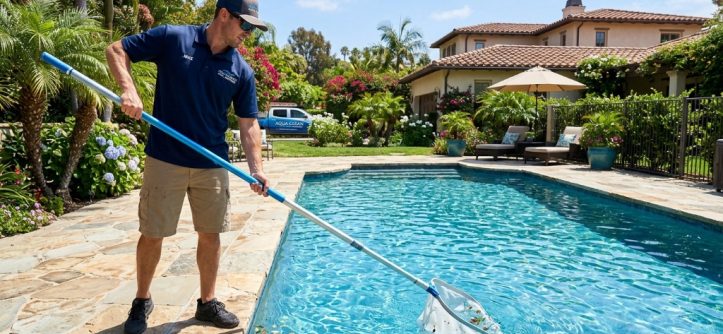
Skimming removes leaves, insects, pollen, and sunscreen residue before they sink and decompose. Decomposing organic matter is the single biggest chlorine consumer in most pools. A five-minute skim each day—or at minimum every other day—prevents that load from building up. Use a long-handled net and work from the shallow end toward the skimmer, so currents carry debris toward the intake.
2. Brushing Walls, Steps, and Corners
Brushing dislodges algae spores and mineral deposits that cling to surfaces. Even if the water looks clear, a thin biofilm can be forming on walls—especially in shaded areas and behind ladders. Brush once per week, paying extra attention to corners, steps, and the waterline tile. For plaster pools, use a nylon brush; for vinyl liners, use a softer brush to avoid damage. Brushing before vacuuming means the loosened debris gets captured rather than settling back.
3. Vacuuming the Floor
Vacuuming removes debris that has settled on the pool floor. Manual vacuuming works, but it’s the most time-consuming part of the routine. This is where a robotic cleaner changes the equation. A robot like the Aiper Scuba series runs independently, scrubbing the floor and walls while you handle other tasks. The trade-off: robots still need filter cleaning and don’t replace brushing or chemical testing. If you’re considering one, factor in pool shape, debris type, and whether it handles walls or floor only.
4. Testing and Balancing Chemicals
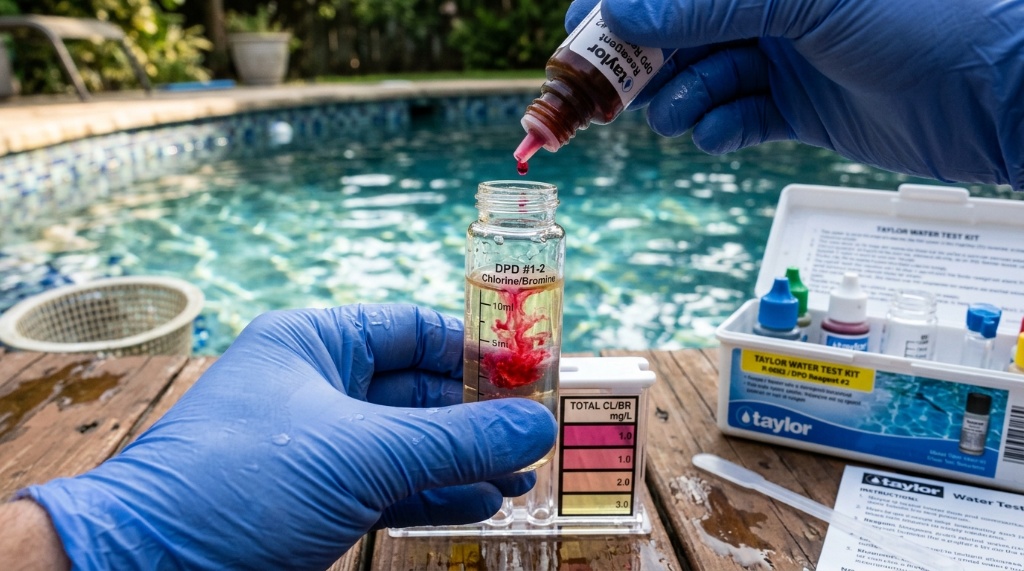
Test at least once per week—more often during heavy use or hot spells. The core readings are pH (7.4–7.6 ideal), free chlorine (1–3 ppm), total alkalinity (80–120 ppm), and calcium hardness (200–400 ppm). Adjust in this order: alkalinity first, then pH, then sanitizer. Alkalinity buffers pH, so adjusting pH before alkalinity is stable leads to bouncing readings. If you use test strips, confirm occasionally with a liquid kit for accuracy.
Building Your Actual Weekly Calendar
The best schedule is the one you’ll actually follow. Here’s a sample seven-day framework that balances effort across the week so no single day feels overwhelming.
| Day | Task | Time Needed |
|---|---|---|
| Monday | Brush walls, steps, and waterline | 15–20 min |
| Tuesday | Skim surface; check pump basket | 5–10 min |
| Wednesday | Vacuum floor (manual or robotic) | 20–30 min (manual) |
| Thursday | Skim surface; empty skimmer baskets | 5–10 min |
| Friday | Check filter pressure; backwash if needed | 10 min |
| Saturday | Test and balance chemicals | 15–20 min |
| Sunday | Rest or catch-up day | — |
If you own a robotic cleaner, you can run it Wednesday and skip manual vacuuming entirely—just clean the robot’s filter after each cycle. That frees up twenty minutes or more per week, which often makes the difference between sticking with the schedule and abandoning it.
Seasonal Adjustments Most Guides Skip
A schedule that works in April won’t be enough in August. Three factors should trigger changes:
- Temperature: Above 80°F, algae grows faster and chlorine dissipates quicker. Test chemicals twice weekly and increase sanitizer slightly.
- Bather load: Every swimmer introduces sweat, sunscreen, and bacteria. After a party or heavy weekend use, test and shock the pool within 24 hours.
- Rain and wind: Storms dump debris and dilute chemicals. After significant rain, re-test pH and alkalinity, and skim more frequently for a few days.
In winter—or during extended periods of non-use—you can reduce frequency, but don’t stop entirely. A pool left completely unattended for weeks will require far more work to restore than one maintained at a minimal level.
Common Mistakes That Undermine Good Schedules
Even pool owners with a plan often run into the same avoidable problems. These are the most frequent:
- Testing chemicals before brushing or vacuuming: Debris and organic matter affect readings. Clean first, test after.
- Adding all chemicals at once: Never mix chlorine and pH adjusters simultaneously. Add one, wait the recommended time, then add the next.
- Ignoring filter pressure: A clogged filter reduces circulation, which makes every other task less effective. Check the gauge weekly and backwash when pressure rises 8–10 psi above the clean baseline.
- Vacuuming before brushing: Brushing lifts debris off walls; if you vacuum first, that debris settles back onto the floor. Always brush, then vacuum.
- Skipping the skimmer basket: A full basket restricts flow and strains the pump. Empty it as part of your weekly routine, or more often during heavy leaf fall.
When to Automate and What to Expect
Robotic pool cleaners handle the most tedious part of the routine—floor and wall vacuuming—without supervision. They’re most valuable for pools with consistent debris (leaves, sand, pollen) and for owners who travel or have limited time. However, they don’t test chemicals, brush steps the way a hand brush does, or manage filtration. Think of them as one component of the schedule, not a replacement for it.
Before buying, check whether the model handles walls or floor only, how it deals with your pool’s shape (rectangular vs. freeform), and how easy the filter is to clean. A robot that saves twenty minutes of vacuuming but takes fifteen minutes to rinse is a wash. The right one should reduce your total weekly effort, not just shift it.
Frequently Asked Questions
How long should a weekly pool cleaning take?
For an average residential pool, plan on 45–75 minutes total per week if you spread tasks across several days. Manual vacuuming adds 20–30 minutes; a robotic cleaner can cut that significantly. Chemical testing and balancing take about 15–20 minutes.
Can I skip brushing if I run a robotic cleaner?
No. Robotic cleaners scrub surfaces, but they don’t reach every corner, step, or waterline tile the way a hand brush does. Brushing also dislodges biofilm that robots may pass over. Keep brushing as a weekly task even with automation.
What’s the ideal order for weekly tasks?
Skim first, then brush, then vacuum, then test and balance chemicals, and finally check the filter. This order ensures debris is removed before it affects water chemistry, and that chemical readings aren’t skewed by organic matter.
How often should I test pool water?
At minimum once per week. During hot weather, heavy use, or after rain, test two to three times per week. pH and free chlorine are the most critical readings to monitor frequently.
Do I need to clean the pool in winter?
Yes, but less often. Reduce skimming to every few days and test chemicals every two weeks. If you close the pool entirely, follow your region’s winterization procedure and check on it periodically.
What if my pool turns green despite following a schedule?
Green water usually means chlorine dropped too low or pH drifted out of range. Shock the pool, brush thoroughly, run the filter continuously, and re-test daily until levels stabilize. Then review whether your weekly testing frequency is sufficient for your pool’s conditions.
Conclusion
A weekly pool cleaning schedule works because it’s consistent, not because it’s complicated. Focus on the four core tasks—skimming, brushing, vacuuming, and chemical balance—and spread them across the week so no single day feels like a chore. Adjust for season, weather, and bather load. If vacuuming is the task you keep skipping, a robotic cleaner can help, but it won’t replace the rest of the routine. Start with the sample calendar above, tweak it to fit your pool, and stick with it for a month. The clarity of the water will make the habit self-reinforcing.




Leave a Reply