
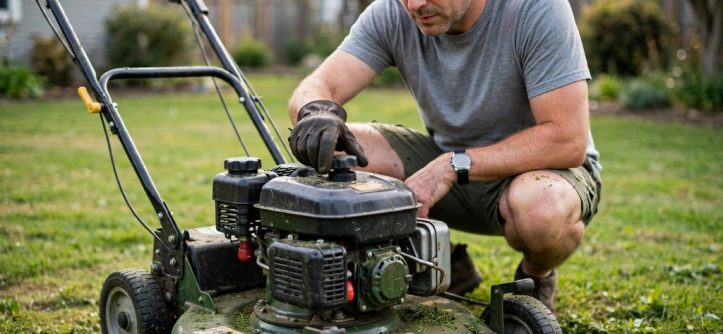
A lawn mower dies mid-job most often from fuel starvation, overheating, or a lost spark. First, test the fuel cap vent, fuel filter, and carburetor. Then, check heat buildup, the ignition coil, and oil shutoffs.
Specifically, this fault differs from a complete no-start failure. For example, the engine proves spark and compression by starting. Therefore, you should trace what changes during running. Our guide to lawn mower repair and maintenance places these running checks clearly.
Also, note when the engine stalls during mowing. Indeed, timing points toward fuel, heat, or ignition trouble. Finally, work through simple tests before replacing expensive parts.
Read the Stall Pattern When a Lawn Mower Dies
First, let the engine cool before touching fuel or ignition parts. Also, keep fuel away from ignition sources during every test. Additionally, read the manual because manuals vary by model.
Next, run the mower and watch the stall closely. For example, fuel starvation often causes sputtering before shutdown. However, sudden shutdown often suggests spark loss or shutoff.
Also, stalls after minutes suggest heat or vacuum building. Meanwhile, stalls within seconds suggest severe fuel restriction. Similarly, stalls under load suggest carburetor or drag problems.
Test the Lawn Mower Fuel Cap Vent First
The fuel cap vent lets air enter the tank. As fuel leaves, air must replace that fuel steadily. However, dirt can block the small vent opening.
When the engine stalls, loosen the cap slightly. Then, restart the engine and watch its running. If the engine runs smoothly, the vent caused vacuum.
- Cap test result: Loosening the cap restores smooth running quickly.
- Cleaning step: Clear dust from the vent with a soft brush.
- Replacement sign: Replace the cap when cleaning fails repeatedly.
Next, clean the vent and cap threads gently. Dry the cap fully before you reinstall it. However, replace a damaged or swollen cap seal. Most lawn mower dies cases trace to fuel delivery rather than engine damage.
Check the Lawn Mower Fuel Filter and Fuel Line
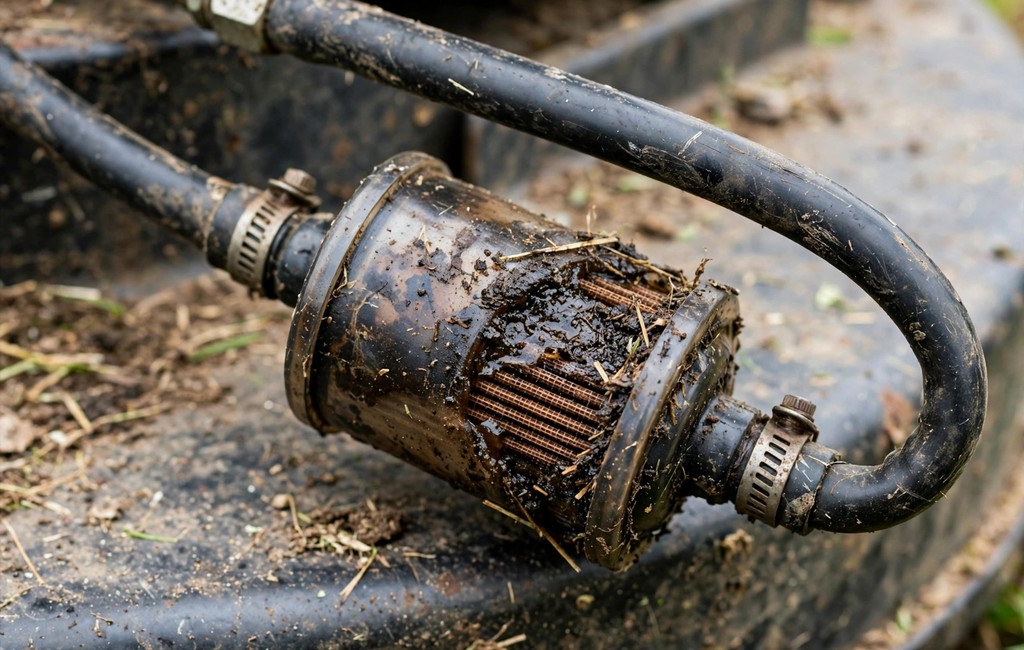
Next, inspect the fuel filter between tank and carburetor. Also, sediment and stale fuel can clog filter media. As a result, the carburetor bowl empties faster than it refills.
First, close the fuel shutoff valve, where fitted. Then, check each fuel line for cracks and blockages. Also, replace a discolored or plugged filter promptly.
Then, confirm steady fuel flow into a safe container. However, keep that container away from ignition sources always. A weak trickle points toward blockage upstream quickly.
Also, stale fuel can leave varnish throughout the system. For example, old fuel smells sour and looks dark. Therefore, drain questionable fuel and refill with fresh fuel. A lawn mower dies under load when fuel flow cannot keep up with demand.
Inspect the Carburetor for Starvation Under Load
Meanwhile, the carburetor must deliver more fuel under load. However, varnish can narrow the main jet opening. Consequently, the engine idles yet starves during cutting.
For example, partially pulling the choke may improve running. That result strongly suggests a lean fuel mixture. Therefore, clean the bowl, float, needle, and jets carefully.
First, photograph linkage and spring positions before disassembly. Then, clean passages with carburetor cleaner and compressed air. Finally, rebuild with fresh gaskets where your manual directs.
However, an engine that never starts needs different checks. Use no-start troubleshooting only when the engine refuses starting. Similarly, keep this guide focused on running stalls. Heat explains many lawn mower dies complaints that vanish after cooling.
Clear Grass Buildup and Stop Overheating
Next, inspect the underside of the mower deck. Wet grass can pack tightly around the blade. As a result, drag rises and engine speed falls.
First, disconnect the spark plug wire before clearing debris. Then, scrape packed grass from the deck and blade. Also, clear grass from cooling fins and air intake screen.
Additionally, inspect the air filter for dust and oil. A clogged filter makes the mixture overly rich. Consequently, the engine can sputter, smoke, and stall.
Also, tall wet grass increases load on every pass. Raise the cutting height and slow your pace. Then, overlap passes less until the deck stays clear.
Meanwhile, blocked cooling fins trap heat around the cylinder. Then the engine may lose power and shut down. For context, review lawn mower smoking causes when smoke appears.
Test an Ignition Coil When a Mower Dies Hot
A failing ignition coil often works when cold. However, heat can open cracks in coil windings. Consequently, spark disappears and the engine quits suddenly.
When the mower stalls, test spark immediately. Then, repeat the test after the engine cools. If spark returns, suspect the coil strongly.
- Cold result: Strong spark returns after cooling points to coil.
- Hot result: No spark while hot suggests coil failure.
- Replacement step: Confirm gap and specs in manual first.
Also, inspect the coil lead and kill wire insulation. Chafed insulation can ground the ignition circuit unexpectedly. Therefore, repair damaged leads before replacing the coil.
Next, remove the spark plug after the engine cools. Heavy carbon or a worn electrode weakens spark noticeably. Therefore, replace a fouled plug and confirm its gap. Keep a short log whenever your lawn mower dies so patterns emerge quickly.
Check Low Oil and Safety Shutoffs
Some engines use low oil shutoffs for protection. When oil drops, the sensor can stop spark. Therefore, park level and check the dipstick carefully.
Also, check oil level before blaming fuel parts. Top oil only to the full mark, never beyond. Meanwhile, typical dipstick marks vary, so confirm manual instructions.
For example, steep slopes can expose the low oil sensor. If shutdown happens only on slopes, recheck oil level. Also, avoid mowing slopes beyond manual limits for safety.
Additionally, operator presence switches can interrupt spark suddenly. For example, a loose bail cable can trigger shutdown. However, never bypass a safety switch for testing.
Prevent the Next Stall After Repairs
After repairs, run the mower under normal cutting load. Then, mow for fifteen minutes and watch for repeats. A stable engine confirms your repair under real conditions.
- Fuel habit: Use fresh fuel and stabilize stored fuel.
- Deck habit: Clean the deck after every wet mowing session.
- Oil habit: Check oil before every mowing session begins.
- Filter habit: Inspect filters monthly during heavy cutting season.
Frequently Asked Questions
Why does my lawn mower start and then die?
Usually, fuel starvation, overheating, or spark loss causes that pattern.
How do I test a lawn mower fuel cap vent?
First, loosen the cap and restart the engine carefully.
Why does my mower die under load?
Often, a clogged main jet starves the engine during cutting.
Why does my mower stall after getting hot?
Often, a failing coil loses spark as heat rises.
Can low oil cause a mower to shut off?
Yes, some engines stop spark when oil drops low.
Conclusion
Overall, start with the cap vent test first. Then, follow fuel through the filter and carburetor. Finally, test heat, spark, oil, and safety shutoffs.
Overall, simple tests save time, money, and needless parts. Each test isolates one cause before you move onward. That order keeps diagnosis clear, safe, and repeatable.
Today, run these checks in order on your mower. Then, replace only the part that your test proves. If stalls persist, book a qualified small engine technician. Simple tests separate the lawn mower dies causes before you buy any parts.



Leave a Reply