

Painting is a craft that rewards good tools. Whether you are an artist, a home decorator, or a hobbyist, the brushes you use will shape the quality of your work. Many people assume that great results require expensive gear. However, that is not always true. With the right knowledge, you can get professional-looking results without spending a fortune.
This guide will help you navigate the world of budget paint brushes and make smart choices. You will learn what to look for, what to avoid, and how to get the most from every purchase. Therefore, by the time you finish reading, shopping for paint brushes will feel much less overwhelming.
Why the Right Brush Makes All the Difference
A brush is more than just a tool. It is an extension of your hand. The way it holds paint, releases it onto a surface, and responds to pressure all affect the final look of your work. A poor brush can leave streaks, shed bristles, and make blending nearly impossible.
On the other hand, a well-made brush gives you control. It holds the right amount of paint and releases it smoothly. It keeps its shape after repeated use. Additionally, it makes techniques like feathering, stippling, and fine detail work much easier to execute.
The great news is that brush quality is no longer tied strictly to price. Many affordable options today perform remarkably well. You just need to know what features to prioritize.
Understanding Brush Types Before You Buy
There are many brush shapes, and each serves a specific purpose. Buying the wrong type will make your work harder, no matter how much you spend. Therefore, understanding the basics before you shop is essential.
Flat Brushes
Flat brushes have a wide, rectangular head. They are ideal for covering large areas quickly and creating sharp, straight edges. They work well for base coats and bold strokes. Additionally, they are great for blending when used on their side.
Round Brushes
Round brushes come to a fine point at the tip. They are the most versatile shape available. You can use them for detailed work, outlining, and filling in small areas. However, they can also create thick strokes when more pressure is applied.
Fan Brushes
Fan brushes have bristles spread out in a wide, curved shape. They are perfect for blending, creating texture, and painting natural elements like grass or foliage. They are also useful for applying glaze or varnish over large surfaces smoothly.
Angular Brushes
Angular brushes have bristles cut at a slant. This makes them excellent for cutting in along edges and painting curved lines. They offer precision that flat brushes cannot always provide. Therefore, they are a popular choice for decorative painting.
Natural Bristles vs. Synthetic Bristles
One of the biggest decisions you will face is choosing between natural and synthetic bristles. Both have strengths, and the right choice depends on the type of paint you use.
Natural bristles come from animal hair, most commonly hog or boar. They are best suited for oil-based paints and varnishes. They hold a large amount of paint and release it evenly. However, they are generally more expensive and require more careful maintenance.
Synthetic bristles are made from nylon or polyester. They work best with water-based paints such as acrylics and latex. They are easy to clean, dry quickly, and hold their shape well over time. Additionally, modern synthetic bristles have improved significantly. Many now rival natural bristles in performance.
For most painters working with acrylics or latex, synthetic brushes offer the best value. They are widely available among cheap paint tools and deliver consistent results across a wide range of applications.
What to Look for in the Ferrule and Handle
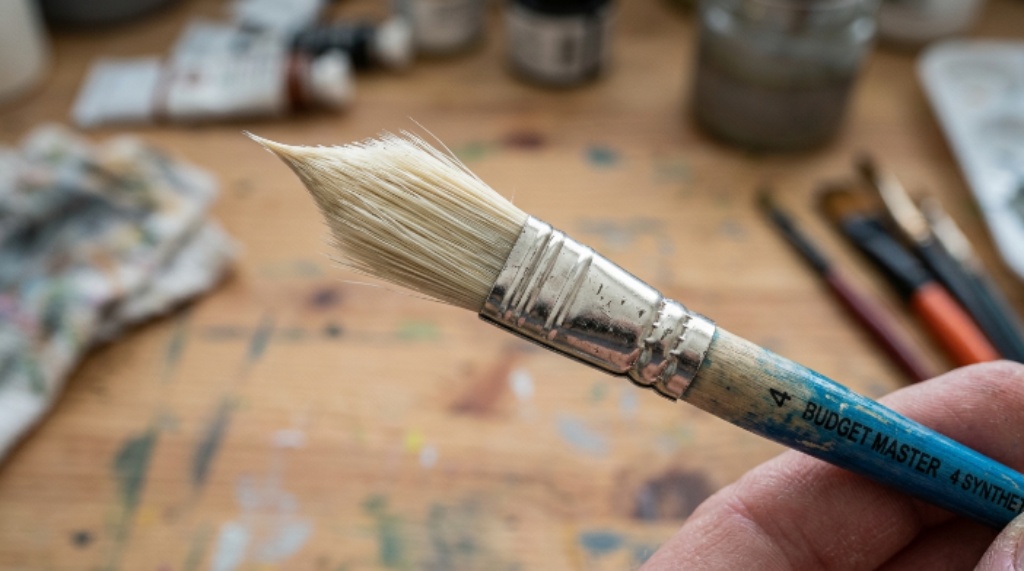
The ferrule is the metal band that connects the bristles to the handle. It plays a critical role in brush durability. A poorly attached ferrule leads to bristles falling out and the brush losing its shape quickly.
Look for a seamless, rust-resistant ferrule. Nickel-plated or stainless steel ferrules are ideal. They resist moisture and do not corrode after repeated washing. Additionally, the ferrule should fit tightly around the bristles with no gaps or wobble.
The handle matters more than many people realize. A long handle gives you distance from your work, which helps with perspective and broad strokes. A short handle offers more control for detailed work. Therefore, consider your painting style when choosing handle length.
Wooden handles are traditional and feel comfortable to hold. However, look for handles with a sealed or lacquered finish. Unsealed wood swells when wet, which weakens the ferrule attachment over time.

How to Spot Quality in an Affordable Brush
Buying affordable brushes does not mean settling for poor quality. There are clear signs that a brush is well-made, even at a low price point. Knowing these signs will help you avoid disappointment.
Here is what to check before you buy:
- The bristles should feel soft but springy. Press them gently and they should snap back into shape.
- Run your fingers through the bristles. A quality brush should shed very few, if any, loose bristles.
- Look at the tip. It should come to a neat point or edge with no stray hairs sticking out at odd angles.
- Check the ferrule. It should sit flush and firm against both the bristles and the handle.
- Inspect the handle for smooth finishing. Rough or splintered wood is a sign of low manufacturing standards.
Additionally, read product reviews from other artists or painters. Real-world feedback about brush shedding, shape retention, and paint flow will tell you far more than a product description.
Building a Starter Set on a Budget
You do not need a large collection to get started. In fact, a small, well-chosen set of brushes will serve you better than a large set of poor-quality ones. For most painters, five brushes cover the majority of tasks.
A good starter set includes one large flat brush for coverage, one medium round brush for general work, one small round brush for detail, one fan brush for blending and texture, and one angular brush for edges and curves.
Many brands sell sets with these five shapes at very reasonable prices. Buying a set is usually more cost-effective than buying individual brushes. Therefore, sets are a smart first purchase when you are exploring budget paint brushes for the first time.
As your skills grow, you can add specialty brushes to your collection one at a time. This approach keeps costs manageable while allowing you to experiment with new techniques.
Caring for Your Brushes to Maximize Their Lifespan
Even the best brush will fail early if you do not care for it properly. Good brush maintenance is simple and takes only a few minutes after each session. However, skipping it regularly will significantly shorten your brush life.
Follow these steps to keep your brushes in top condition:
- Clean brushes immediately after use. Do not let paint dry on the bristles.
- For acrylic paint, rinse with warm water and mild soap. Work the soap gently through the bristles with your fingers.
- For oil paint, use a brush cleaner or solvent before washing with soap and water.
- Reshape the bristles after washing and lay the brush flat or hang it bristle-down to dry. Never store a wet brush upright in a jar.
- Store dry brushes in a roll, case, or jar with bristles facing up and free from pressure.
With proper care, affordable brushes can last for years. Therefore, maintenance is one of the best investments you can make in your craft.
Where to Buy Quality Brushes at Affordable Prices
Knowing where to shop can save you a great deal of money. Art supply stores sometimes run seasonal sales, particularly around back-to-school periods. Online retailers frequently offer competitive pricing and bulk deals.
Direct-to-consumer art brands sell quality brushes at lower prices because they cut out the retail middleman. Additionally, buying sets rather than individual brushes usually offers the best price per brush.
Craft stores with loyalty programs or discount coupons are also a great resource for cheap paint tools. Signing up for newsletters from your favorite stores can alert you to sales you would otherwise miss.
However, always prioritize quality over the lowest price. A slightly more expensive brush from a reputable source will outperform a very cheap one in both results and durability.
Conclusion
Choosing affordable paint brushes for professional results is entirely possible. It simply takes a little knowledge and a careful eye. Focus on bristle quality, ferrule construction, and the right brush shape for your work. Choose synthetic bristles for water-based paints and natural bristles for oils.
Start with a small, versatile set rather than a large collection of inferior brushes. Take care of your tools after every session, and they will reward you with consistent, high-quality results for years. Additionally, shop strategically by timing purchases around sales and exploring reputable value brands.
With the right approach, your budget does not have to limit your creativity. Great painting starts with informed choices, and you are now equipped to make them.
Frequently Asked Questions
1. What is a reasonable price range for good quality paint brushes?
You can find well-made individual brushes in the $5 to $20 range. Sets of five to ten brushes often range from $15 to $40. Anything below $5 per brush may compromise on bristle quality and durability. However, spending over $50 per brush is generally unnecessary unless you are a professional fine artist.
2. Can I use the same brushes for both acrylic and oil paints?
It is not recommended. Acrylic paint requires water for cleaning, while oil paint requires solvents. Using the same brush for both can degrade the bristles faster. Additionally, residual oil paint can contaminate water-based paint and affect the color quality of your work.
3. How do I stop bristles from falling out of my brushes?
Shedding is usually caused by poor ferrule construction or improper cleaning. Avoid soaking brushes in water for long periods, as this loosens the glue inside the ferrule. When cleaning, work paint out of the bristles gently and avoid pressing the brush down hard on the bottom of a jar.
4. What brush should a complete beginner start with?
A medium round brush is the most versatile starting point. It can handle detail work, fill in areas, and create varied stroke widths depending on pressure. Once you are comfortable with a round brush, adding a flat brush will expand your capabilities significantly.
5. Are brush sets worth buying, or is it better to choose individual brushes?
For beginners, sets offer better value and variety. They allow you to explore different brush shapes without committing to high-cost individual purchases. As your skills develop, you will identify which shapes you use most. At that point, investing in higher-quality individual brushes for your preferred styles makes more sense.
Related Topics:
How To Bid A Painting Job Exterior
Can I Paint Laminate Countertops? Transform Your Kitchen on a Budget





Leave a Reply
Cancel reply