
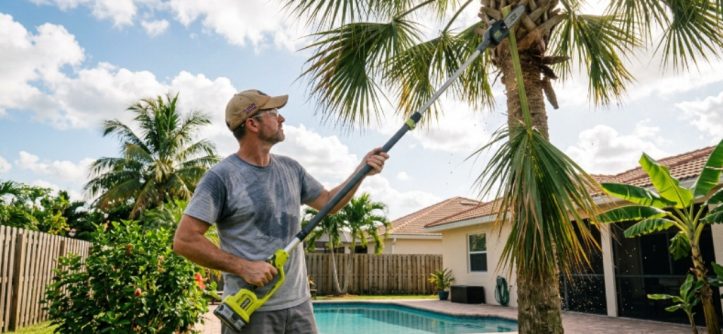
Florida is unlike almost any other state when it comes to yard maintenance. The warm, humid climate encourages rapid plant growth year-round. Palm trees, live oaks, crape myrtles, and subtropical shrubs grow faster here than in cooler states. That means trimming season never really ends.
If you own property in Florida, a pole saw is one of the most useful tools you can have. It lets you cut branches high above your head without climbing a ladder. However, not every pole saw is built to handle Florida’s unique demands. Heat, humidity, salt air near the coast, and the sheer volume of trimming required all affect which tool will serve you best.
This guide walks you through everything you need to consider before buying. By the end, you will know exactly how to find the best pole saw for your Florida yard.
Why Florida’s Climate Creates Unique Challenges for Pole Saws
Most tools are designed and tested in average conditions. Florida is far from average. Temperatures regularly exceed 35 degrees Celsius from May through September. Humidity sits above 80 percent for much of the year. Near the coast, salt air accelerates corrosion on metal components and motors.
These conditions affect pole saws in several ways. Metal bars and chains rust faster. Plastic housings can become brittle under prolonged UV exposure. Electric motors can overheat during extended use on hot days. Batteries drain more quickly in high heat.
Additionally, Florida trees tend to grow at an extraordinary pace. What you trim in spring may need attention again by midsummer. Therefore, a pole saw here gets far more use than it would in a northern state. Durability and ease of maintenance are not optional features in this climate. They are essential.
Understanding the Three Main Types of Pole Saws
Before narrowing your choices, it helps to understand the three main categories available. Each has strengths and trade-offs that matter in a Florida setting.
Corded Electric Pole Saws
Corded models plug into a standard outlet and deliver consistent power throughout the entire job. They never run out of charge and tend to be lighter than gas models. However, the cord limits how far you can roam from a power source. For most residential yards with a garage or outdoor outlet nearby, this is not a major issue. These saws work well for regular light to medium trimming tasks.
Battery-Powered Cordless Pole Saws
Cordless models offer the freedom to move anywhere in your yard without a cord trailing behind you. Modern lithium-ion batteries have improved dramatically and now power saws through significant workloads. The main trade-off is battery life. On a hot Florida afternoon, batteries can drain noticeably faster than they would in cooler conditions. Choosing a model that comes with two batteries or supports quick charging helps overcome this limitation.
Gas-Powered Pole Saws
Gas models deliver the most raw power and are ideal for heavy-duty trimming of thick branches. They are completely independent of any power source, which makes them useful for large rural properties or areas without easy access to electricity. However, they are the heaviest option, require more maintenance, and produce exhaust fumes. In a residential setting with neighbors nearby, the noise and smell of a gas saw can also be a drawback.
Key Features to Look for When Buying a Pole Saw in Florida
Once you know which type suits your situation, focus on specific features that matter most in this climate.
Bar Length and Reach
Pole saws come with different bar lengths, typically ranging from 20 to 40 centimetres. A longer bar cuts through thicker branches but adds weight to the end of an already long pole. For most Florida homeowners dealing with palm fronds, oak branches, and ornamental trees, a bar length of 20 to 25 centimetres is sufficient.
Pay attention to the total reach of the tool as well. Most pole saws extend to between 2.5 and 4.5 metres. For trimming the lower canopy of a large live oak or removing palm fronds from a standard residential palm, a reach of 3 to 3.5 metres is usually adequate. Taller trees may require professional arborists rather than a standard pole saw.
Corrosion-Resistant Components
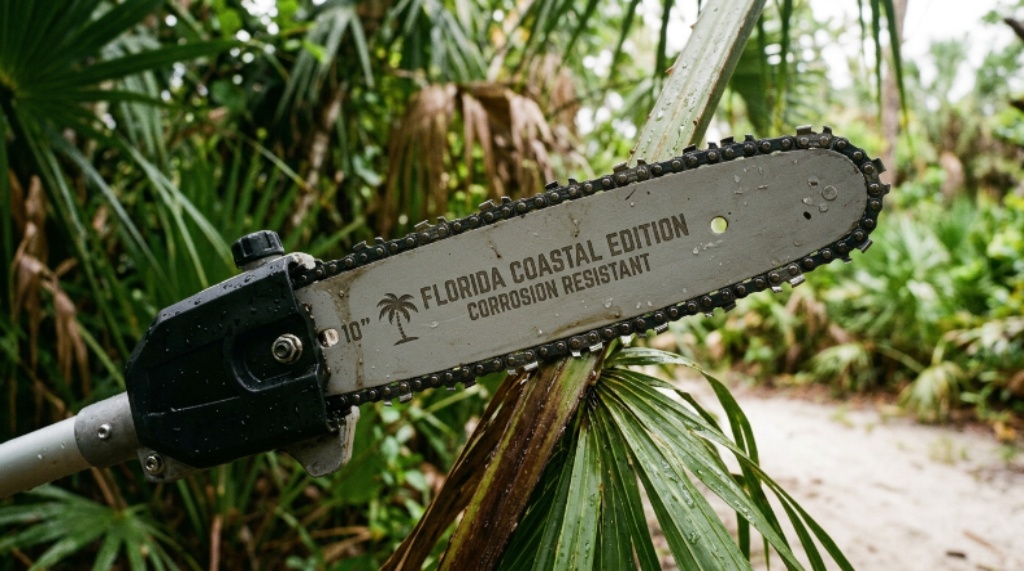
This is a feature that matters far more in Florida than in most other states. Look for pole saws with stainless steel hardware, anodized aluminum poles, and sealed motor housings. Rustproof components last significantly longer in humid and coastal environments. Additionally, sealed joints and connections prevent moisture from working its way into the tool during storage or use.
Weight and Balance
A pole saw at full extension creates significant leverage. Even a relatively light tool can feel heavy after 20 minutes of overhead cutting. Look for a model that balances well throughout its length, not just at the handle. Many manufacturers list the tool’s balance point in their specifications. A lower balance point, closer to the handle, reduces arm fatigue considerably.
Chain Tension and Maintenance Access
Florida yards require frequent trimming, which means your pole saw chain will need regular tensioning and occasional replacement. Choose a model with a tool-free or easy-access chain tensioning system. This makes routine maintenance faster and more likely to actually get done. A well-tensioned chain cuts more efficiently and is safer to operate.
Overheating Protection
Extended use in high temperatures is a real concern in Florida. Some electric and battery-powered models include thermal overload protection that shuts the motor down before it overheats, then allows it to restart once it has cooled. This feature protects the motor from damage and extends the lifespan of the tool significantly.
Matching Your Pole Saw to Your Most Common Trees
Florida homeowners deal with a specific set of trees and shrubs that have their own trimming demands. Knowing your trees helps you choose the right tool.
Palm trees are the most common trimming task for many Florida residents. Dead fronds need regular removal, and the petioles that connect them to the trunk can be surprisingly tough. A saw with a sharp, aggressive chain and a bar of at least 20 centimetres handles palm fronds cleanly. Cordless models work particularly well here because palms are often far from any outlet.
Live oaks grow quickly and drop heavy canopy over driveways, roofs, and fences. Their branches can be thick and dense. For heavy oak limbs, a gas model or a high-voltage cordless model with a longer bar handles the job more comfortably than a light corded saw.
Crape myrtles, citrus trees, and ornamental shrubs are lighter trimming work. Almost any pole saw handles these easily. For these tasks, a lightweight corded or battery model is ideal.
Safety Considerations for Trimming in Florida Conditions
Using tree pruning tools safely requires more thought in Florida than in cooler climates. Heat and humidity affect both your concentration and your physical endurance.
Always trim during the cooler parts of the day. Early morning sessions between 7 and 10 a.m. are ideal. The temperature is lower, the light is better, and you will have more energy to handle the tool safely. Avoid cutting during the hottest part of the afternoon, typically between noon and 4 p.m. in summer.
Wear protective gear every time. Safety glasses protect your eyes from falling debris. A hard hat is worth using when trimming directly overhead. Cut-resistant gloves improve your grip and protect your hands. Long sleeves, while warm, protect your arms from scratches and falling chips.
Never operate a pole saw on a wet surface or immediately after rain. Wet grass is slippery, and wet wood behaves differently under a chain saw. Additionally, check overhead for power lines before extending your pole. Florida neighborhoods often have lines running through tree canopies, and contact with them is extremely dangerous.
Maintaining Your Pole Saw in a Humid Climate
Even the best pole saw Florida homeowners can buy will deteriorate quickly without proper care. Maintenance in a humid environment needs to be more frequent than the manufacturer’s standard recommendations.
After every use, wipe down all metal components with a dry cloth. Apply a thin coat of light machine oil to the bar, chain, and any exposed metal joints. Store the tool indoors, away from direct humidity. A garage with good air circulation is sufficient. Avoid storing it in an outdoor shed with poor ventilation.
Sharpen or replace the chain regularly. A dull chain puts more strain on the motor and makes cutting less precise. In Florida, where the volume of trimming is high, chains need attention more often than in other climates.
Check for cracks in the pole sections after any hard use. UV exposure gradually weakens plastic over time, and a cracked pole section can fail under load. Replace any damaged section immediately rather than continuing to use the tool.
Conclusion
Choosing the right pole saw for a Florida yard requires thinking beyond basic specs. The heat, humidity, salt air, and year-round growth cycle of the Sunshine State all place extra demands on any tool you buy.
Start by deciding which power type suits your property and trimming volume. Then focus on corrosion resistance, weight, bar length, and overheating protection. Match your choice to the trees you trim most often, and always prioritize safety during hot conditions.
The best pole saw for Florida use is one that can handle frequent work, resist the climate, and remain easy to maintain season after season. Invest wisely, care for your tool properly, and it will keep your yard looking its best through every growing season. With the right tree pruning tools in hand, Florida’s fast-growing landscape becomes manageable rather than overwhelming.
Frequently Asked Questions
What is the best type of pole saw for trimming palm trees in Florida?
A cordless battery-powered pole saw works particularly well for palm trees. Palms are often located far from power outlets, and a cordless model gives you the freedom to reach them easily. Choose a model with a bar of at least 20 centimetres and a sharp, aggressive chain for cutting through tough petioles.
How often should I sharpen my pole saw chain in a Florida climate?
In Florida, where trimming frequency is high, plan to inspect and touch up your chain every three to five uses. A dull chain is immediately apparent because it requires more force and produces rough, ragged cuts. Replace the chain entirely once sharpening no longer restores clean cutting performance.
Can salt air near the Florida coast damage a pole saw?
Yes, significantly. Salt air accelerates corrosion on metal components, particularly the bar, chain, and fasteners. Choose a model with stainless steel hardware and sealed motor housing. Wipe down all metal parts with an oiled cloth after every use and store the tool indoors to extend its lifespan.
Is a gas pole saw worth buying for a residential Florida yard?
For most residential properties, a gas model offers more power than is necessary and comes with extra noise, fumes, and maintenance demands. A high-voltage cordless model or a corded electric saw handles the majority of residential trimming tasks comfortably. Gas saws are better suited to large rural properties with heavy hardwood trees.
When is the safest time of day to use a pole saw in Florida summer?
Early morning between 7 and 10 a.m. is the safest and most comfortable window. Temperatures are lower, your energy levels are higher, and you avoid the peak heat of the afternoon. Avoid trimming between noon and 4 p.m. in summer, when heat exhaustion risk is highest and concentration tends to drop.


Leave a Reply