
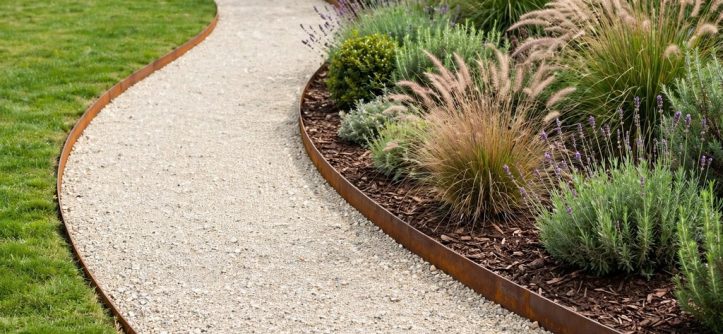
Metal edging gives gravel paths a firm boundary and a tidy finish. A slim steel strip holds loose stones in place and stops drift onto lawns. As a result, the finish looks clean, feels stable, and needs less raking.
For example, metal garden edging contains loose gravel while it separates walking surfaces from planting areas. Additionally, the vertical strip blocks grass roots and keeps mulch from mixing into the path. Gardeners gain a crisp line that stays visible through every season.
Additionally, this guide explains material choices, sizing, installation steps, and simple upkeep. You will learn how to match edging to your path and avoid common mistakes.
Why Gravel Paths Spread Without an Edge
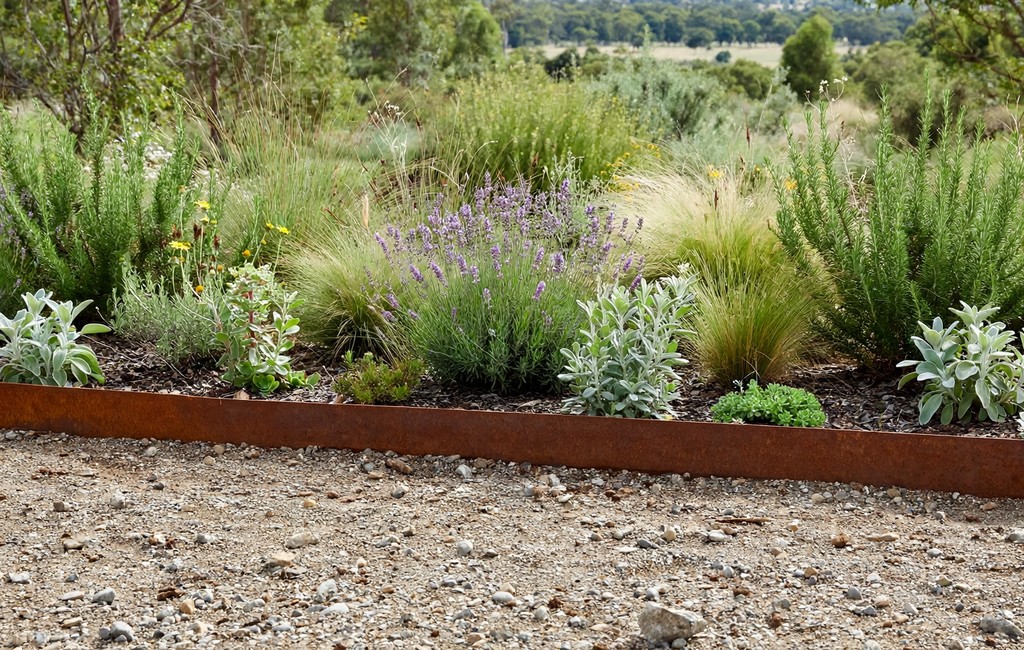
Foot traffic pushes loose stones sideways with every step. Meanwhile, rainwater carries small stones downhill and scatters them across lawns. Mowers and wheelbarrows catch stray stones and fling them farther from the path.
Meanwhile, grass and weeds creep inward from unprotected edges and blur the path line. An unedged path therefore widens unevenly and loses its intended shape within a season. A firm edge solves both problems by holding stones and blocking roots at once.
Edging also protects nearby planting areas from gravel spill and soil compaction. Clean lines help visitors read the garden layout and follow paths confidently. Homeowners spend less time sweeping stones off lawns and driveways afterward.
Steel, Aluminum, and Corten Choices
Durable Strips for Straight Lines
Steel strips hold a straight line under soil pressure and foot traffic. Similarly, thicker gauges resist bending when you tamp gravel against the edge. Powder-coated steel additionally resists rust and keeps a neat dark finish.
Aluminum Strips for Curves
Aluminum bends easily around curves and gentle corners. Installers shape it by hand without special tools or heavy force. However, aluminum flexes more than steel under sustained root pressure.
Corten Steel for a Rustic Look
Corten steel develops a warm rust-colored patina that protects the metal beneath. The weathered tone suits natural gardens, stone paths, and timber features. Similarly, raw steel offers a clean silver line for modern garden designs.
Choosing the Right Height and Profile
First, match edging height to your finished gravel depth for a flush result. A strip slightly above the gravel surface contains stones without creating a trip hazard. Deeper strips additionally block more roots and hold thicker gravel layers.
For example, garden paths usually need a lower profile than driveways or parking areas. Narrow strips disappear beside the path, while wider strips make a stronger visual statement. Measure your gravel depth before ordering so every strip fits the design.
Installing Metal Edging Along a Gravel Path
First, mark the path edge with string lines or spray paint. Clear grass, roots, and loose soil from the marked line. Dig a narrow trench along the line, deep enough to seat the strip firmly.
Next, set each strip into the trench and check the top line with a level. Drive stakes through the fixing slots at regular intervals along every strip. Join strips with connectors or overlapping ends, then tighten every fixing securely.
Finally, spread gravel up to the edging and rake it level across the path. Then, compact the gravel lightly so stones settle against the strip. Step back, inspect the line from several angles, and adjust any high spots.
Pairing Edging With Lawns, Beds, and Patios
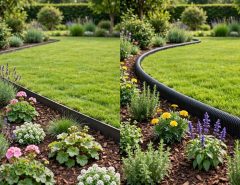
Metal edging creates clean transitions where paths meet lawns, beds, and patios. Similarly, mowers glide along the strip without scattering stones into grass. Gardeners edge beds on one side and paths on the other with matching strips.
In contrast, timber borders rot over time and plastic borders crack under pressure. Metal strips therefore suit gardeners who want durable lines with minimal upkeep. Match the finish across the garden for a unified and intentional look.
Gravel Types That Pair Well With Metal Edging
Pea gravel feels smooth underfoot and settles neatly against a metal strip. In contrast, crushed stone locks together firmly and shifts less underfoot. Angular gravel additionally grips the edging and resists rolling across the path.
For example, fine gravel suits quiet garden paths, while coarser stone suits busier routes. Avoid rounded stones on slopes, since they roll easily and escape the border. Test a small section first and observe how the gravel behaves underfoot.
Keeping Edges Clean and Stable
First, rake stray stones back onto the path during regular garden tidy-ups. Pull weeds along the edge before roots lift or loosen the strips. Additionally, check stakes after heavy rain and firm any that feel loose.
Top up gravel each season to keep depth even beside the edging. Trim grass along the strip with shears for a crisp finish. As a result, the border stays straight, tidy, and easy to maintain.
Inspect the top line each spring and re-level any strips that frost lifted. Replace bent stakes promptly so small shifts never become long wavy sections. Meanwhile, clear leaves and debris from the edge to stop moisture buildup.
Mistakes That Undermine a Gravel Border
- Skipping stakes: Stakes anchor every strip against soil pressure and foot traffic.
- Setting strips too low: Low strips let stones roll over the edge onto lawns.
- Leaving gaps at joints: Open joints leak gravel and weaken the whole border line.
- Ignoring drainage: Standing water softens soil and shifts edging out of alignment.
- Mixing materials carelessly: Mismatched strips create uneven heights and a messy finish.
Frequently Asked Questions
Does metal edging stop gravel from spreading onto lawns?
Yes, a staked metal strip blocks sideways movement and keeps stones on the path.
How deep should metal edging sit beside a gravel path?
Seat the strip deep enough to anchor firmly while its top sits near gravel level.
Can metal edging follow curved gravel paths?
Yes, flexible strips bend smoothly around curves and gentle corners.
Which metal lasts longest beside gravel paths?
Steel generally holds its line longest, while aluminum suits lighter curved borders.
Do I need landscape fabric under gravel paths?
Fabric helps, since it separates soil from gravel and slows weed growth.
Give Your Gravel Paths a Lasting Clean Edge
Metal edging turns a loose gravel path into a defined garden feature. Therefore, choose the right metal, set it carefully, and maintain it each season.
Start with one path, measure its edges, and order strips to fit. Your garden will gain cleaner lines, tidier beds, and paths that stay put.
Walk your garden today, note every path edge, and plan your first border upgrade. Clean borders reward that small effort with tidier paths for seasons ahead.

Leave a Reply