
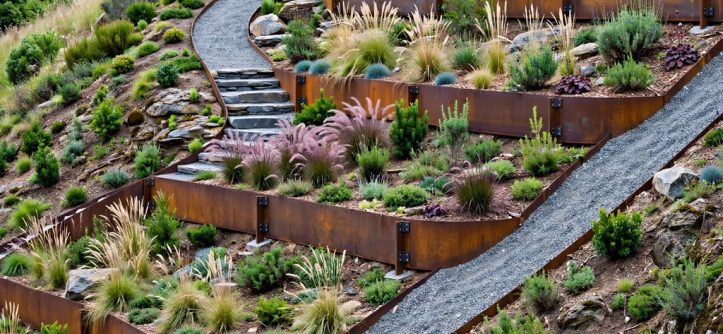
Metal garden edging shapes sloped yards into clear, usable planting levels. It holds soil, mulch, and gravel in place along each contour. Therefore, gardeners gain stable beds, tidy paths, and safer footing on uneven ground.
Slopes move water downhill quickly, and loose soil follows that same path. Additionally, bare edges let mulch wash away and roots lose support after heavy rain. Metal strips interrupt that movement and create calm pockets for planting.
For example, a gentle slope needs only low borders to define beds. Meanwhile, a steeper slope benefits from stepped terraces and stronger support. This guide explains practical ideas, safe limits, and simple planting choices.
How Metal Garden Edging Separates Levels on a Sloped Yard
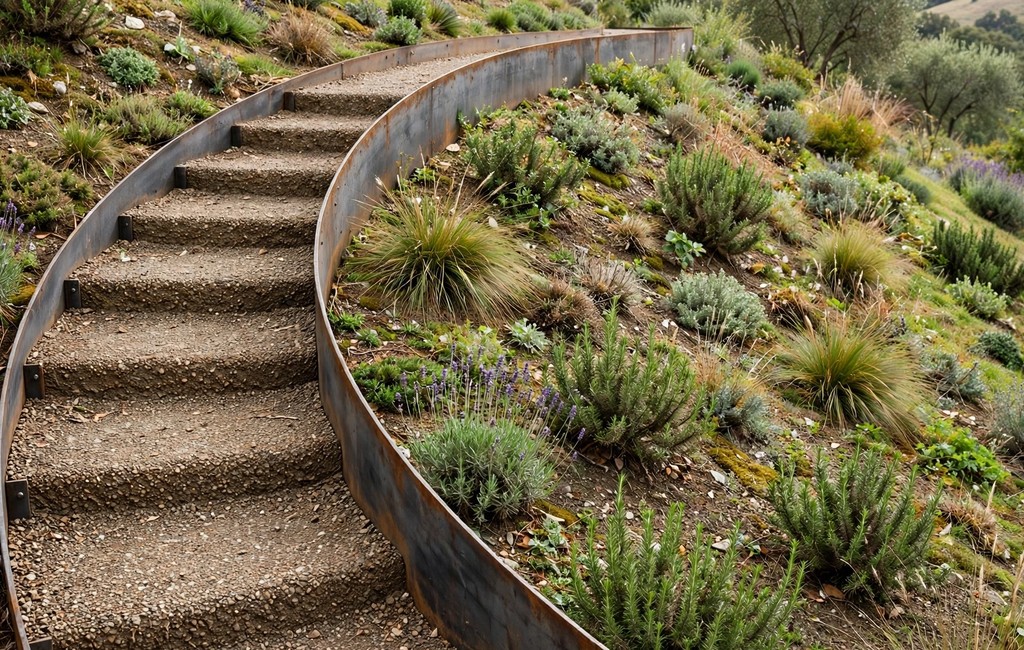
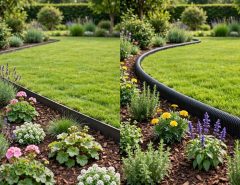
Careful metal garden edging divides a slope into distinct planting levels. Each strip marks one level and stabilizes small planting borders against downhill drift. Additionally, the clear edge keeps soil, mulch, and paths separate at every step.
First, mark the contour where each level should sit. Next, follow that line around curves and corners without forcing sharp angles. Finally, check the line from below before digging any trench. As a result, each level reads as intentional rather than accidental.
Decorative Edging Versus Engineered Retaining Structures
Decorative edging defines borders and holds small amounts of loose material. However, decorative edging cannot replace a retaining wall under heavy soil pressure. Engineered structures resist lateral pressure, manage water, and support steep ground. In contrast, thin strips work best for gentle grades and shallow planting pockets.
Similarly, height signals function, and taller borders demand greater caution. Therefore, treat tall borders as structural work rather than simple decoration. Additionally, tall borders or areas with significant soil pressure may need proper drainage, reinforcement, and professional assessment. Seek expert advice before building above a gentle, low border.
Metal Garden Edging Terraced Beds for a Sloped Yard
Terraces break one long slope into shorter, flatter planting steps. Each step slows water and gives roots a level place to grow. For example, plant groundcovers on upper edges and taller plants behind them. Meanwhile, leave walking room between levels for watering and pruning.
Start at the lowest level and build upward one terrace at a time. Next, level each shelf before adding soil or plants. As a result, lower levels support upper levels without crowding the slope. Finally, plant each level fully before moving to the next terrace.
Paths, Steps, and Drainage on Sloped Ground
Metal edging also frames paths and steps that cross a slope safely. It contains gravel, guides foot traffic, and separates planting from walking areas. Additionally, edging along a path stops loose material from spilling downhill. For example, curve a path gently across the slope instead of running straight down.
Good drainage protects every terrace, path, and planting border. Water needs a clear outlet, and trapped water increases pressure behind borders. Therefore, direct runoff toward gravel channels, planting pockets, or open ground.
Similarly, avoid sealing gaps where water naturally needs to escape. Next, inspect outlets after heavy rain and clear any blockages promptly.
Steps connect terraces and deserve the same careful edging as beds. Metal strips frame each riser and contain gravel treads securely. Additionally, keep treads level and wide enough for comfortable footing. Finally, add groundcovers beside steps to soften edges and catch runoff.
Choosing Metal Garden Edging Finishes for a Sloped Yard
Weathering steel develops a warm rust patina and suits natural planting schemes. Galvanized steel offers a cooler, silvery finish for modern garden designs. Aluminum edging bends easily around curves and resists corrosion in damp soil. In contrast, darker powder-coated steel recedes visually behind dense foliage.
Plant roots stabilize soil, so choose plants that suit slope conditions. For example, pair deep-rooted shrubs with spreading groundcovers along exposed edges. Additionally, ornamental grasses soften hard metal lines and slow surface runoff.
Meanwhile, perennials fill terraces with seasonal color without hiding the structure. Finally, mulch each level lightly and keep mulch below the metal edge.
Metal Garden Edging Installation Tips for a Sloped Yard
Careful installation keeps metal edging stable through wet and dry seasons. Mark lines, dig shallow trenches, and anchor strips firmly into compacted soil. Additionally, drive stakes at regular intervals, especially on curves and steep sections. Next, backfill gradually and tamp soil firmly against both sides.
Anchor spacing: Place stakes close together on curves and steep sections.
Level checks: Check each strip with a level before backfilling soil.
Soil backfill: Tamp soil in thin layers to prevent settling and shifting.
Seasonal inspection: Inspect joints, stakes, and drainage outlets after heavy rain.
Inspect edges after storms and reset any strips that shift downhill. Similarly, trim plants that hide the edge and trap damp debris. Therefore, small repairs stay simple when gardeners catch movement early. Finally, replace damaged stakes promptly to protect neighboring terraces.
Design Ideas for Terraces, Corners, and Small Slopes
Use narrow terraces for herbs and wide terraces for shrubs and seating. Additionally, stagger terrace ends to create planting pockets and visual rhythm. For example, curve one level around a tree and square another near a path. Meanwhile, repeat one metal finish across levels for a cohesive look.
Small slopes benefit from low borders, gravel paths, and dense groundcovers. In contrast, larger slopes need shorter terraces and more frequent level breaks. Therefore, match terrace size to slope steepness and available maintenance time. Next, test access routes before planting tall shrubs near narrow steps.
Frequently Asked Questions
Can Metal Edging Hold Soil on a Slope?
Yes, low metal edging holds small amounts of soil on gentle slopes.
What Is the Best Metal Edging for a Sloped Yard?
Flexible steel follows curves well, while taller panels suit stepped terraces.
Do Terraced Beds Need Drainage Behind Metal Edging?
Yes, drainage outlets prevent trapped water and reduce pressure behind borders.
Can I Build Tall Metal Borders Without Professional Help?
Seek professional assessment for tall borders or significant soil pressure.
Which Plants Work Best Along Sloped Metal Edging?
Groundcovers, ornamental grasses, and shrubs stabilize soil and soften edges.
Create Stable, Beautiful Levels in Your Sloped Yard
Metal edging turns a difficult slope into organized planting levels. Start with one gentle terrace and expand gradually as confidence grows. Additionally, plan drainage, choose suitable plants, and respect structural limits. Sketch your slope today, mark your first terrace, and transform uneven ground into a garden you enjoy.

Leave a Reply