
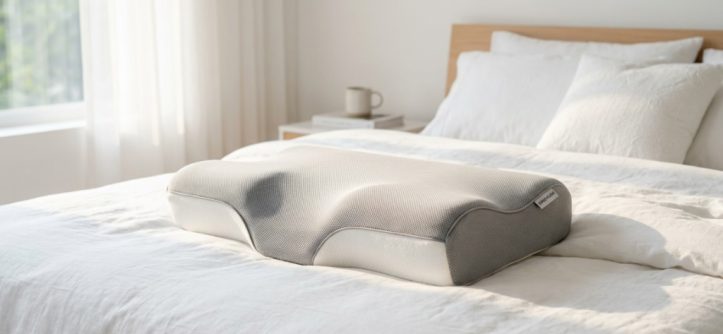
Waking up with a stiff, aching neck is a frustrating way to start the day. If you’ve been tossing and turning all night, only to rise with a headache or a knot that won’t budge, your pillow is likely the culprit. Traditional pillows push your head forward, straining the natural S-curve of your spine. The solution lies in understanding how proper alignment transforms your sleep. This guide explores how a cervical pillow for neck support can restore your posture, alleviate pain, and improve sleep quality, offering actionable advice on choosing and using one effectively.
What Exactly Is a Cervical Pillow and Why Do You Need One?
A cervical pillow is a contoured orthopedic pillow designed to maintain the natural lordotic curve of your cervical spine while you sleep. Unlike flat or fluffy standard pillows, these are engineered with a dip in the center and elevated edges to cradle your head and support your neck.
The Science Behind Cervical Support
Your neck isn’t designed to rest on a thick slab of foam. When your head is elevated at an unnatural angle, the muscles, ligaments, and discs in the cervical spine are placed under stress for hours. Cervical pillows work by filling the space between your head and shoulder, keeping the spine in a neutral, straight line from your hips to your ears. This reduces muscle tension and prevents the “sleep creases” that contribute to morning stiffness.
Standard Pillows vs. Cervical Pillows
Standard pillows typically offer uniform loft, which often fails to accommodate the longer distance between your shoulder and ear compared to the width of your head. Cervical pillows use a “ramp” or “contour” design. The neck roll supports the curve, while the central depression allows your head to rest without tilting upward. This distinction is critical for side and back sleepers who need targeted support rather than just softness.
Who Benefits the Most?
While anyone can benefit from better sleep posture, individuals with chronic neck pain, whiplash injuries, or occipital neuralgia—a condition affecting the nerves at the base of the skull—often find significant relief. Even if you are pain-free, preventing the gradual wear-and-tear of your spine is easier than fixing it later. Think of this pillow as an investment in your long-term musculoskeletal health.
How Does a Cervical Pillow Actually Relieve Neck Pain?
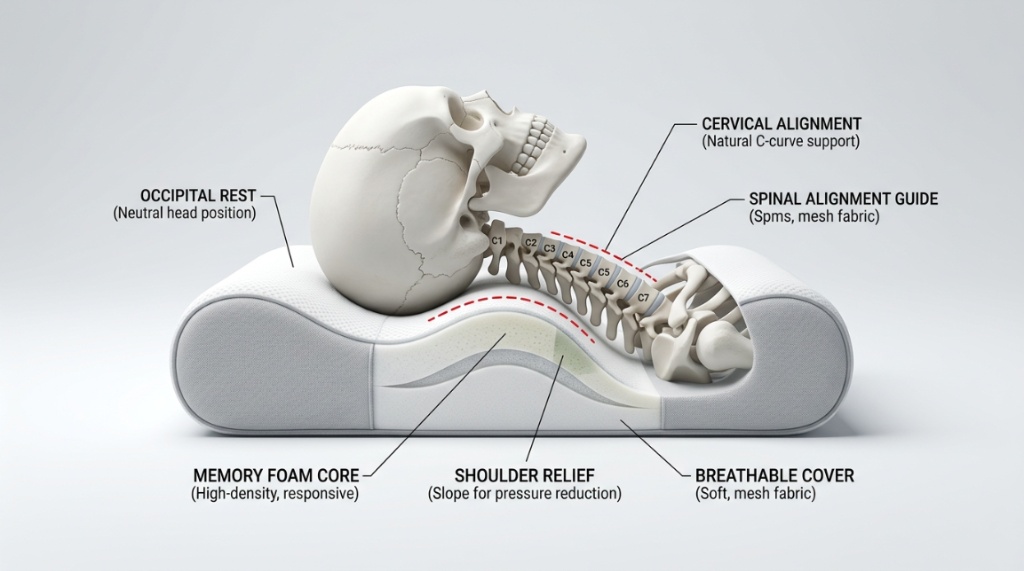
Cervical pillows relieve neck pain by redistributing pressure and maintaining alignment, which allows muscles to relax and decreases inflammation around sensitive nerve roots. The adjustment period can be challenging, but the long-term benefits are substantial.
Reducing Pressure Points
When you sleep on a wrong pillow, the weight of your head (roughly 10-12 pounds) falls unevenly on one side, creating pressure points. A contoured design spreads this load across a larger surface area. This improves blood circulation and prevents waking up with a “pins and needles” sensation in your arms or hands, a common sign of compressed nerves.
Preventing Morning Headaches
Tension build-up at the base of the skull often leads to cervicogenic headaches. By supporting the facet joints and reducing strain on the suboccipital muscles, the pillow minimizes the trigger points that cause these headaches to radiate. For migraine sufferers, reducing sleep disturbance is a vital strategy for prevention.
The Alignment and Breathing Connection
Proper cervical alignment isn’t just about bones; it impacts your airway. When your head is pushed forward, the airway narrows, making breathing more difficult. A neutral neck position helps keep the trachea open, which can reduce snoring and improve oxygen flow. This leads to deeper, more restorative sleep stages, which are essential for pain recovery.
Which Cervical Pillow Shape Is Right for Your Sleep Position?
Your sleeping position dictates which type of cervical pillow for neck support will work best. There are primarily two shapes: the butterfly (wave) and the classic contoured (ramp).
Butterfly Pillows for Back Sleepers
The butterfly design features a distinctive cut-out in the center for the head and thicker bolsters under the neck. This is ideal for back sleepers because it gently cradles the back of the skull while supporting the neck curve. The wing-like sides also offer a cozy place to rest your shoulders without rolling them forward.
Ramp Pillows for Side Sleepers
Side sleepers require a taller loft to fill the space between the shoulder and ear. Ramp-style pillows have a high edge that supports the neck when you roll over. These usually have a flatter middle section that prevents your head from tilting up to the ceiling or down to the mattress. Your ear should rest comfortably in the center groove, keeping your spine parallel to the mattress.
Adjustable Lofts and Fill Materials
Some pillows feature adjustable inserts, allowing you to add or remove fill to customize loft. This is beneficial for combination sleepers. Materials range from memory foam (which conforms) to latex (which is more responsive) and even water-based pillows (which provide adaptive support). Consider whether you want a “sleeping in the pill” feel or a “sleeping on top” feel before purchasing.
Side Sleeping vs. Back Sleeping: Does It Change the Technique?
Yes, the technique for getting support differs. Back sleepers need a lower loft to keep the head back, while side sleepers need a higher loft to lift the head off the shoulder.
Positioning for Back Sleepers
When lying on your back, the back of your head should rest in the lower, central groove. Your chin should stay neutral—not poking toward the ceiling and not tucked into your chest. A great test: you should be able to look at the ceiling with your face parallel to it. If your forehead is higher, the pillow is too high.
Positioning for Side Sleepers
Lie on your side with the pillow’s higher edge supporting your neck. Ensure your nose aligns exactly with the center of your sternum and the middle of your pelvis. This alignment prevents twisting. Often, side sleepers also benefit from placing a small pillow between their knees to keep the spine aligned from the lower back to the neck.
Transitioning if You’re a Stomach Sleeper
Stomach sleeping is highly discouraged for neck health, as it requires turning the head 90 degrees. If you are using a cervical pillow, stomach sleeping will be uncomfortable, naturally discouraging the behavior. However, if you must, use the lowest loft possible or place the pillow under your stomach rather than your head to wean yourself off the habit.
Can You Use a Cervical Pillow If You Have Migraines?
Yes, cervical pillows are specifically recommended for migraine management due to their ability to eliminate pressure on the occipital nerves and reduce muscular tension that triggers pain.
The Occipital Nerve Connection
Migraines often stem from referred pain. When the neck muscles are tight, they compress the greater occipital nerve, which runs from the top of the spinal cord to the scalp. By keeping the neck lengthened and relaxed, the pillow helps prevent the nerve entrapment that is characteristic of occipital neuralgia.
Reducing Sensory Input
Many contoured pillows use “cooling gel” finishers. Temperature regulation is vital for migraine sufferers, as overheating can be a trigger. A cool, comfortable pillow reduces the likelihood of night sweats and keeps your core temperature low, which supports sleep onset and maintenance.
Is It a Treatment or a Preventative?
Think of the pillow as a preventative tool. It won’t stop a migraine once it has started, but it reduces the “baseline” tension in your shoulders and neck. Over time, this lower baseline means you have a higher threshold before stress or diet pushes you over the migraine edge. Consistency is key here.
How Long Does It Take to Get Used to a Cervical Pillow?
It typically takes between 3 to 7 nights to adapt to a cervical pillow, though some users report needing up to two weeks for the muscles to “release” their old guarded posture.
Night 1 to Night 3: The Discomfort Phase
During the initial nights, you might feel that the pillow is too firm or that your neck is stretched. This is the “unlearning” phase. The muscles are lengthening in a way they haven’t for years. If you experience pressure pain on the bone, that’s okay. If you experience sharp, radiating pain, stop and adjust the foam loft.
Night 4 to Night 7: The Adjustment Phase
By the end of the first week, the foreign feel usually subsides. Your body recognizes the neutral alignment as safe. You may notice you are sleeping deeper because you are no longer subconsciously shifting to relieve pressure.
When to Persist vs. When to Quit
If after 10 days you still wake up with numbness in your fingers, the loft is likely too high. If you wake up with a sore jaw, it might be too low. Listen to your body. A slight soreness like after a massage is normal; sharp joint pain is not. Allow a transition period by using the pillow for an hour while watching TV before sleeping on it all night.
What Features Should You Look for in a High-Quality Cervical Pillow?
Choosing the right pillow involves analyzing loft, firmness, material density, and the distribution of the contour. It is a personal fit rather than a one-size-fits-all accessory.
Loft Height and Shoulder Width
Measure the distance from your ear to the outer edge of your shoulder. If this measurement is 5 inches, your pillow loft should be around 4 to 5 inches to compensate for the mattress sink. This “Ear-Shoulder Height” test is the most reliable indicator of the loft you need.
Firmness and Material Density
Low-density foam (soft) is forgiving but provides poor support. High-density memory foam (25-30 ILD) supports the weight of the head without bottoming out. For hot sleepers, consider latex or gel-infused foams which are more breathable. The support firmness should be similar to the firmness of a good running shoe—stable yet slightly cushioned.
Hypoallergenic and Maintenance
Always check if the cover is removable and washable. Since you’ll be putting your face on this nightly, microfibers and dust mites can be a problem. Look for organic cotton covers or those treated with silver ions. Additionally, check the warranty—a quality cervical pillow should last 2-3 years without losing its shape.
How to Properly Maintain and Clean Your Cervical Pillow
Proper maintenance extends the life of the pillow and hygiene protects your skin and respiratory health. Foam pillows generally cannot be machine washed, but covers can.
Daily and Weekly Maintenance
Fluff the pillow (even foam ones benefit from a shake) daily to allow the material to expand. Every week, remove the outer cover and wash it in cold water on a gentle cycle. Air dry the cover—do not put it in the dryer as heat can shrink it.
Spot Cleaning the Foam Core
For sweat stains, spot clean with a damp cloth and a mild detergent. Wring the cloth well so no excess water seeps into the foam. Never submerge the foam core in water; this breaks down the cell structure, causing it to crumble. Dry the foam instantly with a fan or hairdryer on a cool setting.
When to Replace Your Pillow
If you fold the pillow in half and it does not spring back, or if you see visible yellowing (oxidation) and crumbling, it is time to replace it. The National Sleep Foundation suggests replacing pillows every 1.5 to 3 years. A tired pillow leads to poor support, negating the benefits you worked to achieve.
Is a Neck Pillow Safe for People with Osteoarthritis?
Yes, cervical pillows can be safe and beneficial for osteoarthritis, provided the pillow is not too firm and the neck is not forced into a stretch. It should support, not manipulate. Seamlessly insert this link within a section discussing companion ergonomic sleep accessories such as spinal alignment aids for side sleepers boost topical relevance and internal link equity.
Joint Protection and Support
Areas affected by arthritis often have reduced joint space. A cervical pillow with a contoured “cradle” can gently separate the cervical vertebrae, reducing the load on the facet joints. This unloading effect can decrease inflammation and pain associated with bone-on-bone grinding.
Consulting with a Healthcare Professional
If you have severe bone spurs or spinal stenosis, you should consult a physical therapist or orthopedist before changing your sleep gear. They can recommend specific lofts or features, such as a roll-pillow with a cut-out, that avoid aggravating sensitive structures. Never use a cervical pillow if you have a recent, acute neck fracture.
The “Knee Chest” Position
For arthritis suffers, sleeping with a thin pillow under the neck and a slightly thicker pillow under the knees (for back sleepers) can reduce lumbar and cervical stress simultaneously. The goal is to keep the spine in a long, relaxed line without creating any pressure points on inflamed joints.
Step-by-Step Routine: Getting the Perfect Fit on Night One
Start right by setting up your bed mentally and physically. Your body needs to know that this new tool is there to help, not harm.
Step 1: The Alignment Check
Lie down and have a partner or a mirror look at your profile. Your ear, shoulder, and hip should form a straight line. The pillow should fill the gap between your ear and the mattress entirely. Adjust to the higher ledge if the line breaks.
Step 2: The “Hand Grab” Test
Slide your hand between the pillow and your neck. If you can slip your hand out easily, the pillow is too low. If you have to force your hand in, it is too high. There should be a snug, almost “Velcro-like” fit where the pillow contacts your neck.
Step 3: Relax the Shoulders
Take a deep breath and draw your shoulder blades down away from your ears. Many of us shrug unconsciously. Tuck a small towel under your armpit if needed to keep the shoulder open. This allows the chest muscles to stretch, reinforcing the neutral spine position. Do this before you fall asleep to set the posture.
Frequently Asked Questions
Can a cervical pillow make neck pain worse?
Yes, temporarily. If the pillow is the wrong height or too firm, it can overstretch muscles and cause strain. Give it a week, but if pain is sharp and persistent rather than a dull ache, replace it with a lower loft option.
Are cervical pillows good for lower back pain?
Indirectly, yes. Correct neck alignment reduces the “pull” down the entire spine. However, for lower back pain, you should also place a pillow under your knees when sleeping on your back to reduce lumbar pressure.
Should I use a cervical pillow on top of a regular pillow?
No, you should never stack a cervical pillow on another pillow. This defeats the purpose of proper alignment by creating excessive height. A cervical pillow should rest directly on the mattress.
Can I wash my memory foam cervical pillow?
You can wash the outer cover. The foam inner core should only be spot-cleaned. Never put memory foam in a washing machine, as the agitation will damage the cell structure permanently.
What is the difference between a contoured pillow and a roll pillow?
A contoured pillow has a “dip” for the head and a bolster for the neck. A roll pillow is just a cylinder of foam placed directly under the neck. Contoured pillows are better for side sleepers, while rolls are often used for back sleepers in physical therapy sessions.
Conclusion
Getting proper neck support in 2026 isn’t about buying the trendiest pillow; it’s about engineering your sleep environment for anatomical success. The transition away from a traditional pillow may feel unfamiliar initially, but the rewards—pain-free mornings, fewer headaches, and more restorative rest—are worth the adjustment period. By identifying your sleep position, measuring your shoulder width, and committing to a two-week adaptation protocol, you can transform your bed into a sanctuary for spinal health. If you are ready to stop waking up stiff and start tackling the root cause of your discomfort, exploring a quality cervical pillow is the most effective first step. Your neck has supported you every day—it’s time to support it back for a healthier, more active life.




Leave a Reply