

The most effective way to improve posture while reading in bed is to use a structured back support pillow for reading that keeps your spine aligned, shoulders relaxed, and neck supported at a neutral angle. Without proper support, most people slump forward or bend their neck excessively, which increases strain on the cervical spine and lower back.
What Is a Back Support Pillow for Reading and How Does It Improve Posture?
A back support pillow for reading is a firm, upright pillow designed to maintain spinal alignment while sitting in bed by supporting the lower back, mid-spine, shoulders, and neck.
A standard sleeping pillow collapses under body weight. A reading pillow does the opposite. It holds your torso upright and prevents rounding of the spine. This keeps the lumbar curve intact and reduces pressure on intervertebral discs.
Most models include:
- High backrest panels
- Arm support extensions
- Neck support contours
- Dense memory foam or shredded foam filling
These features stabilize posture during activities like reading, working on a laptop, watching TV, or scrolling on a phone.
According to ergonomics research published by the National Institutes of Health, unsupported seated positions significantly increase spinal load compared to supported upright posture. A structured pillow helps distribute that load evenly.
Why Is Reading in Bed Bad for Posture Without Proper Support?
Reading in bed without structured support forces the spine into a curved position that strains the neck, shoulders, and lower back.
Most people lean forward, prop themselves on elbows, or slide downward into a slouched position. These habits compress spinal discs and overstretch supporting muscles.
Common posture mistakes include:
- Forward head tilt (“text neck” posture)
- Rounded shoulders
- Collapsed lumbar spine
- Unsupported arm weight
- Twisted torso alignment
Even 20 minutes in these positions can cause stiffness. Repeating them daily contributes to chronic discomfort.
Can reading in bed cause long-term posture problems?
Yes, repeated unsupported reading positions can gradually weaken postural muscles and increase risk of chronic neck and back pain.
Over time, muscle imbalance develops between the upper back and chest. That imbalance pulls shoulders forward and shortens neck flexors.
How Does a Back Support Pillow for Reading Keep Your Spine Aligned?
A reading pillow improves posture by supporting the natural S-curve of the spine and preventing forward collapse of the torso.
Spinal alignment depends on three areas:
- Lumbar curve support
- Thoracic stabilization
- Neutral cervical positioning
A properly positioned pillow maintains all three simultaneously.
Here’s what happens biomechanically:
- The lumbar region stays slightly arched
- The rib cage remains stacked over the pelvis
- The head stays centered over the shoulders
- The shoulder blades stay relaxed
This reduces muscular effort needed to remain upright.
What Features Should You Look for in the Best Back Support Pillow for Reading?
The best reading pillow includes firm lumbar support, extended height coverage, armrests, and breathable materials for sustained comfort and alignment.
| Feature | Why It Matters | Posture Benefit |
|---|---|---|
| Firm foam structure | Prevents collapse | Maintains spinal alignment |
| High back panel | Supports thoracic spine | Reduces shoulder rounding |
| Armrests | Relieves shoulder tension | Prevents upper-back fatigue |
| Neck contour | Stabilizes head position | Reduces cervical strain |
| Breathable cover | Improves comfort | Encourages longer upright sitting |
Is memory foam better than fiberfill for posture?
Yes, memory foam provides more stable structural support than fiberfill, making it better for maintaining upright posture during extended reading sessions.
How Should You Sit in Bed With a Reading Pillow for Proper Posture?
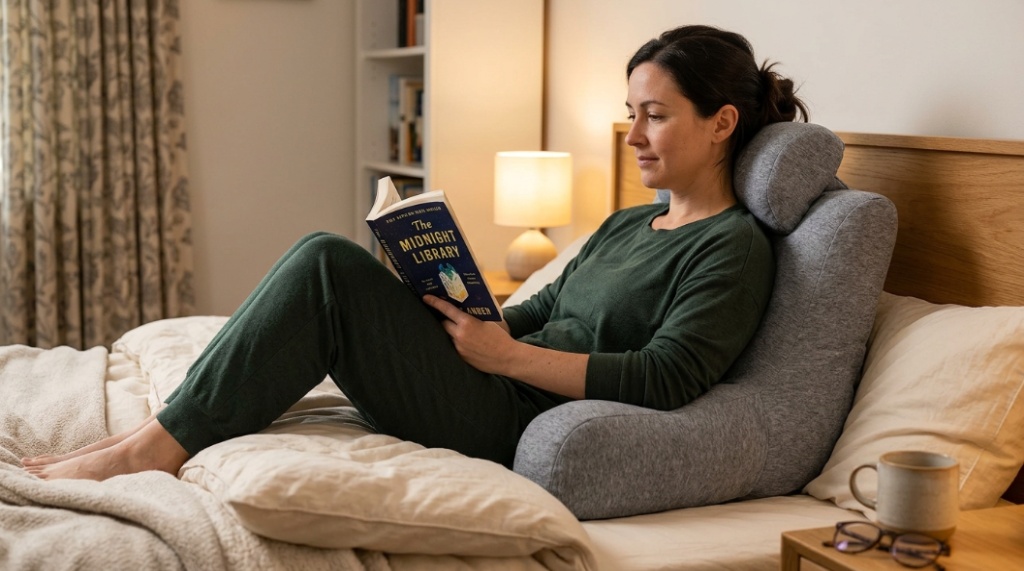
You should sit with your hips against the headboard, spine upright, pillow supporting your lower back, and book positioned at eye level.
Follow these steps:
- Place pillow vertically against headboard
- Sit with hips touching the pillow base
- Lean back fully into support panel
- Rest elbows on armrests
- Raise book to eye level
- Keep feet slightly elevated or extended
This posture reduces forward neck flexion and shoulder strain.
Should your knees be bent while reading in bed?
Slight knee elevation reduces lower-back tension and helps maintain pelvic neutrality.
Use a wedge pillow or folded blanket beneath knees if needed.
Can a Reading Pillow Help Reduce Neck Pain While Reading?
Yes, a reading pillow reduces neck pain by preventing forward head posture and supporting cervical alignment.
The average adult head weighs about 10–12 pounds. When tilted forward just 15 degrees, the effective load on the neck doubles. At 45 degrees, it increases dramatically.
A structured pillow keeps the head upright and minimizes this stress.
Additional benefits include:
- Reduced muscle fatigue
- Lower risk of tension headaches
- Improved breathing posture
- Less shoulder stiffness
How Long Should You Use a Back Support Pillow for Reading Each Day?
Using a reading pillow for 20–60 minutes at a time provides posture benefits without causing fatigue from prolonged static sitting.
Experts recommend changing positions periodically during long reading sessions.
Try this posture routine:
- 20 minutes upright reading
- 5 minutes movement break
- Light stretching
- Resume supported reading
This prevents stiffness buildup.
Is it safe to read for hours with a reading pillow?
Yes, but only if you take regular movement breaks every 30–45 minutes.
Are Reading Pillows Better Than Stacking Regular Pillows?
Reading pillows provide more consistent spinal support than stacked pillows because they maintain shape and alignment over time.
Stacked pillows shift easily. They compress unevenly and slide downward during use.
| Support Method | Stability | Alignment Quality | Comfort Duration |
|---|---|---|---|
| Reading pillow | High | Excellent | Long sessions |
| Stacked pillows | Low | Inconsistent | Short sessions |
| Headboard alone | Very low | Poor | Minimal |
Who Benefits Most From Using a Back Support Pillow for Reading?
People with sedentary routines, students, remote workers, and individuals with mild back discomfort benefit the most from structured reading pillows.
High-benefit groups include:
- Students studying in bed
- Remote workers using laptops
- E-reader users
- People recovering from mild back strain
- Older adults needing extra support
Maintaining upright posture reduces cumulative strain from long daily sitting hours.
Can seniors safely use reading pillows?
Yes, reading pillows improve comfort and stability for seniors by supporting spinal alignment during seated activities.
What Common Mistakes Reduce the Effectiveness of a Reading Pillow?
Incorrect positioning, weak pillow density, and unsupported arm placement reduce posture benefits significantly.
Avoid these mistakes:
- Sitting too far forward from pillow base
- Using overly soft support
- Holding books too low
- Ignoring neck alignment
- Remaining static too long
Small adjustments improve results immediately.
Should your shoulders touch the reading pillow?
Yes, your upper back and shoulders should rest lightly against the pillow to maintain full spinal support.
Can a Back Support Pillow Improve Sleep Posture Too?
Yes, reading pillows can improve pre-sleep posture habits, which helps reduce spinal strain before transitioning into a sleeping position.
While not designed for overnight use, they support:
- Evening reading routines
- Bedtime journaling
- Tablet browsing
- Relaxation posture
Better pre-sleep posture reduces next-morning stiffness.
Conclusion: Is a Back Support Pillow for Reading Worth Using Daily?
Yes, using a back support pillow for reading daily helps maintain spinal alignment, reduces neck strain, and improves long-term sitting posture in bed.
Small posture habits create long-term effects. Reading without support encourages slouching. Over time, that leads to muscle imbalance and discomfort.
A structured reading pillow solves this problem by stabilizing the spine, supporting shoulders, and keeping the neck neutral. It turns bed reading into an ergonomic activity instead of a strain-inducing habit.
If you regularly read, work, or relax in bed, upgrading your support setup is one of the simplest posture improvements you can make today.
Choose a supportive model, position it correctly, and use it consistently. Your back will notice the difference quickly.
FAQ: Back Support Pillow for Reading and Posture
Does a back support pillow really improve posture?
Yes, a back support pillow improves posture by stabilizing the spine and preventing forward slouching during seated reading sessions.
What height reading pillow is best for posture support?
A reading pillow that reaches mid-shoulder height provides optimal thoracic and cervical support.
Can reading pillows help with lower back pain?
Yes, reading pillows reduce lower-back strain by supporting the lumbar curve and reducing spinal compression.
Is it better to sit upright or reclined while reading in bed?
A slightly reclined upright position supported by a reading pillow provides the healthiest spinal alignment.
How firm should a reading pillow be?
A medium-firm to firm pillow provides the best balance between comfort and posture support.
Are wedge pillows better than reading pillows?
Wedge pillows support angled positioning, but reading pillows provide superior full-spine seated support.
Can children use reading pillows safely?
Yes, children can safely use appropriately sized reading pillows to maintain upright posture while studying or reading.
Read More Also How to Improve Your Posture Using a Reading Pillow in Bed
Discover More How to Choose the Best Affordable Paint Brushes for Professional Results




Leave a Reply