
Choosing the right range hood transforms your kitchen from a smoky, greasy space into a fresh cooking environment. A 30-inch range hood fits perfectly above standard stoves and offers excellent ventilation for most home kitchens. This comprehensive guide will walk you through everything you need to know to make an informed decision in 2026.
Why Proper Kitchen Ventilation Matters
Your kitchen produces more than just delicious meals. Cooking generates smoke, steam, grease particles, and odors that linger without proper ventilation. Over time, these airborne particles settle on cabinets, walls, and countertops, creating sticky residue and potential health concerns.
A quality range hood removes these contaminants efficiently. It protects your kitchen surfaces from damage while improving air quality. Moreover, proper ventilation prevents moisture buildup that can lead to mold growth in your home.
Understanding Range Hood Basics
Range hoods come in various styles and configurations. However, they all serve the same primary function of removing unwanted air from your cooking area. The effectiveness depends on several factors including size, power, and installation type.
The 30-inch width represents the most common size for residential kitchens. This measurement matches standard stove widths, making installation straightforward. Additionally, this size offers adequate coverage for typical home cooking needs without overwhelming smaller kitchens.
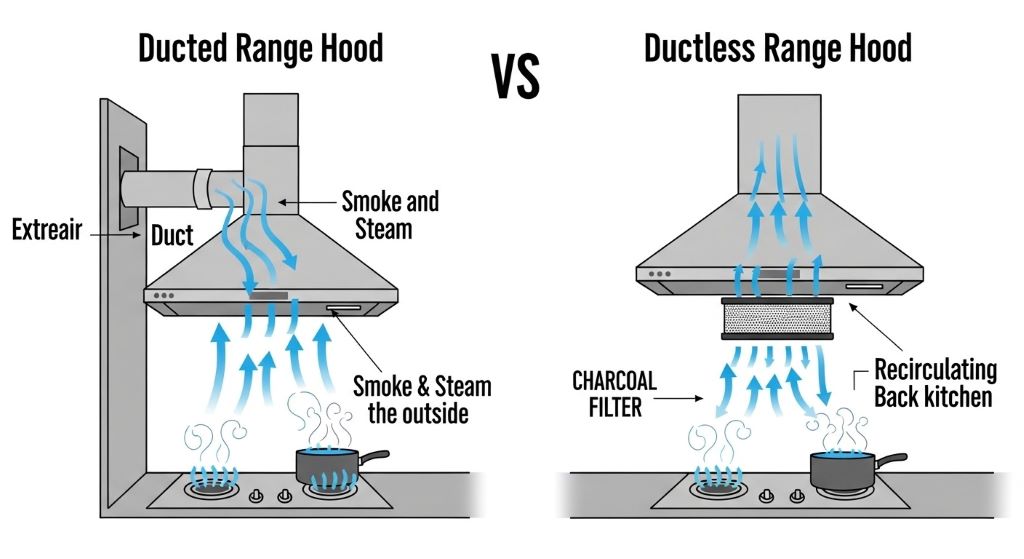
Ducted vs Ductless Hood Systems Explained
One of the most important decisions involves choosing between ducted and ductless configurations. Each system has distinct advantages and limitations that affect performance and installation requirements.
Ducted Range Hoods
Ducted systems vent air outside your home through ductwork. They remove smoke, moisture, and odors completely from your living space. This makes them the most effective option for serious home cooks who frequently use high-heat cooking methods.
Installation requires running ducts through walls or ceilings to an exterior vent. Therefore, ducted systems work best during new construction or major renovations. The installation costs more initially, but the superior performance justifies the investment for many homeowners.
These systems maintain better air quality because they eliminate contaminants rather than recirculating them. Furthermore, they handle grease and moisture more effectively than their ductless counterparts.
Ductless Range Hoods
Ductless models filter air and return it to your kitchen. They use charcoal filters to remove odors and metal filters to trap grease particles. This approach works well for apartments, condos, or homes where installing ductwork proves impractical.
Installation is simpler and less expensive because no ductwork is needed. However, these systems require regular filter replacements to maintain effectiveness. The charcoal filters typically need changing every three to six months depending on cooking frequency.
While ductless hoods remove odors reasonably well, they cannot eliminate moisture or heat. Consequently, they perform best in kitchens with good general ventilation or for light cooking needs.
Measuring Ventilation Power
CFM, or cubic feet per minute, measures how much air a range hood moves. Higher CFM ratings indicate more powerful ventilation. For a 30-inch range hood, most experts recommend between 250 and 400 CFM for typical home cooking.
Calculate your needs based on your stove’s BTU output. A common formula suggests 100 CFM for every 10,000 BTUs. For example, a 30,000 BTU range needs approximately 300 CFM. However, this represents just a starting point for your calculations.
Consider your cooking style when selecting CFM ratings. Frequent wok cooking or high-temperature searing requires more powerful ventilation. Conversely, occasional light cooking needs less aggressive air movement.
Noise Levels and Sone Ratings
Nobody wants a vacuum cleaner sound while cooking dinner. Range hood noise is measured in sones, with lower numbers indicating quieter operation. One sone equals the sound of a quiet refrigerator, while four sones resembles normal conversation volume.
Most quality range hoods operate between 1.5 and 4.0 sones. Models with multiple fan speeds allow you to balance ventilation power with noise levels. Use lower speeds for simmering and higher speeds for intense cooking that generates more smoke.
Some manufacturers incorporate special noise-reduction features. These include insulated blower housings and advanced motor designs. Additionally, external or inline blowers place the motor outside the hood, significantly reducing kitchen noise.
Key Features to Consider
Modern range hoods offer numerous features beyond basic ventilation. Understanding these options helps you select a model that fits your lifestyle and preferences.
Lighting Options
Good lighting is essential for safe cooking. LED lights have become standard in 2026, offering bright illumination while consuming minimal energy. Some models include adjustable brightness or color temperature settings for customized lighting.
Task lighting focuses directly on your cooking surface. This proves especially valuable for detailed food preparation or monitoring simmering sauces. Quality range hoods position lights to eliminate shadows on your cooktop.
Filter Systems
Grease filters require regular cleaning to maintain efficiency. Stainless steel baffle filters are considered the gold standard because they trap grease effectively and clean easily in dishwashers. Mesh filters cost less but need more frequent replacement.
Some advanced models feature dishwasher-safe filters with indicator lights that remind you when cleaning is needed. This convenience ensures your hood maintains optimal performance without constant monitoring.
Control Types
Touch controls offer a sleek, modern appearance and easy cleaning. Push-button controls provide tactile feedback that some users prefer. Additionally, remote controls allow you to adjust settings without reaching up to the hood.
Smart range hoods connect to your home network. They can automatically adjust fan speed based on detected smoke or heat levels. Furthermore, some integrate with voice assistants for hands-free operation while cooking.
Installation Considerations
Proper installation directly affects range hood performance. The hood should extend slightly beyond your cooktop edges for optimal capture. Most manufacturers recommend installing the hood 24 to 30 inches above your cooking surface.
Wall-mounted hoods attach directly to the wall above your range. Island hoods suspend from the ceiling over island cooktops. Under-cabinet models fit beneath existing cabinetry, saving space while providing ventilation.
Professional installation ensures proper ductwork sizing and routing. Ducts should be as short and straight as possible to maximize airflow. Additionally, proper duct termination prevents backdrafts and weather infiltration.
Material and Finish Choices
Stainless steel dominates the market due to its durability and easy maintenance. It resists corrosion and complements most kitchen designs. However, stainless steel shows fingerprints easily, requiring regular wiping.
Black stainless steel offers a modern alternative with better fingerprint resistance. Glass and copper finishes create distinctive visual statements. Choose materials that coordinate with your appliances and overall kitchen aesthetic.
Quality construction extends beyond appearance. Heavy-gauge metal housings last longer and resist warping. Welded seams prove more durable than riveted connections over time.
Energy Efficiency and Operating Costs
Modern range hoods consume relatively little electricity. LED lighting reduces energy use compared to older halogen bulbs. Variable-speed motors allow you to use only the power needed for current cooking tasks.
Consider the ongoing costs of filter replacement, especially for ductless models. Charcoal filters add up over time, while washable metal filters require only occasional replacement after years of use.
Energy Star certification indicates efficient operation. While range hoods are not currently covered by Energy Star programs, some manufacturers voluntarily meet similar efficiency standards.
Matching Hood Size to Your Cooktop
A 30-inch range hood pairs perfectly with a 30-inch cooktop or range. However, some designers recommend choosing a hood slightly wider than your cooking surface. This creates better coverage and captures more rising steam and smoke.
Ensure adequate clearance on all sides for proper installation. Check cabinet dimensions and ceiling height before purchasing. Additionally, verify that your chosen model fits with existing lighting fixtures or ceiling features.
Budget Considerations
Range hoods range from under $200 to over $2000 for residential models. Basic ductless units cost less but offer limited features. Mid-range models between $400 and $800 provide excellent value with solid performance and useful features.
Premium hoods justify higher prices through superior construction, quieter operation, and advanced features. However, most homeowners find that mid-range options meet their needs perfectly well. Focus your budget on features that matter most for your cooking style.
Remember to factor in installation costs when budgeting. Professional installation typically adds $200 to $500 depending on complexity. Ducted installations generally cost more than ductless setups due to ductwork requirements.
Maintenance Requirements
Regular cleaning maintains performance and extends lifespan. Wipe exterior surfaces weekly to prevent grease buildup. Clean or replace filters according to manufacturer recommendations, typically monthly for heavy use.
Ductwork should be professionally cleaned every few years to remove accumulated grease. This prevents fire hazards and maintains airflow efficiency. Schedule this maintenance alongside regular HVAC system cleaning for convenience.
Keep spare filters on hand to avoid performance degradation. Set calendar reminders for filter cleaning or replacement. Proper maintenance ensures your investment continues performing optimally for years.
Safety Features
Automatic shut-off timers prevent you from leaving the fan running unnecessarily. Some models include heat sensors that activate ventilation when temperatures rise. These features add convenience while reducing energy waste.
Fire suppression systems are available in some premium models. While rare in residential applications, they provide extra protection for serious home chefs. Check local building codes for any specific requirements in your area.
Making Your Final Decision
Evaluate your priorities before making a purchase. Consider whether you value quiet operation, powerful ventilation, or smart features most. Read verified customer reviews to learn about real-world performance and reliability.
Visit showrooms to see models in person when possible. This allows you to assess build quality, examine controls, and compare noise levels. Additionally, speaking with knowledgeable sales staff can provide valuable insights.
Check warranty coverage carefully. Quality manufacturers offer at least one year of comprehensive coverage. Extended warranties or specific coverage for motors and electronics indicate manufacturer confidence in their products.
Conclusion
Selecting the best 30-inch range hood involves balancing multiple factors. Understanding the difference between ducted vs ductless hood systems helps narrow your options based on your home’s configuration. A good kitchen exhaust fan guide considers ventilation power, noise levels, features, and budget to find the ideal match.
Remember that the most expensive option is not always the best choice for your needs. Focus on adequate CFM ratings for your cooking style, acceptable noise levels, and features you will actually use. Proper installation and regular maintenance ensure your range hood performs effectively for many years.
Taking time to research and compare options pays off in improved kitchen air quality and cooking comfort. Whether you choose a simple model or a feature-rich smart hood, proper ventilation makes your kitchen a more pleasant place to create meals.
Frequently Asked Questions
What CFM rating do I need for a 30-inch range hood?
Most 30-inch range hoods work well with 250 to 400 CFM. Calculate your specific needs by dividing your stove’s BTU rating by 100. Light cooking requires less power, while frequent high-heat cooking benefits from higher CFM ratings. Consider your typical cooking methods when making this decision.
How often should I clean my range hood filters?
Clean metal grease filters monthly if you cook frequently, or every two to three months for lighter use. Most stainless steel filters are dishwasher-safe, making maintenance simple. Replace charcoal filters in ductless models every three to six months depending on cooking frequency and odor levels.
Can I install a range hood myself?
Under-cabinet and ductless models are often DIY-friendly for handy homeowners. However, ducted installations requiring ductwork typically need professional help. Ensure you follow local building codes and manufacturer instructions carefully. Improper installation can void warranties and create safety hazards.
Which is better for apartments, ducted or ductless?
Ductless models usually work best for apartments because they require no exterior venting. Installation is simpler and often allowed under rental agreements. While they are less effective than ducted systems at removing moisture, they handle odors and grease adequately for most apartment cooking needs.
How loud should I expect my range hood to be?
Quality range hoods operate between 1.5 and 4.0 sones on lower settings. Higher speeds naturally produce more noise but provide stronger ventilation when needed. Models rated under 3.0 sones are considered quiet for normal operation. Test different speed settings in showrooms when possible to assess acceptable noise levels.
Related Topics:
Cheap but Nice Countertops: Budget-Friendly Elegance for Your Kitchen or Bathroom
Southern Style Frozen Breaded Okra Recipe


Leave a Reply