
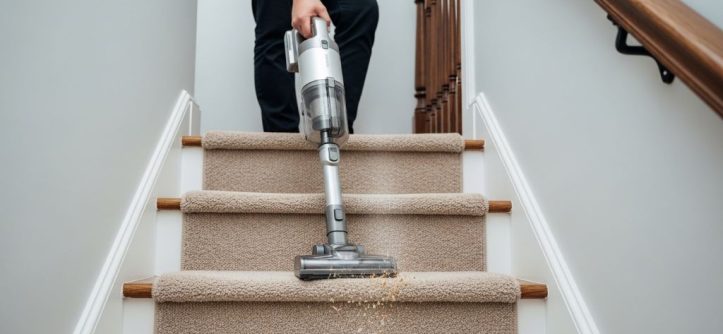
Carpeted stairs collect dirt faster than almost any other surface in your home. Every time someone walks up or down, they grind dust, pet hair, and debris deep into the fibers. Regular vacuuming helps, but not every vacuum is built for stair cleaning.
The good news is that you do not need to spend a fortune. The right vacuum is out there for every budget. However, you do need to know what to look for before you buy. This guide will walk you through everything you need to make a smart, affordable choice.
Why Carpeted Stairs Are Harder to Clean Than You Think
Most people assume any vacuum will handle stairs. That is rarely the case. Standard upright vacuums are heavy and awkward to lift. They are designed for flat, open floors. Using one on stairs is tiring and often ineffective.
Carpeted stairs also have corners, edges, and risers that trap dirt. A vacuum without the right attachments will miss these spots entirely. Additionally, stair carpet tends to be thinner than floor carpet, which means it needs gentler suction to avoid wear and tear over time.
Therefore, choosing the right vacuum from the start saves you time, effort, and money in the long run. Understanding the challenge is the first step toward solving it.
Key Features to Look for in a Stair Vacuum
Not all vacuums are created equal. When shopping for one to use on carpeted stairs, certain features matter more than others. Here is what to keep in mind.
Lightweight Design
Weight is everything when it comes to stair cleaning. You will be carrying the vacuum up and down repeatedly. A heavy machine will tire you out quickly and may even become a safety hazard. Look for a vacuum that weighs under five pounds if possible. Cordless stick vacuums and handheld models are usually the lightest options available.
Strong Suction Power
Light does not mean weak. A good stair vacuum should have enough suction to pull embedded dirt and pet hair from carpet fibers. Look for models with at least 15 to 20 air watts of suction power for carpeted surfaces. This level of power is enough to clean effectively without needing a heavy motor.
Useful Attachments
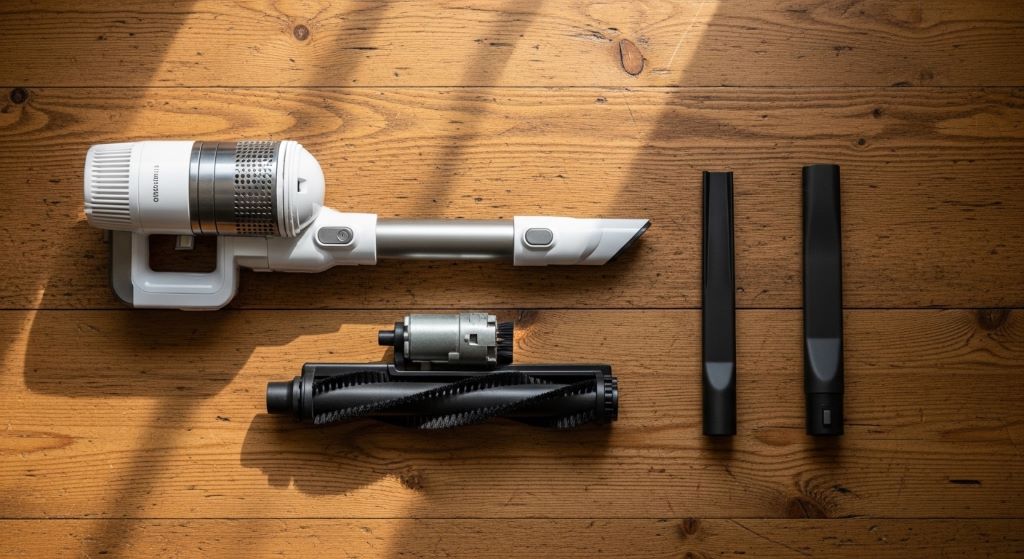
Attachments can make or break a stair vacuum. A motorized brush roll attachment is ideal for carpet because it agitates fibers and loosens dirt. A crevice tool helps reach the tight corners where each step meets the riser. Additionally, an upholstery tool works well on the flat surfaces of each stair. Always check what comes included in the box before buying.
Cord Length or Battery Life
If you choose a corded vacuum, make sure the cord is long enough to reach your entire staircase from a single outlet. A cord that is too short means constantly unplugging and moving. On the other hand, if you choose a cordless model, check the battery life carefully. Most cordless vacuums offer between 20 and 40 minutes of runtime. That should be enough for most staircases, but longer is always better.
Easy to Empty and Maintain
Stairs collect a surprising amount of debris. A vacuum with a small dustbin fills up quickly and interrupts your cleaning. Choose a model with a reasonably large bin that is easy to empty without making a mess. Bagless vacuums are often the most convenient for this type of cleaning.
Types of Vacuums That Work Best on Stairs
There are several types of vacuums worth considering. Each has its strengths and weaknesses. Knowing the differences helps you match the right tool to your needs.
Handheld Vacuums
Handheld vacuums are small, light, and easy to maneuver. They are among the most popular home cleaning tools for stairs because they are simple to use on each individual step. However, their suction is often weaker than larger models, and the bin fills up fast. They work best for quick touch-ups between deeper cleaning sessions.
Cordless Stick Vacuums
Cordless stick vacuums are a step up from handheld models. They are taller, making them easier to use without crouching. Many come with detachable handheld units, giving you flexibility. They offer stronger suction than most handhelds and are still light enough to carry on stairs comfortably. Therefore, this type is often the best all-around choice for carpeted stairs.
Canister Vacuums
Canister vacuums are more powerful than handheld or stick models. You leave the main unit at the bottom or top of the stairs and work with just the hose and attachment. This setup reduces the weight you actually carry. However, managing the hose can be tricky, and canister vacuums tend to cost more. They are a good option if you also need to vacuum large floor areas regularly.
Upright Vacuums with Hose Attachments
Some upright vacuums come with a long hose and stair attachments. You park the vacuum at the top or bottom of the staircase and use the hose to reach each step. This works reasonably well. However, the hose reach is often limited, and the vacuum itself can be in the way. This is not the most elegant solution, but it can work if you already own an upright and do not want to buy something new.
Applying Useful Stair Vacuum Tips Before You Buy
Before spending any money, think about your specific situation. These stair vacuum tips will help you narrow down your choices quickly and avoid common mistakes.
First, count your stairs and measure the width of each step. Wider stairs may need a vacuum with a wider cleaning head. Narrow stairs do well with compact handheld models.
Second, think about who will be doing the cleaning. If it is an older adult or someone with limited strength, a very lightweight model is a priority. If it is a younger person who cleans frequently, battery life matters more.
Third, consider your carpet type. Thick, plush carpet needs stronger suction and a motorized brush roll. Low-pile carpet can be cleaned effectively with less power. Additionally, if you have pets, look specifically for models marketed for pet hair. These usually have stronger suction and better filters.
Fourth, set your budget before you start browsing. It is easy to get distracted by features you do not need. Decide on your maximum spend and stick to it. There are excellent stair vacuums available at every price point from $30 to $200.
How to Get the Most Value Without Overspending
Spending less does not have to mean sacrificing quality. There are several smart ways to get a great vacuum without paying top dollar.
Start by reading customer reviews on retail websites. Look for reviews that specifically mention stair cleaning. Real-world feedback from people with similar homes is far more useful than product descriptions written by the manufacturer.
Additionally, consider buying a previous-generation model from a trusted brand. Companies release updated versions of their vacuums regularly. The older model often performs almost as well for a significantly lower price. You can usually find these on sale at large retailers or through online marketplaces.
Look for vacuums that come with a warranty. A one-year or two-year warranty signals that the manufacturer stands behind the product. This adds long-term value even if the upfront price is low.
Finally, avoid buying attachments separately unless you have to. Vacuums that come bundled with stair and crevice tools are almost always better value than buying the base model and adding accessories later.
Brands Worth Considering at Different Price Points
You do not need to fixate on one brand. However, some names consistently perform well for stair vacuuming across different budgets.
At the lower end of the price range, brands like Black+Decker and Shark offer reliable handheld and cordless models. They are widely available and have strong customer support.
In the mid-range, Dyson and Bissell make some of the most popular home cleaning tools for stairs. Dyson cordless models are especially well regarded for their suction power and easy-to-use design. Bissell offers excellent pet-hair specific models at very reasonable prices.
At the higher end, Miele canister vacuums and Dyson V-series models offer superior performance and durability. These are worth considering if you have a large home with multiple staircases or heavy cleaning demands.
Remember, the most expensive option is not always the best for your needs. Match the vacuum to your staircase, not to a brand name.
Maintenance Tips to Make Your Vacuum Last Longer
A good vacuum is an investment, even at a lower price point. Taking care of it properly extends its life and keeps it performing well.
Empty the dustbin after every use. This prevents clogs and keeps suction strong. Clean or replace filters regularly according to the manufacturer’s instructions. A dirty filter reduces suction and can spread dust back into the air.
Check the brush roll for tangled hair or fibers every few uses. Hair wraps around the brush over time and reduces its effectiveness. Most brush rolls are easy to clean with a pair of scissors and a few minutes of effort.
Store the vacuum in a dry, accessible place. If it is inconvenient to get out, you are less likely to use it regularly. Consistent cleaning is the real secret to maintaining clean carpeted stairs over time.
Conclusion
Picking the best vacuum for carpeted stairs does not have to be complicated or expensive. The key is to focus on the features that actually matter: lightweight design, strong suction, good attachments, and a reasonable battery life or cord length. Understanding the type of vacuum that suits your stairs, your carpet, and your lifestyle makes the decision much easier.
Use practical stair vacuum tips to narrow your options before you shop. Read real customer reviews, consider previous-generation models, and always set a clear budget. The right home cleaning tools are out there at every price point. You simply need to know what you are looking for. With the right vacuum in hand, clean carpeted stairs become a quick and simple task rather than a dreaded chore.
Frequently Asked Questions
What type of vacuum is best for carpeted stairs?
Cordless stick vacuums with detachable handheld units are generally the best choice for carpeted stairs. They are lightweight, offer decent suction, and come with attachments that reach corners and edges. Handheld vacuums also work well for quick cleanups between deeper cleaning sessions.
How often should I vacuum carpeted stairs?
Ideally, carpeted stairs should be vacuumed at least once a week. If you have pets or children, vacuuming two to three times a week will keep dirt and hair from building up in the carpet fibers. Regular cleaning also extends the life of your stair carpet.
Can I use a regular upright vacuum on stairs?
You can, but it is not ideal. Upright vacuums are heavy and difficult to maneuver on stairs. Some have hose attachments that help, but the reach is often limited. A lighter, purpose-built stair vacuum will always do a better and safer job.
What attachments do I need for cleaning carpeted stairs?
The most useful attachments are a motorized brush roll for agitating carpet fibers, a crevice tool for tight corners, and an upholstery tool for the flat surface of each step. Many handheld and cordless vacuums come with these included, so always check the package contents before buying.
Is a bagless or bagged vacuum better for stair cleaning?
Bagless vacuums are generally more convenient for stair cleaning. They are easier to empty, and you can see when the bin is full. Bagged vacuums can offer better filtration, which is useful for allergy sufferers, but the bags add ongoing cost and need to be replaced regularly.
Related Topics:
How to Select an Anti-Allergy Vacuum Cleaner for Your Bedroom
How to Clean Ceramic Tile Shower: A Step-By-Step Guide



Leave a Reply