
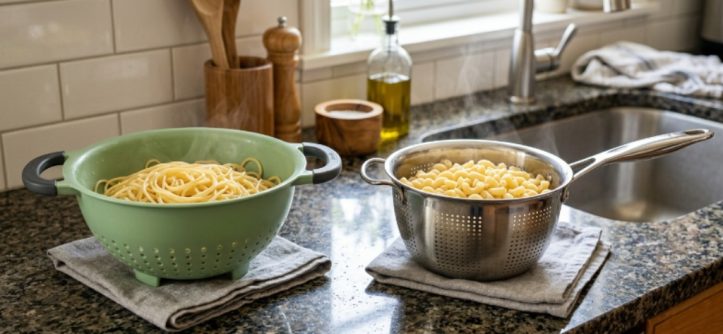
Every home kitchen needs a good strainer. It is one of those tools you reach for without thinking, until the one you own starts to warp, rust, or crack. When that moment comes, you face a familiar choice. Do you go with plastic or metal?
Both options have their loyal fans. Both have real advantages and genuine drawbacks. The right answer depends on how you cook, how often you cook, and what matters most to you in the kitchen.
This kitchen tools guide walks you through every important factor so you can make a decision with confidence. From durability and safety to price and ease of cleaning, nothing is left out.
What a Pasta Strainer Actually Does and Why It Matters
A pasta strainer, also called a colander, does one job. It drains liquid from food while keeping the solid pieces inside. You use it for pasta, vegetables, canned beans, washed fruit, and much more.
However, not all strainers perform this job equally well. The material affects how the strainer handles heat, how long it lasts, and whether it is safe to use with certain foods. Therefore, understanding the differences between plastic and metal before you buy is time well spent.
A poor-quality strainer can warp under hot water, leach chemicals into food, or become a breeding ground for bacteria in hard-to-clean crevices. A good one simply works, year after year, without any of those concerns.
The Case for Plastic Pasta Strainers
Plastic strainers are popular for good reasons. They are lightweight, affordable, and available in a wide range of colors and sizes. Many home cooks prefer them for everyday use because they are easy to handle and gentle on hands.
Lightweight and Easy to Handle
Plastic strainers weigh very little. This makes them easy to lift and tilt, even when full of hot pasta and boiling water. For people who find heavier cookware difficult to manage, plastic is a practical choice. Additionally, plastic strainers are less likely to damage delicate items like soft fruits or freshly rinsed salad leaves.
Budget-Friendly Option
Plastic strainers are almost always cheaper than their metal counterparts. A decent plastic model costs very little, which makes it an appealing choice for students, new renters, or anyone setting up a kitchen on a tight budget. However, lower cost sometimes reflects lower quality, so it pays to check reviews and avoid the cheapest options on the shelf.
Colour and Style Options
Plastic comes in virtually every color imaginable. If you like a coordinated kitchen, plastic strainers make it easy to match your tools to your decor. This is a minor benefit for most people, but for those who care about kitchen aesthetics, it is a real plus.
The Downsides of Plastic
Plastic has significant limitations in a cooking environment. The most important is heat tolerance. Standard plastic strainers can warp or melt when exposed to very hot water repeatedly. High-quality food-grade plastics handle heat better, but they still have limits that metal does not.
Additionally, plastic can stain over time. Tomato-based sauces and brightly colored foods leave marks that are difficult to remove. Scratches from utensils also create tiny grooves where bacteria can accumulate. Furthermore, older or lower-quality plastics may contain chemicals like BPA, which can leach into food when exposed to heat. Always look for BPA-free labeling when choosing a plastic strainer.
The Case for Metal Pasta Strainers
Metal strainers, typically made from stainless steel, are the choice of professional kitchens around the world. Their durability, hygiene, and heat resistance make them a reliable option for serious home cooks.
Superior Durability and Longevity
Stainless steel strainers do not warp, crack, or degrade over time the way plastic does. A well-made metal strainer can last for decades with proper care. This makes it a better long-term investment, even if the upfront cost is higher. Therefore, when you calculate cost per use over several years, metal often works out to be the more economical choice.
Excellent Heat Resistance
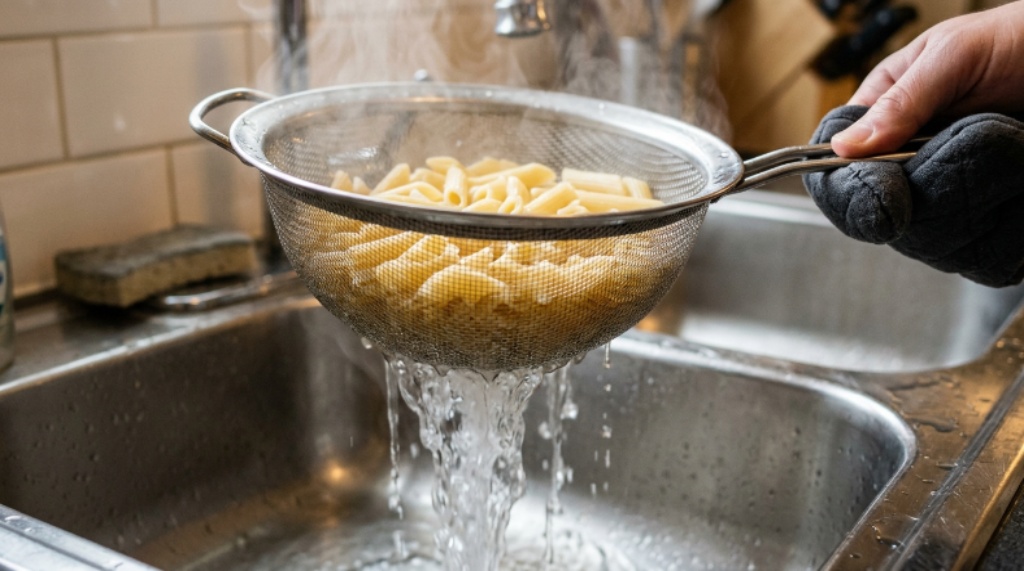
Metal handles heat without any concern. You can pour boiling water directly through a stainless steel strainer without worrying about warping or chemical release. This is a critical advantage for pasta, blanched vegetables, or any recipe that involves draining very hot liquid.
Additionally, some metal strainers are oven-safe, which expands their usefulness beyond simple draining tasks.
Hygienic and Easy to Clean
Stainless steel has a smooth, non-porous surface that resists bacteria and is simple to clean. Most metal strainers are dishwasher-safe, and they do not absorb odors or stains the way plastic sometimes does. This makes them a more hygienic long-term option, particularly in households where the strainer sees heavy daily use.
The Downsides of Metal
Metal strainers are heavier than plastic ones. Lifting a large stainless steel colander full of boiling pasta water requires more effort and a firmer grip. For some users, this is a genuine inconvenience.
They are also more expensive upfront. A quality stainless steel strainer costs more than a comparable plastic model. However, as noted above, the longer lifespan often makes up for this difference over time.
Finally, metal strainers can scratch certain surfaces. Setting a metal colander down firmly in a ceramic sink or on a glass cooktop can cause damage if you are not careful.
Head-to-Head Strainer Comparison: Eight Key Factors
Looking at both options side by side makes the decision clearer. Here is how plastic and metal strainers measure up across the factors that matter most in everyday cooking.
Heat Resistance
Metal wins clearly here. Stainless steel handles boiling water without any risk of warping or chemical release. Plastic tolerates heat to a point but has limits that can become a problem with repeated exposure to very hot liquid.
Durability Over Time
Metal is the more durable material. A quality stainless steel strainer will outlast most plastic alternatives by many years. Plastic becomes brittle, stains, and warps more quickly under regular kitchen conditions.
Weight and Ease of Use
Plastic is lighter and easier to handle for most users. This makes it a better choice for children helping in the kitchen, elderly users, or anyone with limited grip strength.
Hygiene and Safety
Stainless steel is more hygienic due to its non-porous surface. BPA-free plastic is safe when new, but scratches and aging can compromise hygiene over time.
Price and Value
Plastic costs less upfront. Metal costs more but offers better long-term value due to its durability. Budget determines which makes more sense in the short term, but metal wins over the long run.
Cleaning and Maintenance
Both are generally dishwasher-safe. However, metal is easier to keep hygienic and does not stain or hold odors the way plastic can.
Aesthetics
Plastic offers more color variety. Metal has a timeless, professional appearance that suits most kitchen styles.
Environmental Impact
Stainless steel is more sustainable. It lasts longer, reducing waste. A plastic strainer that needs replacing every few years generates more landfill material over time.
Who Should Choose Plastic and Who Should Choose Metal
Understanding your own cooking habits makes this decision straightforward.
Plastic is the better choice if you cook occasionally, have a limited budget, prefer lightweight tools, or want something easy for younger family members to use. It is also a good fit for people who value colorful, coordinated kitchenware.
Metal is the better choice if you cook frequently, value durability and hygiene above all else, regularly drain very hot ingredients, or want a tool that will last the lifetime of your kitchen. Additionally, if sustainability matters to you, metal is the more environmentally responsible option.
Practical Tips for Getting the Most from Either Type
Whichever type you choose, a few habits will extend its life and maintain performance.
- Rinse your strainer immediately after use to prevent food residue from drying and sticking.
- For plastic strainers, avoid using abrasive scrubbers that create scratches.
- Store metal strainers in a dry location to prevent any surface spotting, even on stainless steel.
- Check the base of your strainer regularly. Rubber feet on colanders can loosen over time and should be replaced or secured if they come off.
- For metal strainers, dry them thoroughly after washing to maintain their finish and prevent water marks.
Conclusion
This strainer comparison makes one thing clear: there is no universally right answer. Both plastic and metal pasta strainers have earned their place in home kitchens. The best choice depends entirely on your priorities.
If you need something lightweight, affordable, and cheerful, a high-quality BPA-free plastic strainer is a perfectly sensible choice. If you want a tool that handles heat without compromise, stays hygienic for years, and offers the best long-term value, stainless steel is the way to go.
This kitchen tools guide has covered every major factor from safety and durability to price and sustainability. Use the information here to match the right strainer to your kitchen, your budget, and the way you actually cook. The right strainer will serve you quietly and reliably for years, and that is exactly what a good kitchen tool should do.
Frequently Asked Questions
Is stainless steel or plastic better for draining boiling pasta?
Stainless steel is the safer and more reliable choice for boiling water. It handles extreme heat without warping or releasing any chemicals. A high-quality BPA-free plastic strainer can work, but repeated exposure to boiling water shortens its lifespan and may cause deformation over time.
Are plastic colanders safe to use with hot food?
BPA-free plastic colanders are generally considered safe for hot foods. However, it is important to check the heat rating of the specific product. Avoid using plastic strainers with water that has been rapidly boiling, as this can push the material beyond its tolerances and cause warping.
How long does a stainless steel strainer typically last?
A well-made stainless steel strainer can last 10 to 20 years or more with proper care. Regular cleaning, drying after washing, and correct storage keep the material in excellent condition. This longevity is one of the strongest arguments for choosing metal over plastic.
Can I put both types of strainers in the dishwasher?
Most stainless steel and many plastic strainers are dishwasher-safe, but always check the manufacturer’s instructions. High dishwasher temperatures can shorten the lifespan of some plastic models. Stainless steel generally handles dishwasher cycles without any problems.
What size strainer should I buy for a family household?
A 5-quart or larger colander works well for families of four or more. This size handles a full pound of pasta comfortably with room to spare. If you frequently cook large batch meals, consider a strainer in the 7- to 8-quart range to give yourself extra capacity without overflow.




Leave a Reply