
Your bedroom should be a place of rest and recovery. However, for millions of people worldwide, it is also a place where allergy symptoms flare up. Sneezing, itchy eyes, a runny nose, and difficulty breathing can all start right where you sleep. The culprit is often invisible. Dust mites, pet dander, mold spores, and pollen settle deep into mattresses, carpets, and soft furnishings.
A standard vacuum cleaner can actually make things worse. It stirs up particles without capturing them fully. Therefore, choosing the right anti-allergy vacuum is one of the most important decisions you can make for your health at home. This guide will help you understand exactly what to look for and why it matters.
Understanding Allergens in the Bedroom
Before selecting any cleaning equipment, it helps to understand what you are dealing with. Bedrooms tend to collect more allergens than other rooms in the home. You spend several hours there each night, which means prolonged exposure to whatever is lurking in the air and on surfaces.
Dust mites are the most common bedroom allergen. They thrive in warm, humid environments and feed on dead skin cells. They live in mattresses, pillows, carpets, and curtains. Additionally, pet dander is a major concern for animal lovers. Tiny flakes of skin shed by cats, dogs, and other animals can remain airborne for hours.
Mold spores and pollen also find their way into bedrooms through open windows and on clothing. All of these particles are microscopic, which means only a powerful filtration system can trap them effectively.
Why Ordinary Vacuums Fall Short
Many people assume that any vacuum cleaner will remove allergens. Unfortunately, this is not the case. A standard vacuum may pick up visible dust and debris, but it often releases fine particles back into the air through its exhaust. These particles are so small that they pass straight through basic filters.
This process is sometimes called re-aerosolization. It means that vacuuming with the wrong machine can temporarily increase the concentration of allergens in the air. For sensitive individuals, this is not just uncomfortable. It can trigger serious respiratory reactions.
Therefore, a vacuum designed specifically for allergy sufferers must meet a much higher standard of filtration. The machine needs to capture particles and keep them trapped inside, not recirculate them into the room.
The Role of HEPA Filtration
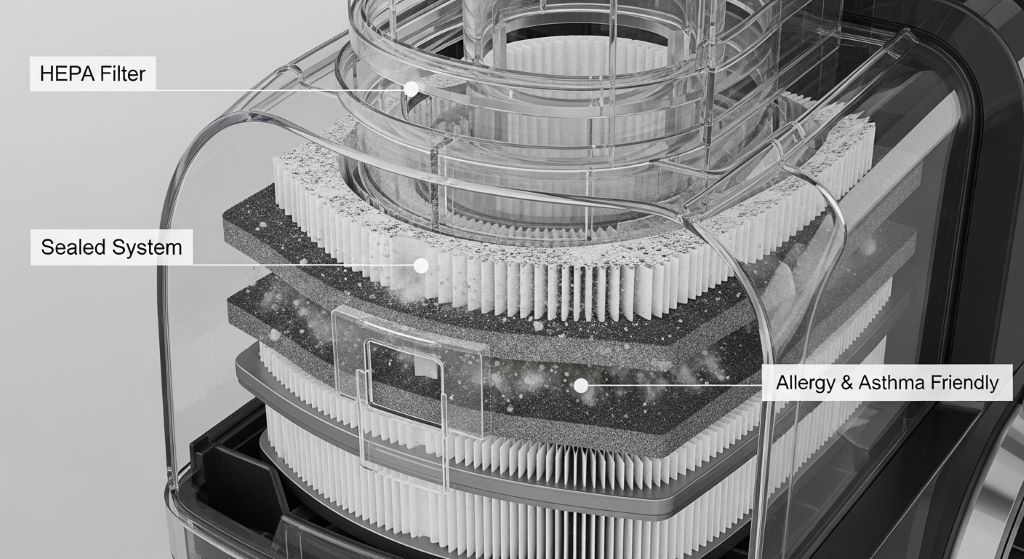
When it comes to choosing a vacuum for allergy relief, filtration is everything. A HEPA filter vacuum is widely considered the gold standard for this purpose. HEPA stands for High-Efficiency Particulate Air. These filters are engineered to capture at least 99.97 percent of particles as small as 0.3 microns.
To put that in perspective, a human hair is roughly 70 microns wide. Dust mite allergens and mold spores are far smaller than that. A true HEPA-rated filter can catch them all. However, not all vacuums labeled as HEPA actually meet the standard. Look for the term true HEPA or check for certification from a recognized testing body.
Additionally, the filter alone is not enough. The vacuum must also be sealed properly. A well-sealed body prevents unfiltered air from leaking out through gaps in the casing. This is known as a fully sealed filtration system. Always check for this feature when comparing models.
Key Features to Look for in an Anti-Allergy Vacuum
Choosing the right vacuum involves more than just picking one with a good filter. Several other features contribute to effective allergen removal and easier maintenance. Here is what to prioritize:
Sealed Filtration System
As mentioned earlier, even the best filter is useless if air can escape through the body of the machine. A fully sealed system means every bit of air that enters the vacuum exits only through the filter. Look for models that specifically advertise sealed systems and have been independently tested.
Bagged vs. Bagless Design
This is one of the most debated topics among allergy sufferers. Bagged vacuums are generally better for people with allergies. The bag acts as a second layer of filtration. More importantly, when you remove a bag, the dust and allergens stay sealed inside. You simply tie it off and throw it away.
Bagless vacuums require you to empty a dustbin. This process releases a puff of trapped particles back into the air. If you prefer a bagless model, look for one with a self-sealing or enclosed dustbin. Additionally, always empty it outdoors if possible.
Suction Power and Motorized Brush Heads
Strong suction is essential for pulling allergens out of deep carpet fibers and mattress surfaces. Look for adjustable suction settings so you can switch between delicate surfaces and heavy-duty cleaning. A motorized brush head is also valuable. It agitates carpet fibers to dislodge deeply embedded particles before the suction removes them.
Specialized Attachments
Bedroom cleaning goes beyond the floor. Your vacuum should come with attachments designed for multiple surfaces. A mattress tool allows you to clean the sleeping surface where dust mites accumulate most heavily. Additionally, an upholstery tool handles pillows, cushions, and soft headboards. A crevice tool reaches into corners, along skirting boards, and under furniture.
Noise Level
This may seem like a minor concern, but it matters in the context of bedroom use. Many people vacuum their bedrooms in the morning or evening. A quieter machine makes this easier without disturbing others in the household. Check the decibel rating when comparing models.
Types of Anti-Allergy Vacuums and Which Suits Your Bedroom
There are several styles of vacuum cleaners on the market. Each has advantages and trade-offs for bedroom use.
Upright Vacuums
Upright vacuums are powerful and well-suited to carpeted bedrooms. They cover large areas quickly and typically have strong motorized brush heads. However, they can be bulky and harder to maneuver around furniture. Many upright models now come with HEPA filtration and sealed systems, making them a solid choice for allergy relief.
Canister Vacuums
Canister vacuums offer great flexibility. The motor sits in a separate unit that you pull behind you. This makes them lighter to handle and easier to use for above-floor cleaning. They are ideal for vacuuming curtains, upholstered furniture, and mattresses. Additionally, many canister models offer excellent filtration systems.
Stick and Handheld Vacuums
These lightweight options are convenient for quick cleanups. However, they typically lack the power and filtration quality of full-sized machines. Therefore, they work best as a supplement to a main vacuum rather than a replacement. Some premium cordless stick vacuums do include proper HEPA-level filters, but always verify before purchasing.
Robot Vacuums
Robot vacuums have grown in popularity. They offer the convenience of automated daily cleaning, which can significantly reduce allergen buildup. However, most models do not offer true HEPA-grade filtration. Additionally, they cannot clean mattresses, upholstery, or high surfaces. Use a robot vacuum to maintain floors between deeper cleans with a full-sized machine.
Vacuuming Habits That Make a Real Difference
Owning the right vacuum is only half of the equation. How and how often you use it matters just as much. Here are some habits that will maximize results:
- Vacuum your bedroom at least twice a week. High-traffic areas and carpets benefit from more frequent cleaning.
- Clean your mattress regularly. Use the mattress attachment once a week to remove dust mites and skin cells.
- Vacuum slowly. Moving too quickly reduces suction effectiveness. Slow, overlapping passes allow the machine to capture more particles.
- Do not forget curtains and blinds. These surfaces trap a surprising amount of dust and pollen.
- Replace or clean filters on schedule. A clogged filter loses effectiveness over time. Follow the manufacturer’s guidelines for maintenance.
Additionally, vacuum before you dust. This way, particles that fall from shelves and surfaces get picked up rather than resettling on freshly cleaned floors.
Allergy Symptoms and the Connection to Clean Air
For those who suffer from respiratory conditions, the quality of indoor air is critical. Effective asthma prevention in the bedroom begins with reducing the concentration of airborne triggers. Regular vacuuming with a properly filtered machine is one of the most impactful steps you can take.
Studies have shown that reducing indoor allergens can decrease the frequency and severity of asthma attacks. This is especially true for children, who spend more time indoors and are more vulnerable to airborne particles. Therefore, choosing the right cleaning tools is not just about comfort. It is about health.
Combining a good vacuum with other measures will give you the best results. Use allergen-proof mattress and pillow covers. Wash bedding weekly in hot water. Keep windows closed during high pollen seasons. Consider an air purifier with a certified filter to complement your vacuuming routine.
What to Avoid When Choosing a Vacuum for Allergies
Just as important as knowing what to look for is knowing what to avoid. Several common mistakes can lead to disappointment or, worse, worsened symptoms.
Avoid vacuums that claim to have HEPA-style or HEPA-like filters. These terms have no standardized meaning. Only true HEPA or certified HEPA filters meet the 99.97 percent capture rate. Do not be misled by marketing language.
Avoid models with poor build quality. A vacuum that develops cracks or loose joints over time will allow unfiltered air to escape. This defeats the purpose of buying an anti-allergy machine in the first place.
Additionally, avoid skipping filter maintenance. Even the best filter becomes ineffective when overloaded with particles. Check your filter regularly and replace it according to the manufacturer’s schedule.
Finally, avoid buying based on price alone. The cheapest models often lack proper sealing or use low-grade filters. However, the most expensive option is not always necessary either. Focus on features and certifications, and find a model that balances performance with your budget.
Certifications and Labels Worth Trusting
When shopping for an anti-allergy vacuum, look for independent certification marks. These give you confidence that the claims on the packaging have been verified by a third party.
The Allergy UK Seal of Approval is one of the most respected certifications in the United Kingdom. Products bearing this label have been independently tested and proven to reduce allergen exposure. Similarly, the British Allergy Foundation seal carries significant weight.
In the United States, the Asthma and Allergy Foundation of America certifies products that meet strict allergen-reduction standards. Look for their certification mark when shopping in North American markets.
Additionally, some European models carry the EN 1822 certification for HEPA filters. This standard specifies the exact filtration efficiency required. Therefore, a vacuum with this certification on its filter can be trusted to perform as advertised.
Conclusion
Choosing an anti-allergy vacuum for your bedroom is a decision that directly affects your health and quality of sleep. The right machine will capture microscopic allergens rather than releasing them back into the air. It will seal particles safely inside and give you the tools to clean every surface where allergens hide.
Prioritize true HEPA filtration, a fully sealed system, strong suction, and the right attachments for bedroom surfaces. Consider whether a bagged or bagless design suits your needs. Choose a style of vacuum that fits your bedroom layout and cleaning routine.
Additionally, combine your vacuum with regular mattress cleaning, allergen-proof covers, and good ventilation habits. Together, these steps will dramatically reduce your exposure to the particles that cause sneezing, watery eyes, and respiratory distress. Your bedroom can become the clean, restful sanctuary it is meant to be.
Frequently Asked Questions
1. Is a HEPA filter vacuum really necessary if I do not have allergies?
Even without diagnosed allergies, a high-filtration vacuum improves the air quality in your home. Fine particles such as bacteria, mold spores, and microscopic pollutants are present in every home. Removing them benefits everyone in the household, particularly children and the elderly. It is a worthwhile investment regardless of allergy status.
2. How often should I replace the filter in my anti-allergy vacuum?
This depends on the model and how frequently you vacuum. Most manufacturers recommend replacing washable filters every twelve months and non-washable filters every six to twelve months. However, if you notice reduced suction or increased allergy symptoms after vacuuming, check the filter sooner. Always follow the guidelines in your product manual.
3. Can a vacuum cleaner help with dust mite allergies specifically?
Yes, significantly. Dust mites and their waste particles are a leading cause of indoor allergies. Regular vacuuming of mattresses, carpets, and upholstered furniture with a properly filtered machine removes dust mites and the allergens they produce. Combining this with allergen-proof mattress covers provides even stronger protection.
4. What is the difference between a sealed system and a regular vacuum?
A regular vacuum may have a HEPA filter but still allow unfiltered air to escape through gaps in the casing. A sealed system ensures that all air must pass through the filtration before exiting. This is a critical distinction for allergy sufferers. Always look for the term fully sealed or sealed filtration when comparing models.
5. Is vacuuming alone enough for effective asthma prevention in the bedroom?
Vacuuming is one of the most effective steps for asthma prevention, but it works best as part of a broader routine. Wash bedding weekly in hot water above 60 degrees Celsius to kill dust mites. Use allergen-proof covers on pillows and mattresses. Keep humidity below 50 percent to discourage mold and mite growth. Additionally, an air purifier with a certified filter can remove airborne particles between cleaning sessions.
Related Topics:
Don’t Hold Your Nose! How to Banish Pesky Odors From Your Kitchen Sink Drain For Good
How to Clean Ceramic Tile Shower: A Step-By-Step Guide



Leave a Reply