
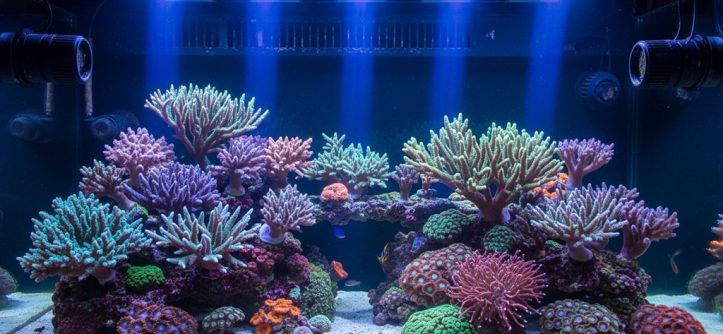
Corals are living animals that rely heavily on light to survive and grow. Inside their tissue live tiny algae called zooxanthellae. These algae use light to perform photosynthesis and produce energy that fuels coral growth and coloration. Without proper lighting, corals struggle to grow, lose color, and may eventually die.
Choosing the best lighting for coral growth in a reef tank is not simply about buying the brightest light. Reef aquariums require a balance of coral PAR levels, reef light spectrum, and stable LED reef lighting. Each factor influences how effectively corals absorb light and convert it into energy.
Modern reef keepers rely on programmable LED reef lighting systems because they provide adjustable spectrum, energy efficiency, and better control over coral PAR levels. However, understanding how light intensity, spectrum, and placement affect coral health is essential before making a decision.
This guide explains how to select the right lighting for coral growth. You will learn about PAR requirements, spectrum balance, lighting schedules, and real-world reef tank results. By the end, you will know how to create a lighting setup that supports coral health, growth, and vibrant coloration.
Why Is Lighting Critical for Coral Growth in a Reef Tank?
Short answer: Corals need proper lighting because the algae living inside them perform photosynthesis using aquarium light.
In natural reefs, sunlight penetrates ocean water and powers coral ecosystems. In aquariums, artificial lighting replaces the sun. If the light intensity or spectrum is incorrect, the photosynthesis process slows down.
Research published in marine biology journals shows that reef-building corals obtain up to 90% of their energy from photosynthesis. That means lighting is the most important factor in a reef aquarium after water quality.
Without proper reef lighting:
- Corals lose their vibrant colors
- Growth rates decline
- Coral tissue may bleach
- Zooxanthellae density decreases
This is why reef aquarists monitor coral PAR levels and reef light spectrum carefully when setting up lighting systems.
What Are Coral PAR Levels and Why Do They Matter?
Short answer: PAR (Photosynthetically Active Radiation) measures the usable light energy corals receive for photosynthesis.
PAR is measured in micromoles of photons per square meter per second (µmol/m²/s). Unlike brightness measured in lumens, PAR directly indicates how much light corals can use.
Different coral species require different PAR ranges. Soft corals typically need lower PAR, while SPS corals require higher light intensity.
| Coral Type | Recommended PAR Range | Lighting Difficulty |
|---|---|---|
| Soft Corals (Zoanthids, Mushrooms) | 50–100 PAR | Beginner |
| LPS Corals (Hammer, Frogspawn) | 100–200 PAR | Moderate |
| SPS Corals (Acropora, Montipora) | 200–350+ PAR | Advanced |
Maintaining the correct coral PAR levels prevents both under-lighting and over-lighting. Too little light slows coral growth. Too much light can cause coral bleaching.
Many reef aquarists use PAR meters to measure light intensity at different tank depths. This helps them position corals according to their lighting needs.
What Is the Ideal Reef Light Spectrum for Corals?
Short answer: Corals grow best under blue-heavy light in the 400–500 nm wavelength range.
The reef light spectrum refers to the wavelengths of light produced by aquarium fixtures. Natural sunlight contains a wide spectrum, but water absorbs many wavelengths before reaching reef corals.
Studies of coral reefs show that blue light penetrates ocean water most effectively. As a result, corals evolved to use blue wavelengths efficiently for photosynthesis.
The most beneficial spectrum for reef tanks typically includes:
- Blue (420–470 nm)
- Violet (400–420 nm)
- Some white spectrum
- Minimal red and green light
Blue wavelengths stimulate coral fluorescence and photosynthesis. This is why reef tanks often appear deep blue compared to freshwater aquariums.
High-quality LED reef lighting systems allow aquarists to adjust spectrum channels individually. This makes it easier to mimic natural reef conditions.
Why Is LED Reef Lighting the Most Popular Choice Today?
Short answer: LED reef lighting provides adjustable spectrum, strong PAR output, and lower energy consumption.
Older reef tanks relied on metal halide and fluorescent lighting. While these systems produced strong PAR levels, they generated significant heat and consumed large amounts of electricity.
LED reef lighting has largely replaced those technologies because of several advantages.
Energy Efficiency
LED fixtures use significantly less power than metal halide lighting. This reduces electricity costs while maintaining high coral PAR levels.
Adjustable Spectrum
Modern reef LEDs allow users to customize blue, violet, and white channels independently. This makes it easier to optimize the reef light spectrum for different coral species.
Programmable Lighting Cycles
Most LED reef lights include timers and sunrise/sunset simulations. These gradual lighting transitions reduce coral stress and mimic natural reef conditions.
Lower Heat Output
LED systems generate less heat compared to traditional reef lighting systems. This helps maintain stable aquarium temperatures.
Because of these advantages, most modern reef tanks rely on LED reef lighting to maintain healthy coral growth.
How Do You Choose the Right Light for Your Reef Tank Size?
Short answer: The best reef lighting depends on tank depth, coral type, and fixture coverage.
Selecting the correct light fixture requires evaluating several factors.
Tank Depth
Light intensity decreases as water depth increases. Deep aquariums require stronger lights to deliver sufficient PAR levels at the bottom.
For example:
- Shallow tanks (12–16 inches): moderate LED lighting
- Medium tanks (18–24 inches): stronger PAR output
- Deep tanks (24+ inches): high-output reef lighting
Tank Width
Wide aquariums may require multiple fixtures to ensure even coverage. Uneven lighting can create dark zones where corals struggle to grow.
Coral Types
Soft coral tanks can operate with moderate PAR levels. SPS-dominant tanks require stronger lighting systems capable of delivering 300+ PAR.
Understanding coral PAR levels helps determine the correct fixture power.
How Long Should Reef Tank Lights Stay On?
Short answer: Most reef tanks run lights for 8–12 hours per day.
Corals require a consistent light cycle to maintain healthy metabolism. Too little lighting limits photosynthesis. Too much lighting encourages algae growth.
A typical reef lighting schedule looks like this:
- 2 hours sunrise ramp-up
- 6–8 hours peak lighting
- 2 hours sunset ramp-down
Programmable LED reef lighting makes it easy to automate this schedule.
Maintaining consistent lighting hours helps stabilize coral growth and prevents stress.

What Happens If Reef Lighting Is Too Strong?
Short answer: Excessive light can bleach corals and damage zooxanthellae.
When coral PAR levels exceed safe thresholds, corals may expel their symbiotic algae. This process is called coral bleaching.
Bleached corals appear pale or white because the algae responsible for coloration are gone.
Signs of excessive lighting include:
- Faded coral color
- Reduced polyp extension
- White or pale tissue
- Slow recovery after lighting changes
To prevent this issue, aquarists gradually increase LED reef lighting intensity when introducing new corals.
Case Study: How Proper Lighting Improved Coral Growth
A reef hobbyist documented coral growth in a 75-gallon reef tank over six months after upgrading lighting.
Before the upgrade, the tank used outdated fluorescent lighting producing around 90 PAR at mid-depth. Coral growth remained slow.
After switching to programmable LED reef lighting:
- PAR increased to 220 at mid-depth
- Blue spectrum increased to 450 nm range
- Lighting schedule stabilized at 10 hours daily
Within six months:
- Acropora growth rate doubled
- Coral coloration intensified
- Zoanthid colonies expanded significantly
This case highlights the importance of maintaining correct coral PAR levels and reef light spectrum for healthy coral growth.
Conclusion: How Can You Build the Perfect Reef Lighting Setup?
Selecting the best lighting for coral growth requires balancing intensity, spectrum, and consistency. Reef aquariums depend heavily on light-driven photosynthesis, making lighting one of the most important decisions a reef hobbyist can make.
Focus on three key principles when choosing reef lighting:
- Maintain correct coral PAR levels for your coral species
- Use a blue-dominant reef light spectrum
- Invest in adjustable LED reef lighting systems
Modern LED fixtures allow precise control over spectrum and intensity, making it easier than ever to create stable reef environments.
If you are setting up a reef tank or upgrading your system, start by measuring PAR levels and researching coral requirements. Small adjustments in lighting can dramatically improve coral growth, coloration, and long-term reef stability.
Ready to improve your reef tank? Evaluate your current lighting setup and consider upgrading to a programmable LED reef lighting system that matches your coral’s PAR needs.
FAQ: Reef Tank Lighting for Coral Growth
What PAR level is best for coral growth?
Most corals thrive between 100 and 300 PAR. Soft corals prefer lower levels around 50–100 PAR, while SPS corals often require 200–350 PAR.
Is blue light better for corals?
Yes. Blue wavelengths between 420–470 nm penetrate water effectively and support coral photosynthesis. They also enhance coral fluorescence.
Can corals grow under LED lighting?
Yes. High-quality LED reef lighting can support strong coral growth when PAR levels and spectrum are properly configured.
How many hours of light do corals need?
Most reef tanks operate with 8–12 hours of lighting per day. Peak lighting typically lasts 6–8 hours.
Do corals need complete darkness at night?
Yes. Corals benefit from a natural day-night cycle. Darkness allows metabolic recovery and supports natural reef behavior.
Can too much light harm corals?
Yes. Excessive PAR levels can cause coral bleaching, which occurs when corals expel their symbiotic algae due to light stress.
Is a PAR meter necessary for reef tanks?
A PAR meter is not mandatory but highly recommended. It helps aquarists measure coral PAR levels accurately and position corals correctly in the tank.
Read More Also: How to Paint Walls Without Streaks (Beginner Guide)
Find out: How to Pick the Right Pillow for Kids Without Hurting Their Neck
Suggested Image ALT Texts
- PAR meter measuring coral PAR levels in reef tank
- healthy SPS corals under blue reef light spectrum




Leave a Reply