

Imagine you live in a small apartment with a tiny kitchen. You want to cook a quick meal, but your stove has limited space. A single burner hot plate solves this problem perfectly.
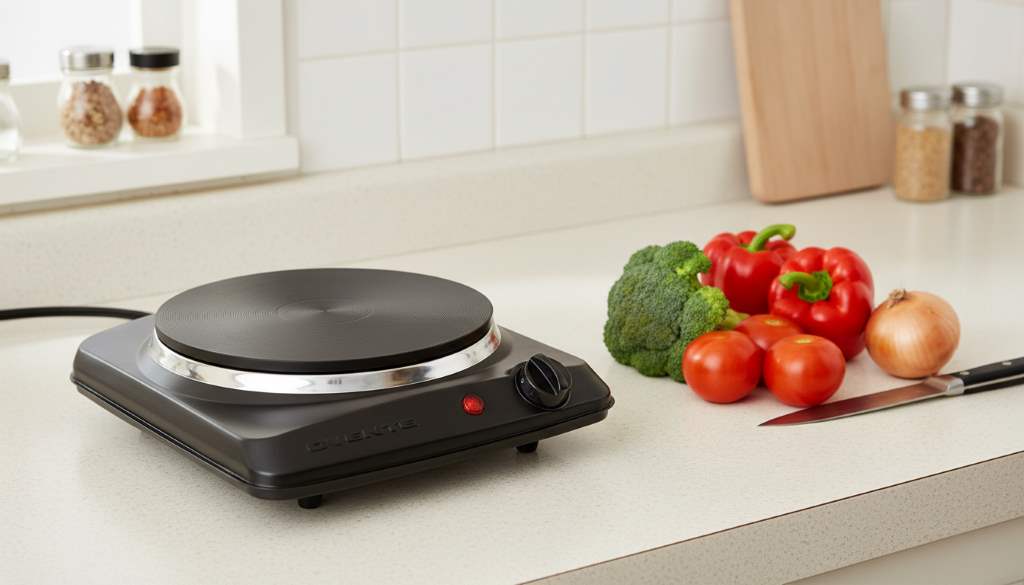
This simple device offers one heating element for basic cooking needs. People love it for its portability and ease of use. For instance, a reliable countertop cooking appliance like the Ovente 1000W model delivers consistent heat in compact form.
Moreover, demand grows steadily. Global Market Insights reports the hot plates market reached USD 1.1 billion in 2023. Experts project a 5.5% compound annual growth rate through 2032. Additionally, single-burner models lead this expansion due to their suitability for urban living and small households.
In short, these devices bring convenience to everyday cooking. Now, let’s explore them in detail.
What Exactly Is a Single Burner Hot Plate?
A single burner hot plate serves as a portable electric cooking device. It features one heating surface that plugs into a standard outlet.
Manufacturers design it for simplicity. You place a pot or pan directly on the burner. Then, you adjust the temperature with a knob or digital controls.
Furthermore, these units come in various styles. Traditional models use exposed coils. Modern versions offer flat surfaces for easier cleaning.
However, all share the same goal. They provide reliable heat without needing a full stove.
People often call them portable burners or electric hot plates. Synonyms include countertop burners or single electric stoves.
Additionally, sizes vary. Most measure about 10 to 12 inches wide. This compact design fits easily on any counter.
Many users appreciate the lightweight build. You can move it from kitchen to table without effort.
Therefore, it becomes a go-to tool for flexible cooking.
Types of Single Burner Hot Plates
Single burner hot plates fall into two main categories. Each type offers unique advantages.
First, electric coil models remain the most common. They feature a spiral metal element that glows red when hot.
Second, induction models gain popularity quickly. They use electromagnetic fields for heating.
Moreover, some versions combine infrared technology. These heat up fast and distribute warmth evenly.
Coil types suit budget-conscious buyers. Induction options appeal to those seeking efficiency.
For example, coil burners work with any cookware. Induction requires magnetic pots and pans.
Consequently, your choice depends on needs and existing tools.
Both deliver excellent results when used correctly.
How a Single Burner Hot Plate Works
Understanding the mechanism helps you use it better. The process differs by type.
Traditional Electric Coil Hot Plates
Electric coil models rely on resistance heating. Electricity flows through a nichrome wire coil.
This wire resists the current. As a result, it generates intense heat.
The coil then transfers heat to your cookware through radiation and conduction.
Furthermore, a thermostat controls the temperature. It cycles power on and off to maintain settings.
You turn the dial, and the coil heats up in minutes. Simple yet effective.
However, some heat escapes into the air. This makes coil models slightly less efficient.
Still, they provide steady, reliable performance for everyday tasks.
Induction Single Burner Hot Plates
Induction technology works differently. It creates a magnetic field beneath the surface.
When you place a compatible pan on top, the field induces currents in the cookware.
These currents produce heat directly in the pan. The surface stays cooler.
Additionally, induction responds instantly to control changes. You get precise adjustments.
Consumer Reports notes induction uses up to 10% less energy than traditional electric. It proves three times more efficient than gas.
Therefore, it saves time and electricity.
However, you need ferromagnetic cookware. Cast iron and certain stainless steels work best.
Overall, induction offers safer, faster cooking.
Key Benefits of Single Burner Hot Plates
Owners enjoy many advantages from these devices.
First, portability stands out. You can cook anywhere with an outlet.
Next, they save space. Small kitchens benefit greatly.
Additionally, they provide extra cooking capacity. Holidays become easier with an additional burner.
Energy efficiency varies by model. Induction types excel here.
Moreover, quick heating reduces waiting time. Boiling water happens faster than on some stoves.
Easy storage adds convenience. Tuck it away when not needed.
Finally, versatility shines. Simmer sauces, fry eggs, or warm soups effortlessly.
These benefits make them essential for many households.
- Portability for travel or outdoor use
- Compact size for limited counters
- Quick setup and cleanup
- Affordable entry into electric cooking
- Reliable backup during stove repairs
Popular Uses for Single Burner Hot Plates
People find creative ways to use these devices daily.
In dorm rooms, students prepare meals without full kitchens. They boil pasta or heat ramen quickly.
Office workers warm lunch at desks. No need for microwaves.
Campers bring them for RV trips. Paired with a generator, they enable home-style cooking.
Small apartment dwellers rely on them as primary cooktops.
During large gatherings, they handle side dishes. This frees the main stove for entrees.
Additionally, crafters use them for melting wax or dyes.
Buffet services keep food warm at events.
For example, fondue parties thrive with dedicated burners.
Travelers in hotels extend meal options beyond room service.
Overall, uses span from daily meals to special occasions.
Related:
Renovate with Confidence: Trusted Kitchen and Bathroom Remodeling Tips
How to Plan a Kitchen Remodel: Ideas, Steps, and Pro Tips
How to Choose the Best Single Burner Hot Plate
Selecting the right model requires consideration of several factors.
First, decide between coil and induction. Coil works universally. Induction demands compatible pans.
Next, check power output. Most range from 1000 to 1800 watts. Higher watts heat faster.
Controls matter too. Analog dials offer simplicity. Digital panels provide precision.
Size and weight affect portability. Measure your storage space.
Safety features include auto shut-off and indicator lights.
Surface material influences cleaning. Cast iron retains heat well. Ceramic cleans easily.
Read user reviews for real experiences.
Finally, match it to your cooking style.
Thoughtful selection ensures years of satisfaction.
Essential Safety Tips for Using Single Burner Hot Plates
Safety always comes first with any heating device.
Never leave it unattended while on. Fires can start quickly.
Place it on stable, heat-resistant surfaces. Avoid flammable materials nearby.
Keep cords away from edges. Prevent pulling or tripping.
Use appropriate cookware. Flat bottoms ensure good contact.
Additionally, unplug when not in use. This prevents accidental activation.
Check cords regularly for damage. Replace frayed units immediately.
Keep children and pets at a safe distance.
Moreover, avoid overheating empty pans. This damages both device and cookware.
University safety guidelines recommend medium settings for liquids. High heat risks boiling over.
Follow these practices for worry-free cooking.
- Position away from water sources
- Use dry hands when adjusting controls
- Allow full cooling before storage
- Never immerse in water
- Store upright to prevent damage
Cleaning and Maintaining Your Single Burner Hot Plate
Proper care extends lifespan significantly.
First, unplug and cool completely before cleaning.
For coil models, lift elements if possible. Wipe spills underneath.
Use damp cloth with mild soap for surfaces. Avoid abrasive cleaners.
Induction tops clean easily. Wipe with soft sponge.
Remove stubborn spots with vinegar solution.
Dry thoroughly to prevent rust.
Additionally, inspect heating elements monthly. Look for warping or discoloration.
Store in dry place. Cover to protect from dust.
Regular maintenance keeps performance optimal.
Simple habits prevent buildup and ensure hygiene.
Single Burner Hot Plates vs. Other Cooking Options
Compare them to alternatives for better perspective.
Versus full stoves, they offer portability. Stoves provide multiple burners.
Microwaves heat quickly but lack browning. Hot plates sear and simmer better.
Gas burners respond instantly. Electric models prove safer indoors.
Toaster ovens bake small items. Hot plates focus on stovetop tasks.
Slow cookers handle long simmers. Hot plates manage active cooking.
Each tool serves specific purposes.
Many kitchens combine them for complete flexibility.
Your needs determine the best choice.
Conclusion
Single burner hot plates deliver practical solutions for modern cooking challenges. They combine portability, efficiency, and simplicity in one compact package.
From dorms to RVs, they adapt to various lifestyles. Understanding types and operation helps you choose wisely.
Safety and maintenance ensure long-term enjoyment.
Consider adding one to your setup today. Experience the convenience firsthand.
Start exploring options that fit your space and habits.
FAQs
What makes a single burner hot plate portable?
Its lightweight design and simple plug-in operation allow easy movement. You can use it on counters, tables, or outdoors with power access.
Can I use any cookware on a single burner hot plate?
Coil models accept most materials. Induction versions require magnetic bottoms like cast iron or compatible stainless steel.
How energy efficient are single burner hot plates?
Induction models transfer up to 90% of energy to cooking. Traditional coil types achieve around 70%. Both outperform gas in controlled settings.
Is it safe to leave a single burner hot plate on overnight?
No. Always turn it off and unplug after use. Attended operation prevents hazards.
How quickly does a single burner hot plate heat up?
Most reach full temperature in 3 to 5 minutes. Induction models often prove fastest.
References
- Global Market Insights: Hot Plates Market Size, Share & Forecast Report, 2024-2032. https://www.gminsights.com/industry-analysis/hot-plates-market
- Fortune Business Insights: Hot Plates Market Size, Industry Share | Forecast [2026-2034]. https://www.fortunebusinessinsights.com/hot-plates-market-114964
- University of Wisconsin Engineering Safety: Hot Plate Safety Guideline. https://safety.engr.wisc.edu/wp-content/uploads/sites/706/2019/10/Hot-Plate-Safety-Guideline.pdf
- Consumer Reports: Pros and Cons of Induction Cooktops and Ranges. https://www.consumerreports.org/appliances/ranges/pros-and-cons-of-induction-cooktops-and-ranges-a5854942923




Leave a Reply