
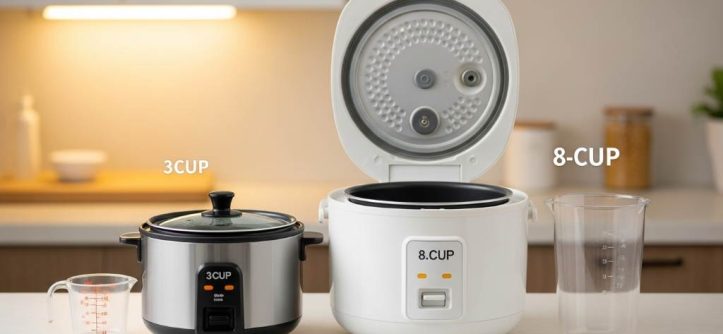
Rice feeds more than half the world’s population every day. In fact, the USDA projects global rice consumption will hit a record 542 million tons in 2025/26. Perfectly cooked rice matters deeply for billions of meals.
Yet many home cooks struggle with mushy, crunchy, or uneven batches. The secret often hides in one overlooked factor: capacity. Choose the wrong size, and even the best rice turns disappointing.
For example, many shoppers seek a clear rice cooker capacity comparison to see real differences in action. This guide breaks down exactly how capacity shapes your results and helps you pick the ideal cooker for your kitchen.
What Rice Cooker Capacity Actually Means
Manufacturers measure capacity in “cups” of uncooked rice. However, these cups differ from standard measuring cups.
Most brands use a 180ml rice cooker cup, roughly 3/4 of a U.S. cup. A 5-cup cooker therefore holds about 900ml of uncooked rice.
That amount typically yields 10-12 cups of cooked rice. Always check whether the rating refers to uncooked or cooked volume, as some brands vary.
Moreover, maximum lines inside the pot show safe fill levels. Exceed them, and problems begin.
Understanding these details prevents surprises. You gain control over portions and outcomes from the start.
How Capacity Influences Cooking Time
Smaller cookers heat up faster. A 3-cup model often finishes white rice in 20-25 minutes.
Larger units need more time to reach full temperature. An 8-10 cup cooker may take 35-45 minutes for the same rice type.
However, time per cup usually drops in bigger models. They handle bulk efficiently once hot.

Additionally, load size matters greatly. Half-filling a large cooker extends timing because sensors detect less mass.
Conversely, filling a small cooker to the brim can lengthen cycles as steam builds slowly.
Match batch size to capacity for quickest, most consistent results.
The Direct Impact on Rice Texture
Texture defines great rice. Capacity plays a starring role here.
In properly loaded cookers, steam circulates freely. Grains cook evenly from bottom to top.
Overfill the pot, and steam struggles to penetrate dense layers. The bottom scorches while the top stays soggy.
Underfill a large cooker, and the thin layer dries out quickly. Rice becomes hard or develops a crust sooner than desired.
Furthermore, water-to-rice ratios shift slightly with capacity. Small batches in oversized pots lose more moisture to evaporation.
Users consistently report fluffier, more separate grains when they cook within 50-80% of rated capacity.
Flavor Development and Capacity
Flavor absorption improves with proper space. Steam carries aromas and seasonings throughout the pot.
In compact loads, grains have room to expand and soak up broth or spices.
Larger capacities allow bolder experiments. You can add vegetables, proteins, or herbs without crowding.
However, tiny batches in big pots often taste bland. Limited steam contact reduces flavor transfer.
Many cooks notice deeper umami in mid-sized cookers filled correctly. The balance of heat, moisture, and circulation proves ideal.
Energy Efficiency Across Different Sizes
Energy use varies by capacity and usage patterns.
Small cookers consume less power overall. A 3-cup model typically draws 400-600 watts.
Larger units range from 800-1200 watts. Yet they prove more efficient per cup when full.
Underloading wastes energy. A half-empty 10-cup cooker still runs full cycles.
Studies show cooking small amounts in appropriately sized units saves up to 30% electricity.
Therefore, households that cook 1-3 cups daily benefit most from compact models.
Choosing the Perfect Capacity for Your Household
Needs differ widely. Consider daily portions and family size first.
Singles or couples thrive with 3-4 cup cookers. They deliver 6-8 cooked cups, perfect for meals plus leftovers.
Families of four usually prefer 5-6 cup models. These yield 10-12 cooked cups comfortably.
Larger households or meal-preppers choose 8-10 cup units. They handle gatherings without stress.
Here’s a quick guide:
- 1-2 people: 3-cup cooker
- 3-4 people: 5-cup cooker
- 5-6 people: 8-cup cooker
- 7+ or entertaining: 10-cup or larger
Always factor in appetite and side dishes. Bigger eaters may need one size up.
Related:
What Is a Single Burner Hot Plate and How Does It Work?
Shop Smart: Get Kitchen Appliances Online at Cheap Prices
Common Capacity Mistakes and Fixes
Many cooks repeat the same errors. Avoid them for better rice every time.
First, overfilling remains the top issue. Steam escapes, rice boils over, and texture suffers. Stick to marked lines.
Second, underfilling large cookers creates dry or burnt results. Use at least half capacity for even heating.
Third, ignoring rice type leads to problems. Brown rice needs more water and space than white.
Fourth, forgetting to rinse increases starch and foaming, especially in full loads.
Finally, skipping the rest period after cooking hurts texture. Let rice steam 10 minutes off heat.
Simple adjustments solve most issues quickly.
Real-World Examples of Capacity in Action
Sarah, a busy parent of two, switched from a 10-cup to a 5-cup cooker. Her daily 2-cup batches transformed from dry and uneven to perfectly fluffy.
Meanwhile, the Chen family hosts weekend gatherings. Their new 8-cup model handles 6 cups uncooked without overflow, delivering consistent restaurant-quality jasmine rice.
Professional caterers rely on 20-30 cup commercial units. They achieve uniform texture across massive batches that smaller home models cannot match.
These stories highlight one truth: right-sizing changes everything.
Advanced Tips for Optimal Results
Rinse rice thoroughly to reduce excess starch. This prevents foaming in any capacity.
Add a teaspoon of oil or butter for extra separation in larger batches.
Experiment with water ratios. Smaller cookers often need slightly less water than instructions suggest.
Use the included measuring cup consistently. Standard cups throw off proportions.
Clean the pot and steam vent after each use. Buildup affects performance over time.
Maintenance and Longevity by Capacity
Smaller cookers experience less wear from frequent small batches.
Larger models endure heavier loads but benefit from sturdy construction.
Regular descaling keeps heating elements efficient across all sizes.
Store with the lid open to prevent moisture buildup.
Proper care ensures years of reliable service regardless of capacity.
Conclusion
Capacity shapes every aspect of rice cooking, from timing and texture to flavor and efficiency. Choose wisely based on your household needs, and you unlock consistently perfect results.
Take a moment today to assess your current cooker. Does it match your typical batch size? If not, consider an upgrade that fits your life.
Your next bowl of rice could become the best you’ve ever made.
FAQs
What size rice cooker works best for a family of four?
A 5-6 cup uncooked capacity cooker suits most families of four perfectly. It yields 10-12 cups cooked, covering generous portions plus leftovers.
Can I cook small amounts in a large rice cooker?
You can, but results often suffer. Small batches spread thinly and may dry out or cook unevenly. Use at least half the rated capacity for best texture.
Does capacity affect brown rice differently than white?
Yes. Brown rice requires more water and longer cooking. Larger capacities provide needed space for proper expansion and steam circulation.
Why does my rice cooker boil over sometimes?
Overfilling stands as the main culprit. Too much rice or water blocks steam release. Reduce portions and rinse rice well to minimize starch.
Is a bigger rice cooker more energy efficient?
Only when cooking large batches. For small daily meals, smaller cookers save electricity and deliver better results.
References
- USDA Economic Research Service Rice Outlook Reports: https://www.ers.usda.gov/topics/crops/rice/market-outlook
- Aroma Housewares Rice Cooker Capacity Guide: https://www.aromaco.com/recipes/rice-cooker-capacity-how-to-pick-the-perfect-size
- Yum Asia Rice Cooker Capacity Guide: https://yum-asia.com/us/rice-cooker-capacity-guide



Leave a Reply