
Creating a balanced bedroom is about more than simply placing a bed, sofas, and armchairs in your Perth home. It is about designing an environment that promotes rest, comfort and clarity. The right furniture choices can significantly impact sleep quality, productivity, and overall well-being. A thoughtfully furnished bedroom should feel calm, organised and functional without appearing overcrowded.
Whether furnishing a new home or refreshing an existing space, selecting the right bedroom furniture requires planning and an understanding of balance, proportion and personal needs. This blog explores how to select furniture that promotes balance, comfort and style while meeting practical needs.
Why Bedroom Balance Matters
A balanced bedroom supports better rest, improved organisation and a sense of wellbeing. The layout, furniture proportions, colour palette and storage solutions all contribute to how the room feels. Balance does not necessarily mean symmetry. Instead, it refers to visual harmony, appropriate scale, and thoughtful placement of furniture. When done well, the bedroom becomes a space that feels uncluttered, inviting and easy to maintain.
Key Things to Consider That Define a Balanced Bedroom Design
Choose the Right Size
Consider room dimensions carefully before selecting a bed frame for your Perth home. A large bed in a small room can feel overwhelming, while a small bed in a spacious room may appear unbalanced. Leave sufficient walking space around the bed to maintain flow and comfort.
Position the bed where it feels natural, ideally against a solid wall with clear visibility of the entrance. This placement often creates a sense of stability and balance.
Balance with Bedside Tables
Bedside tables serve both practical and aesthetic purposes in a bedroom. Placing matching tables on either side of the bed creates symmetry, which often brings a sense of calm and order to the space. However, identical pieces are not essential. A balanced look can still be achieved by choosing coordinated but slightly different designs, as long as their height and proportions complement each other. Ensure bedside tables are:
- Similar in height to the mattress top
- Proportionate to the bed size
- Equipped with storage if needed
Avoid oversized units that overwhelm the room, making it feel cramped. Instead, choose compact designs with built-in drawers to keep essentials organised and maintain a clean, visually balanced space.
Create Comfort with Seating Options
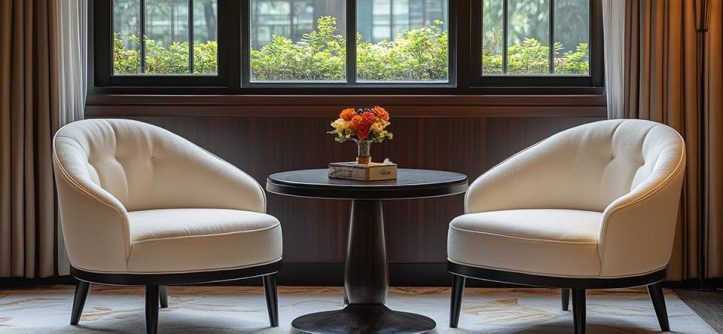
Adding an armchair to the bedroom layout can elevate both comfort and visual harmony. A well-chosen armchair introduces softness, depth, and functionality, transforming the room into a relaxing retreat for reading or unwinding. When selecting an armchair, ensure it:
- Fits comfortably within the room while maintaining open pathways
- Aligns proportionally with the bed and surrounding furniture
- Reflects the overall design style through fabric, colour, and form
Positioning an armchair in a corner or near a window creates a cosy focal point while maintaining flow throughout the room. Designs with subtle curves or supportive cushioning add comfort and style without disrupting the balanced aesthetic of the space.
Prioritise Functional Storage
A balanced bedroom promotes ease and functionality. Thoughtful storage solutions, such as storage beds with built-in drawers, ottomans with hidden compartments or versatile organisers, allow you to store essentials efficiently while making the most of available space. These solutions keep the room orderly, enhance accessibility, and contribute to a calm atmosphere.
Additionally, selecting pieces with proportions that complement the room helps maintain harmony, while integrating stylish storage solutions can enhance the overall aesthetic, creating a bedroom that is both practical and visually pleasing.
Select the Right Dresser
A dresser should serve both functional and aesthetic purposes. It provides essential storage for clothing, accessories, and personal items, helping keep the bedroom organised and efficient. Selecting a dresser that balances practicality with visual appeal contributes significantly to creating an inviting bedroom environment.
While furniture sets offer convenience and a cohesive look, relying only on perfectly matching pieces can make a bedroom feel flat and uninspired. A more effective approach is to mix complementary tones, textures, or materials. This strategy maintains visual harmony while keeping the space engaging and balanced, allowing each piece to contribute to the overall aesthetic without overwhelming the room.
Conclusion
A balanced bedroom feels comfortable, organised, and inviting. Thoughtful furniture choices and practical layouts can create a space that supports relaxation, rest, and daily routines. By focusing on functionality, proportion, and overall design, you can make the most of the available space while maintaining a calm and appealing atmosphere. Ultimately, a well-furnished bedroom supports restful sleep, enhances daily routines, and creates a calming environment where both comfort and style coexist seamlessly.
Frequently Asked Questions
What defines a balanced bedroom?
A balanced bedroom feels comfortable, organised, and visually appealing. It combines functionality, proportion, and thoughtful placement of furniture to create a space that supports rest and daily activities without feeling overcrowded.
How important is furniture size in a bedroom?
Furniture size is crucial for maintaining an open and functional space. Properly scaled furniture ensures comfortable movement and a visually pleasing environment.
Are matching furniture pieces necessary for a balanced look?
Perfectly matching furniture is not required. Complementary tones, materials, and designs can create visual interest while maintaining a cohesive and orderly space.
How should a dresser be chosen for a balanced bedroom?
A dresser should serve both practical storage needs and aesthetic purposes. Selecting a piece that complements other furniture and fits the room’s proportions contributes to a welcoming and organised environment.
How can a bedroom feel inviting without appearing cluttered?
Maintaining open pathways, using appropriately sized furniture, and choosing multi-functional pieces helps keep the room organised.



Leave a Reply