
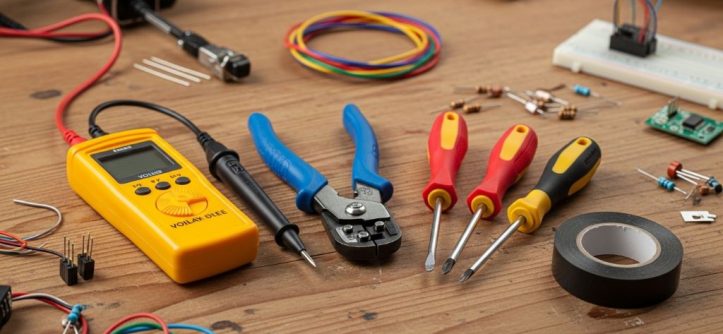
Electrical work at home can feel intimidating. Wires, circuits, and voltage meters seem like things only professionals should handle. However, with the right tools and a little knowledge, many basic electrical tasks are well within a beginner’s reach.
This guide will help you understand which tools you need, how to use them safely, and how to build your toolkit step by step. Whether you want to replace a faulty outlet, install a ceiling fan, or simply feel more prepared for home emergencies, this article will point you in the right direction.
Why Every Homeowner Should Own Basic Electrical Tools
Electrical problems do not always happen at convenient times. A tripped breaker, a loose switch, or a flickering light can occur on a weekend or late at night. Calling an electrician for every small issue adds up fast. Therefore, having a basic set of tools at home gives you the ability to handle minor repairs confidently.
Additionally, understanding your home’s electrical system helps you communicate better with professionals when bigger jobs come up. You will know what questions to ask and what warning signs to watch for. That knowledge alone is worth the small investment in tools.
Safety Comes First: What You Need to Know Before You Start
Before picking up any tool, you need to understand one rule above all others: always turn off the power before working on any electrical component. Go to your breaker box and switch off the circuit you plan to work on. Then use a voltage tester to confirm the power is off. Never assume.
Beginners often underestimate electrical hazards. Even a standard 120-volt household current can cause serious injury. Therefore, treat every wire as live until you have confirmed otherwise. Wear rubber-soled shoes, avoid working in damp areas, and never rush.
Safety gear is not optional. A pair of insulated gloves and safety glasses are the minimum you should have before starting any electrical task at home.
Building Your Toolkit: The Essential Tools to Start With
Voltage Tester
A non-contact voltage tester is the single most important tool for any beginner. It detects the presence of electrical current without touching any wire. You simply hold it near an outlet, switch, or wire, and it beeps or lights up if voltage is present.
This tool is inexpensive and widely available. It should be the first item you purchase. Without it, you are working blind, and that is dangerous.
Screwdrivers
You will need a set that includes both flathead and Phillips-head screwdrivers in multiple sizes. Electrical panels, outlet covers, and switch plates all use screws. Look for screwdrivers with insulated handles rated for electrical work. The insulation protects you if you accidentally make contact with a live component.
A magnetic tip is also a helpful feature. It holds screws in place, which prevents them from falling into walls or junction boxes.
Wire Strippers
Wire strippers are used to remove the plastic insulation from electrical wires without damaging the copper inside. They come in manual and self-adjusting versions. For beginners, a self-adjusting wire stripper is easier to use and reduces the chance of nicking the wire.
Damaged wire cores can cause poor connections and even fires. Therefore, learning to strip wire cleanly is a basic but critical skill.
Needle-Nose Pliers
These pliers have long, narrow jaws that allow you to bend, grip, and position wires in tight spaces. They are especially useful when working inside outlet boxes or connecting wires to terminals.
Additionally, needle-nose pliers can help you hold small parts in place while you tighten screws with your other hand. This simple tool makes fine electrical work much more manageable.
Electrical Tape
Electrical tape is used to insulate wire connections and protect exposed conductors. Always use tape rated for electrical use. It is thicker, more heat-resistant, and more durable than regular tape.
Wrap connections tightly and overlap each layer by about half. A good wrap prevents moisture and accidental contact with other wires or metal surfaces.
Wire Connectors (Wire Nuts)
Wire nuts twist onto the ends of two or more wires to join them together. They come in different sizes for different wire gauges. Using the wrong size can lead to a loose connection, which is a fire hazard.
However, wire nuts are simple to use once you understand the sizing. Most hardware stores label them by wire gauge compatibility, so matching them correctly is straightforward.
Utility Knife
A utility knife helps you score and cut cable sheathing when you need to expose the wires inside. Use it carefully to avoid cutting through the insulation of the individual wires beneath the outer jacket.
A sharp blade is safer than a dull one because you need less pressure and have more control. Replace the blade regularly for clean, precise cuts.
Flashlight or Headlamp
Electrical boxes, attic spaces, and wall cavities are often dark. A reliable flashlight or, better yet, a headlamp keeps your hands free while illuminating your work area. A headlamp is especially practical because it points wherever you look.
Expanding Your Kit: Intermediate Tools Worth Having
Once you have the basics covered, there are a few more tools that will expand what you can do safely at home.
Multimeter
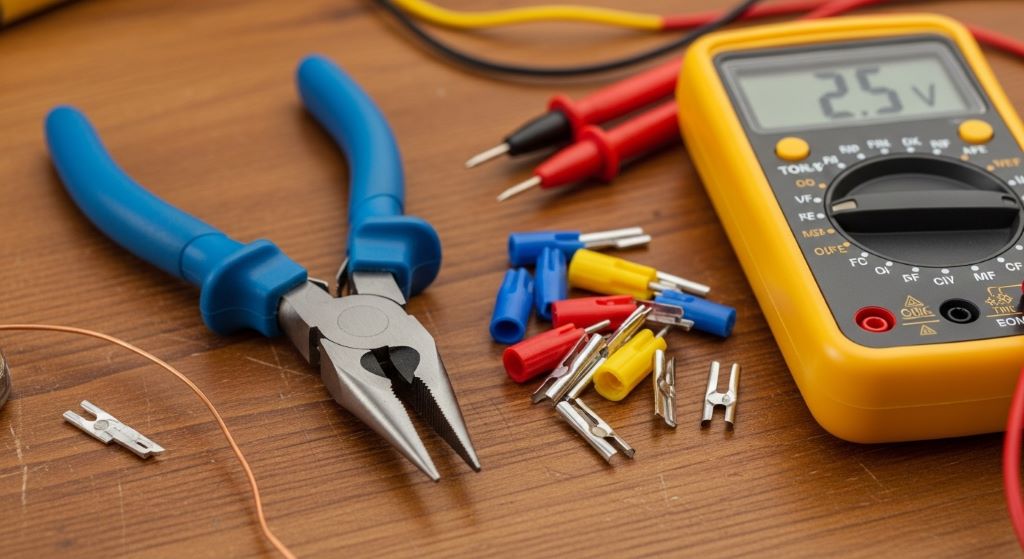
A multimeter measures voltage, current, and resistance. It is more versatile than a basic voltage tester. With a multimeter, you can check whether an outlet is receiving the correct voltage, test continuity in a circuit, or identify a broken wire.
For beginners, a digital multimeter is the easiest to read. They display exact numbers, removing the guesswork that comes with older analog models.
Fish Tape or Cable Snake
If you ever need to run a new wire through a wall or ceiling, a fish tape makes the job possible. It is a long, flexible metal or fiberglass ribbon that you feed through enclosed spaces to pull wire through.
This tool is particularly useful if you want to add a new outlet or light fixture without tearing open walls. Additionally, it is reusable and easy to store on its retractable spool.
Circuit Breaker Finder
A circuit breaker finder helps you identify which breaker controls a specific outlet or fixture without flipping each one individually. One part plugs into the outlet, and a handheld receiver detects the matching breaker in the panel.
This tool saves time and reduces frustration, especially in older homes where breaker labels are missing or inaccurate.
Outlet Tester
An outlet tester is a small plug-in device that tells you if an outlet is wired correctly. It checks for proper grounding, correct polarity, and common wiring faults. The lights on the tester indicate whether everything is right or flag a specific problem.
This is a great addition to a DIY electrical kit because it allows you to quickly audit every outlet in your home.
Organizing Your Tools: Storage and Maintenance Tips
Good tools deserve good storage. A disorganized toolbox leads to damaged equipment, lost items, and wasted time. Therefore, invest in a case with labeled compartments or a dedicated tool bag.
Keep your insulated tools away from moisture and extreme heat. Inspect handles regularly for cracks or wear. Replace any tool that shows signs of damage — especially insulated screwdrivers and gloves. A compromised tool is a safety risk.
Additionally, clean your tools after each use. Wire residue, dust, and grime can build up over time and affect performance. A quick wipe-down takes less than a minute and extends the life of your equipment significantly.
Understanding Home Wiring Basics
Knowing how your home wiring system works helps you use your tools more effectively. Most residential homes in the United States use a 120/240-volt alternating current system. Your main breaker panel distributes this power through individual circuits to different parts of the home.
Each circuit has a breaker that trips when it detects an overload or fault. This safety mechanism prevents fires and equipment damage. When a breaker trips, it does not always mean there is a serious problem. However, if it trips repeatedly, that is a sign something needs attention.
Home wiring tools allow you to investigate these issues safely. With a multimeter and a voltage tester, you can often identify the root cause of a tripping breaker without calling a professional. That said, always know your limits. If you are unsure, stop and consult an electrician.
Common Beginner Mistakes and How to Avoid Them
Even with the best tools, mistakes happen. Here are some of the most common errors beginners make and how to steer clear of them.
Skipping the power check is the most dangerous mistake. Always verify the power is off with your voltage tester before touching any wire. Do not rely on the breaker label alone.
Using the wrong wire gauge is another frequent issue. Every circuit is designed for a specific wire size. Using a thinner wire than required can overheat and cause a fire. Check your local electrical code or consult a professional if you are unsure.
Over-tightening connections can also cause problems. Screws can strip, and wires can break if you apply too much force. Tighten until snug, then stop.
Additionally, leaving connections exposed is a serious hazard. Every splice and connection must be covered with a wire nut and secured inside a proper junction box with a cover plate.
When to DIY and When to Call a Professional
A DIY electrical kit is perfect for a range of simple tasks. Replacing outlets and switches, installing light fixtures, changing a ceiling fan, and testing circuits are all reasonable beginner projects.
However, some jobs should always go to a licensed electrician. Adding a new circuit, upgrading your breaker panel, installing hardwired smoke detectors, or working near your main service entrance are all tasks that carry significant risk. They also often require permits and inspections.
Knowing the boundary between DIY and professional work is not a sign of weakness. It is a sign of good judgment. Electrical fires are one of the leading causes of house fires in the United States. The right tool in the right hands is safe. The wrong task without the right training is dangerous.
Building Your Toolkit on a Budget
You do not need to buy everything at once. Start with the five essentials: a voltage tester, a screwdriver set, wire strippers, needle-nose pliers, and electrical tape. These tools will handle most basic repairs and cost less than fifty dollars combined.
From there, add tools as your projects demand them. A multimeter is a natural next step. Then a circuit breaker finder and an outlet tester. Over time, you will build a well-rounded home wiring tools collection without spending a large amount upfront.
Look for tool kits labeled for electricians at hardware stores. Many brands bundle essentials together at a lower price than buying each item separately. Additionally, quality brands like Klein Tools, Fluke, and Southwire offer reliable products that hold up well for home use.
Conclusion
Building a complete electrical toolkit for your home is a smart investment. It prepares you for everyday repairs, helps you understand your home better, and gives you the confidence to handle minor issues without waiting for a professional.
Start with the basics: a voltage tester, insulated screwdrivers, wire strippers, and electrical tape. As your skills grow, add a multimeter, outlet tester, and circuit finder to your setup. Store everything safely and inspect your tools regularly.
Always put safety first. Turn off the power before any task, verify with a tester, and know when a job is beyond the DIY level. With the right approach and the right tools, home electrical work becomes manageable, even for a complete beginner.
Frequently Asked Questions
What is the most important tool in a DIY electrical kit for beginners?
A non-contact voltage tester is the most important tool. It allows you to confirm whether power is off before you handle any wire or component, which is the foundation of safe electrical work.
Can a beginner safely replace an electrical outlet at home?
Yes, replacing an outlet is one of the most beginner-friendly electrical tasks. As long as you turn off the power, verify with a tester, and match the wiring correctly, it is a manageable project with basic home wiring tools.
How do I know which wire gauge to use for a project?
Wire gauge depends on the circuit’s amperage. A 15-amp circuit uses 14-gauge wire, while a 20-amp circuit requires 12-gauge. Always check the breaker rating and match the wire gauge accordingly, or consult a licensed electrician.
Are there electrical tasks at home that always require a professional?
Yes. Adding new circuits, upgrading a breaker panel, working near the main service entrance, and installing hardwired systems typically require permits and a licensed electrician. These jobs involve risks that go beyond beginner-level DIY work.
How should I store my electrical tools to keep them in good condition?
Store tools in a dry, cool place in a labeled case or bag. Check insulated handles regularly for cracks or wear. Clean tools after each use and replace any item that shows signs of damage to maintain safety and performance.
Related Topics:
Learn How To Cover A Closet Without Doors




Leave a Reply