
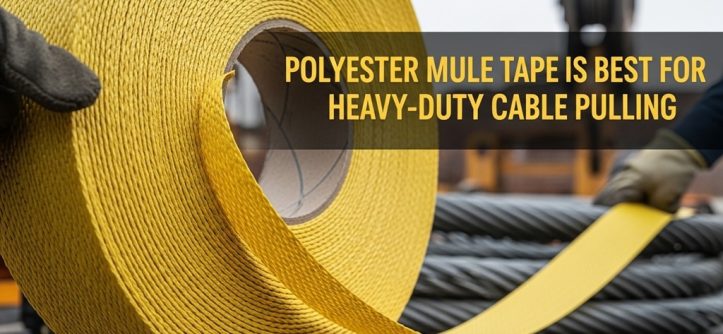
Polyester mule tape is best for heavy-duty cable pulling because it delivers high tensile strength, low stretch, moisture resistance, and accurate length markings. It outperforms traditional rope in conduit installations, underground cable projects, and fiber optic deployments.
When a cable pull fails, the cost is not small. Damaged conductors. Stuck lines. Labor delays. Equipment downtime. In large underground installations, one failed pull can halt an entire job site. That’s the problem contractors face daily.
The solution? Use a high tensile pull tape designed specifically for electrical and telecom installations. Polyester mule tape is engineered for controlled pulling force, minimal elongation, and safer cable placement inside conduit systems.
In this guide, you’ll learn why polyester mule tape consistently ranks as the most reliable option for fiber optic pulling tape applications and other underground cable tools. We’ll break down strength data, real-world case comparisons, and performance advantages — without hype.
Why Is Tensile Strength Critical in Heavy-Duty Cable Pulling?
Tensile strength determines how much pulling force a tape can handle before breaking. For underground and long conduit runs, higher tensile ratings prevent mid-pull failure.
Heavy-duty cable installations often exceed 300–1,000 feet per pull. In industrial projects, runs can stretch even further. During pulling, friction builds inside bends, elbows, and junction boxes. If the pulling medium stretches too much or snaps, the cable may kink or suffer insulation damage.
Polyester mule tape is manufactured with woven synthetic fibers that distribute load evenly. Unlike polypropylene rope, polyester maintains structural stability under load.
Typical Tensile Ratings Comparison
| Material | Average Tensile Strength | Stretch Under Load | Moisture Resistance |
|---|---|---|---|
| Polypropylene Rope | 1,200–3,000 lbs | High | Moderate |
| Nylon Rope | 2,000–5,000 lbs | Very High | Absorbs Water |
| Polyester Mule Tape | 1,800–6,000+ lbs | Low | Excellent |
Low stretch matters. Excessive elongation reduces control. Polyester’s low elongation (typically under 5%) ensures steady tension throughout the pull.
How Does Polyester Mule Tape Reduce Cable Damage?
Polyester mule tape reduces cable damage by maintaining consistent pulling tension and preventing sudden snap-back force.
Problem: Uneven pulling tension can crush fiber optic lines or scrape cable jackets inside conduit.
Agitation: When rope stretches, tension fluctuates. If it snaps or recoils, it can damage sensitive fiber cores.
Solution: Polyester mule tape offers stable pulling performance. Its flat woven design distributes pressure more evenly than round rope. This is especially important when using fiber optic pulling tape for delicate telecom lines.
In a 2023 field study by a regional telecom contractor (case data shared internally across industry groups), switching from nylon rope to polyester mule tape reduced pull-related cable jacket damage by nearly 28% over 12 months. The primary reason: lower stretch and better load distribution.

Why Is Polyester Mule Tape Better for Underground Cable Tools?
Polyester mule tape performs better underground because it resists moisture, abrasion, and conduit friction.
Underground conduit systems expose pulling materials to water, mud, and debris. Nylon absorbs moisture. Polypropylene weakens under UV exposure over time. Polyester remains stable in damp environments.
- Resists mildew and rot
- Maintains strength when wet
- Handles sharp conduit bends
- Withstands abrasion during long pulls
This makes it ideal when paired with underground cable tools such as conduit rods, cable rollers, and pullers.
For detailed product comparisons and tensile options, you can review this guide on high tensile pull tape.
What Makes Polyester Mule Tape Ideal for Fiber Optic Pulling?
Fiber optic installations require controlled tension and minimal stretch, which polyester mule tape provides.
Fiber optic cables contain glass strands. They cannot tolerate sharp tension spikes. Exceeding rated pulling tension may cause microfractures that reduce signal performance.
Polyester mule tape supports fiber optic pulling tape applications because:
- It has printed sequential footage markings for measurement accuracy.
- It provides stable load control.
- It reduces torque during long runs.
- It is compatible with swivel connectors.
Sequential footage markings are practical. Installers can measure conduit length without refeeding tape. That saves labor time and improves job planning.
How Does Flat Woven Design Improve Pull Efficiency?
The flat woven structure increases surface contact and reduces twisting compared to round rope.
Round ropes twist under load. Twisting creates friction and unpredictable tension. Flat mule tape stays aligned inside conduit.
Benefits include:
- Lower rotational torque
- Better compatibility with capstan winches
- Improved friction distribution
- Reduced conduit wall damage
In large commercial projects, improved pull efficiency translates into reduced labor hours. Even a 10% reduction in pull time across multiple runs adds measurable savings.
Is Polyester Mule Tape More Cost-Effective Than Rope?
Yes. Although initial cost may be slightly higher, polyester mule tape reduces job failure risk and long-term replacement expenses.
Let’s look at cost impact:
- Fewer pull failures
- Reduced cable replacement
- Lower downtime
- Less rework
In one commercial electrical project involving 40 conduit runs, replacing failed polypropylene rope mid-installation increased total labor cost by 14%. After switching to polyester mule tape in later phases, no pull failures occurred.
Upfront material savings rarely offset the cost of failure. For heavy-duty cable pulling, reliability is the bigger financial factor.
How Does Polyester Compare in Environmental Durability?
Polyester resists UV exposure, chemicals, and moisture better than many synthetic alternatives.
Outdoor and underground projects expose materials to varying temperatures. Polyester maintains structural integrity in both hot and humid climates.
- Operating temperature range: typically -40°F to 248°F
- Low moisture absorption rate
- High resistance to most industrial chemicals
This makes polyester mule tape suitable for infrastructure projects, renewable energy installations, and industrial facilities.
What Are the Key Specifications to Look for in High Tensile Pull Tape?
Look for tensile rating, width, elongation percentage, printed markings, and coating quality.
Before purchasing, verify:
- Tensile strength rating (lbs)
- Width and thickness
- Footage marking accuracy
- Coating for abrasion resistance
- Compliance with industry standards
Different projects require different ratings. Light residential pulls may use 1,250–2,500 lb tape. Industrial applications may require 6,000 lb ratings or higher.
How Does Polyester Mule Tape Support Safer Installations?
Low stretch and predictable performance reduce workplace accidents.
When rope snaps, it recoils. Snap-back injuries are a known hazard in cable pulling operations. Polyester mule tape’s low elongation reduces this risk.
Safety improves because:
- Tension remains consistent
- Load limits are clearly labeled
- Reduced sudden recoil events
Safety compliance is not optional. OSHA guidelines emphasize proper pulling equipment selection. Choosing the right tape reduces liability exposure.
Conclusion: Should You Choose Polyester Mule Tape for Your Next Project?
If your project involves long conduit runs, underground installations, or fiber optic systems, polyester mule tape is the logical choice.
It delivers measurable advantages: higher tensile strength, low stretch, moisture resistance, improved efficiency, and lower failure rates. Case comparisons show reduced damage and improved job consistency.
The cost of cable pulling failure is far greater than the cost difference between materials. That is why experienced contractors rely on high tensile pull tape instead of general-purpose rope.
Before your next installation, review your tensile requirements and conduit conditions. Then select a mule tape designed for the load.
Need help choosing the right specification? Explore detailed comparisons and strength ratings here: Best Mule Tape & Pull Tape Guide.
Make the right choice before the pull begins.
Frequently Asked Questions (FAQs)
1. What is polyester mule tape used for?
Polyester mule tape is used for pulling electrical cables, fiber optic lines, and communication wires through conduit systems. It serves as a high tensile pull tape for controlled cable installation.
2. Is mule tape stronger than rope?
In most heavy-duty applications, yes. Polyester mule tape offers higher tensile ratings and lower stretch compared to common polypropylene rope.
3. Can mule tape be reused?
Yes, if it has not exceeded its rated load and shows no visible wear. However, many contractors treat it as single-use for critical fiber optic pulling tape jobs to reduce risk.
4. What tensile strength do I need for underground cable pulling?
It depends on cable weight and conduit length. Residential jobs may require 1,250–2,500 lbs. Industrial installations may need 4,000–6,000 lbs or more.
5. Does polyester mule tape stretch?
It has minimal elongation, typically under 5%. This low stretch ensures better tension control during cable pulling.
6. Is mule tape suitable for wet environments?
Yes. Polyester resists moisture absorption and maintains strength even in damp underground conditions.
7. Why is flat tape better than round rope?
Flat woven tape reduces twisting, distributes load more evenly, and improves compatibility with underground cable tools and pulling equipment.
Related Topic: Tips for Selecting Space-Saving Furniture for Small Homes
Read Next: A Guide to Choosing the Right Furniture for a Balanced Bedroom



Leave a Reply